

Kia PV7 electric van to expand fleet choice
Kia is preparing to enter a larger and potentially important segment of the electric van market with the new Kia PV7, its second dedicated all-electric Platform Beyond Vehicle (PBV) model.
The manufacturer has released teaser images and video ahead of the PV7’s global debut at IAA Transportation in Hannover on 14 September 2026, where it will be positioned as a larger and more capable alternative to the PV5.
For fleet operators considering the transition to zero-emission commercial vehicles, the PV7 represents the next stage of Kia’s strategy to provide dedicated electric vehicles designed around the requirements of business users rather than simply electrifying existing van platforms.

The PV7 expands Kia’s PBV strategy into the light commercial vehicle (LCV) segment, providing additional space and capability beyond the PV5. This could make the new model relevant to businesses requiring more carrying capacity, while retaining the benefits of an electric powertrain for urban and regional operations.
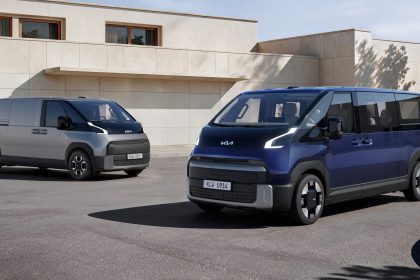
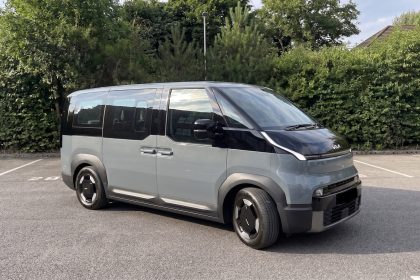
Kia’s teaser images show the PV7 being used in a variety of working and lifestyle environments, emphasising the vehicle’s adaptability. Its one-box profile gives it the appearance expected of a modern large electric van, while the robust stance, contrasting black bonnet and pillar garnish and distinctive front and rear lighting create a clear visual link with Kia’s existing PBV models.
Importantly for fleet buyers, the PV7 is being developed specifically as an electric commercial vehicle. It is based on Kia’s dedicated E-GMP.S platform, rather than an internal combustion engine architecture adapted for battery power.
This dedicated approach gives Kia greater scope to optimise the vehicle around electric operation, packaging and commercial usability as it expands its PBV portfolio.
Fleet flexibility at the heart of Kia PBV strategy
The PV7 will join the PV5 as the second dedicated PBV model in Kia’s range, with the company planning further derivatives to broaden its commercial vehicle offering.
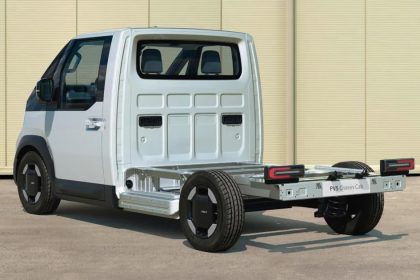
That flexibility is already evident in the PV5, which Kia will also showcase at IAA Transportation. The manufacturer will demonstrate a wide range of configurations, including the PV5 Cargo L2/H2, PV5 Cargo L1/H1, PV5 Chassis, PV5 Passenger seven-seat, PV5 WAV (Wheelchair Accessible Vehicle) and PV5 Food Truck.
For fleet operators, the significance of this approach goes beyond simply offering different body styles. A modular electric platform can potentially allow businesses to select a vehicle configuration more closely matched to the job, whether that involves carrying goods, transporting passengers or operating a specialist commercial conversion.

The ability to support multiple applications from a common platform could also help manufacturers and operators manage the growing diversity of electric commercial vehicle requirements.
Kia says the PV5 has been designed from the ground up as an electric commercial vehicle, with usability and efficiency in real-world operating conditions central to its development.
A tight turning radius is intended to make the van easier to manoeuvre in urban environments, while a low cargo loading height can reduce physical strain on drivers and operators when loading and unloading goods.
The PV5’s modular body architecture is also designed to simplify repairs, an important consideration for commercial fleets where vehicle downtime can have a direct impact on productivity and operating costs.
These considerations will be equally important as fleet operators assess the business case for moving from diesel vans to electric alternatives. Range and charging remain critical considerations, but factors such as payload, accessibility, vehicle utilisation, maintenance, downtime and total cost of ownership can ultimately determine whether an electric van works effectively within a particular operation.
Kia’s expansion into the larger electric LCV market comes as fleet operators have an increasing choice of zero-emission vans from established manufacturers and newer electric vehicle specialists.
The PV7 will therefore need to compete on more than styling and technology. Its success with business customers is likely to depend on how effectively it combines usable range, payload and cargo capacity with charging capability, reliability and competitive whole-life costs.
Kia’s PBV strategy could give it an advantage by allowing the company to develop multiple commercial applications around dedicated electric architecture.
The PV7’s unveiling at IAA Transportation will provide fleet operators with their first detailed opportunity to assess whether Kia’s larger PBV can deliver the practicality required for demanding commercial operations.
With the PV5 already demonstrating the breadth of applications possible from the PBV concept, the arrival of the PV7 marks an important step in Kia’s ambition to establish itself as a serious player in the electric commercial vehicle market.
For fleets planning future electrification, the new model could provide another option for businesses looking to replace larger diesel LCVs with dedicated electric alternatives while maintaining the flexibility needed for day-to-day commercial operations.