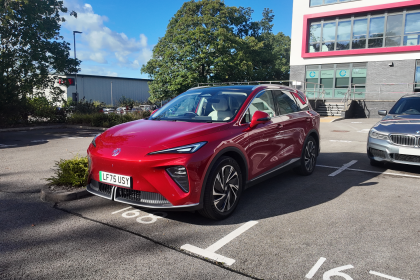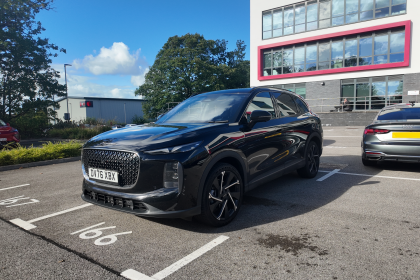

Kia PV5 Passenger Plus: is this the perfect fleet MPV?
The PV5 Passenger Plus is a sub-£40k cruiser that rewrites the rulebook for team transport and family life, reviewed by Ian Campbell.
First Impressions
Every so often a car comes along that resets what you thought you knew about a segment. This month, that car is the Kia PV5 Passenger — or, more specifically, the Plus trim I spent a week with. I’ll be honest: I was blown away. The style, the ease of driving, and just the sheer general ability to do absolutely anything you throw at it — this thing carves out its own space in a way I genuinely wasn’t expecting.
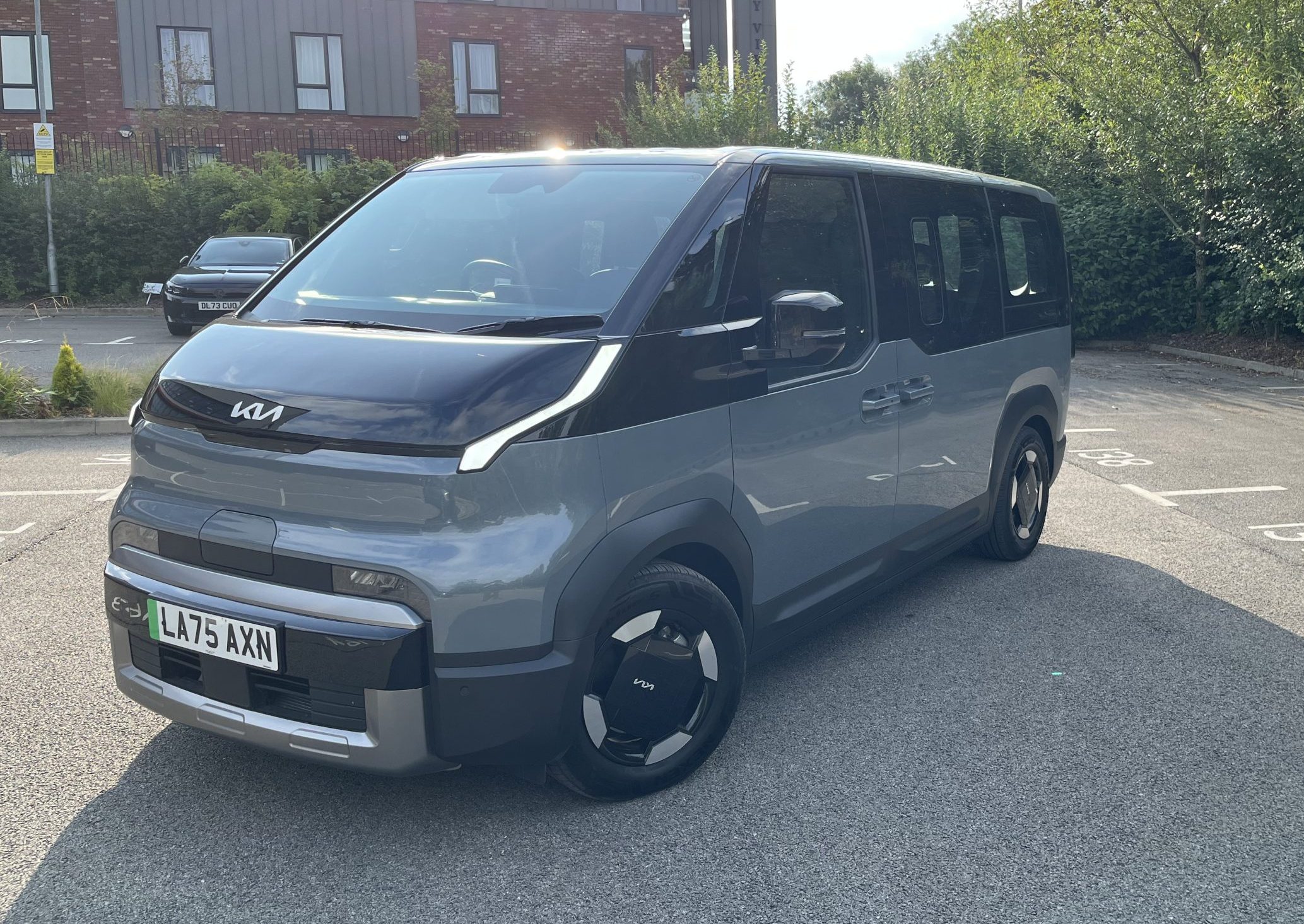
Image: Fleetpoint; all rights reserved
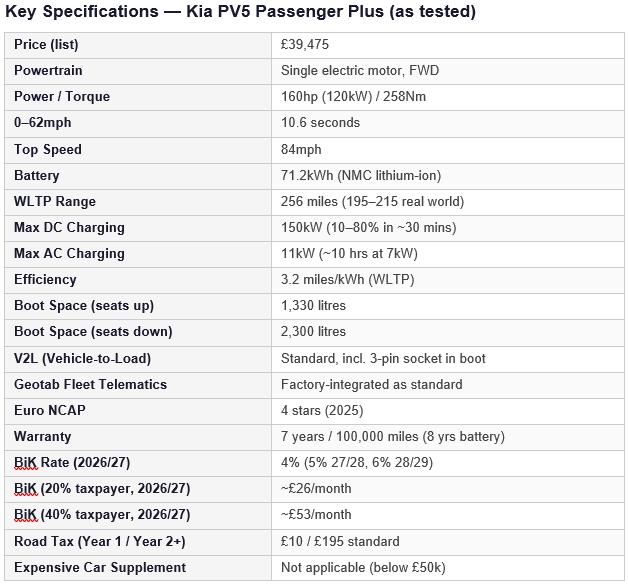
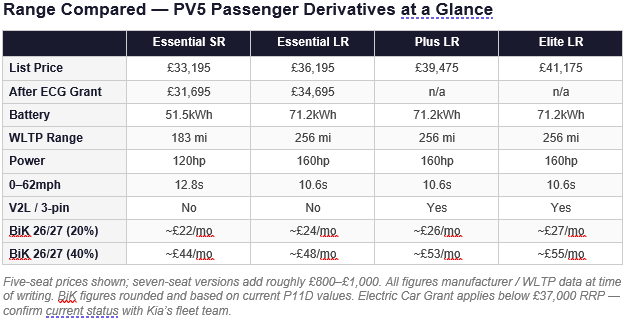
Let’s deal with the basics first. The PV5 Passenger range starts at £33,195 for the Essential Standard Range and tops out at £41,975 for the seven-seat Elite. My five-seat Plus test car sits at £39,475, and includes the 71.2kWh Long Range battery good for 256 miles WLTP, the 160hp motor, heated front and outer rear seats, a heated steering wheel, electric front seat adjustment, a powered tailgate, wireless phone charging, and — crucially — Vehicle-to-Load capability with a three-pin socket in the boot. That last feature turned out to be more important than it sounds. Much more on that shortly.
Here’s the fleet headline: at 4% Benefit-in-Kind for the 2026/27 tax year, a 20% taxpayer is looking at around £26 a month in BiK on the Plus. A 40% taxpayer, roughly £53. And because the entire range sits below both the £37,000 Electric Car Grant threshold (Essential trims) and the £50,000 Expensive Car Supplement threshold (every trim), the PV5 sidesteps a lot of the tax traps that make similar-sized rivals painful to run.
Design and Interior
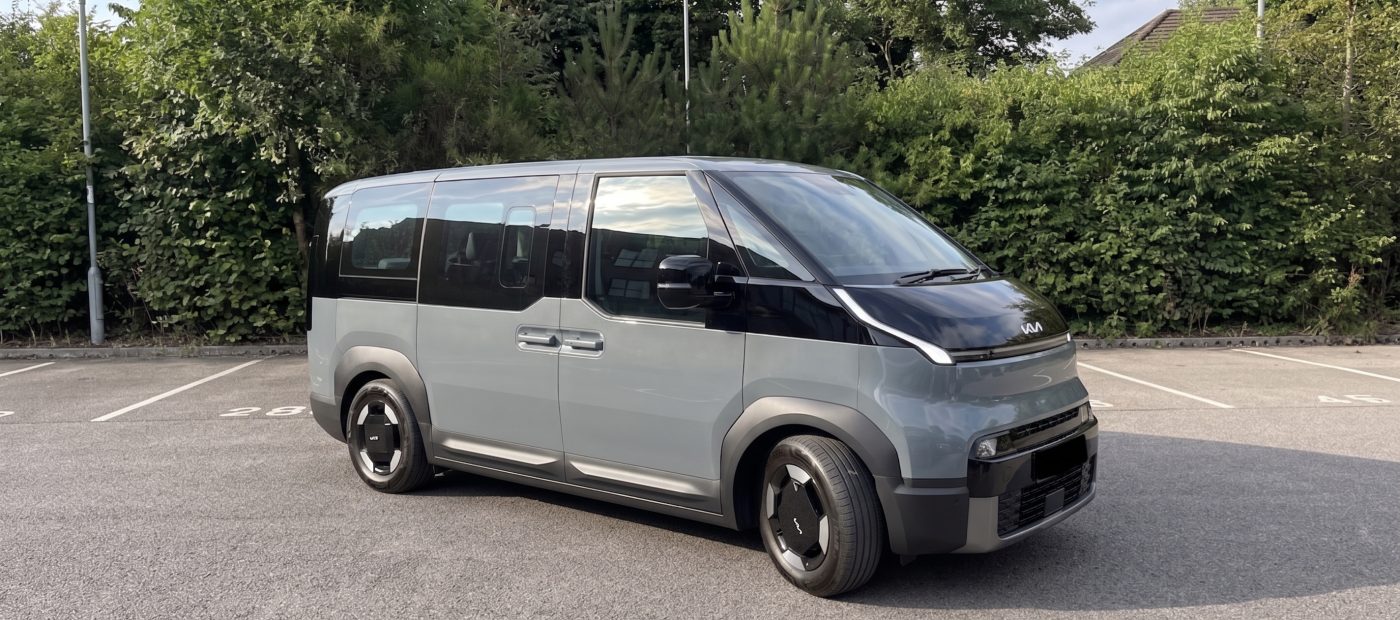
Kia has done something rare with the PV5 passenger Plus: it’s made a genuinely stylish van-based MPV. The upright, boxy silhouette is honest about what this vehicle is, but it’s dressed with sharp LED daytime running lights, a two-tone finish with a black bonnet, a wraparound window trim that runs the length of the body, and SUV-style wheel arches that add just enough attitude. It looks futuristic without trying too hard, and it’s a proper design in its own right. Neighbours will absolutely stop and ask what it is, mine did!
There’s a genuinely clever practical touch worth flagging for fleet managers: the exterior body panels are modular. If a driver picks up a supermarket car park scrape or a courier ding, the affected panel can be swapped out cheaply rather than requiring a full paint-and-blend repair. For any fleet operator who’s had a monthly bodyshop bill north of four figures, that’s a serious quiet win.
Inside, the driving position is lofty in the best sense of the word. It’s the highest I’ve sat in a fleet car for years, and the visibility is genuinely the best I’ve seen in a very long time. Massive windscreen, deep side glass, an extra glass section in the A-pillar to kill the traditional blind spot, and a rear window the size of a small conservatory. Placing this vehicle on the road is stunningly easy for something of its footprint, and pulling out of tight junctions in Manchester traffic became a genuine pleasure rather than a leap of faith.
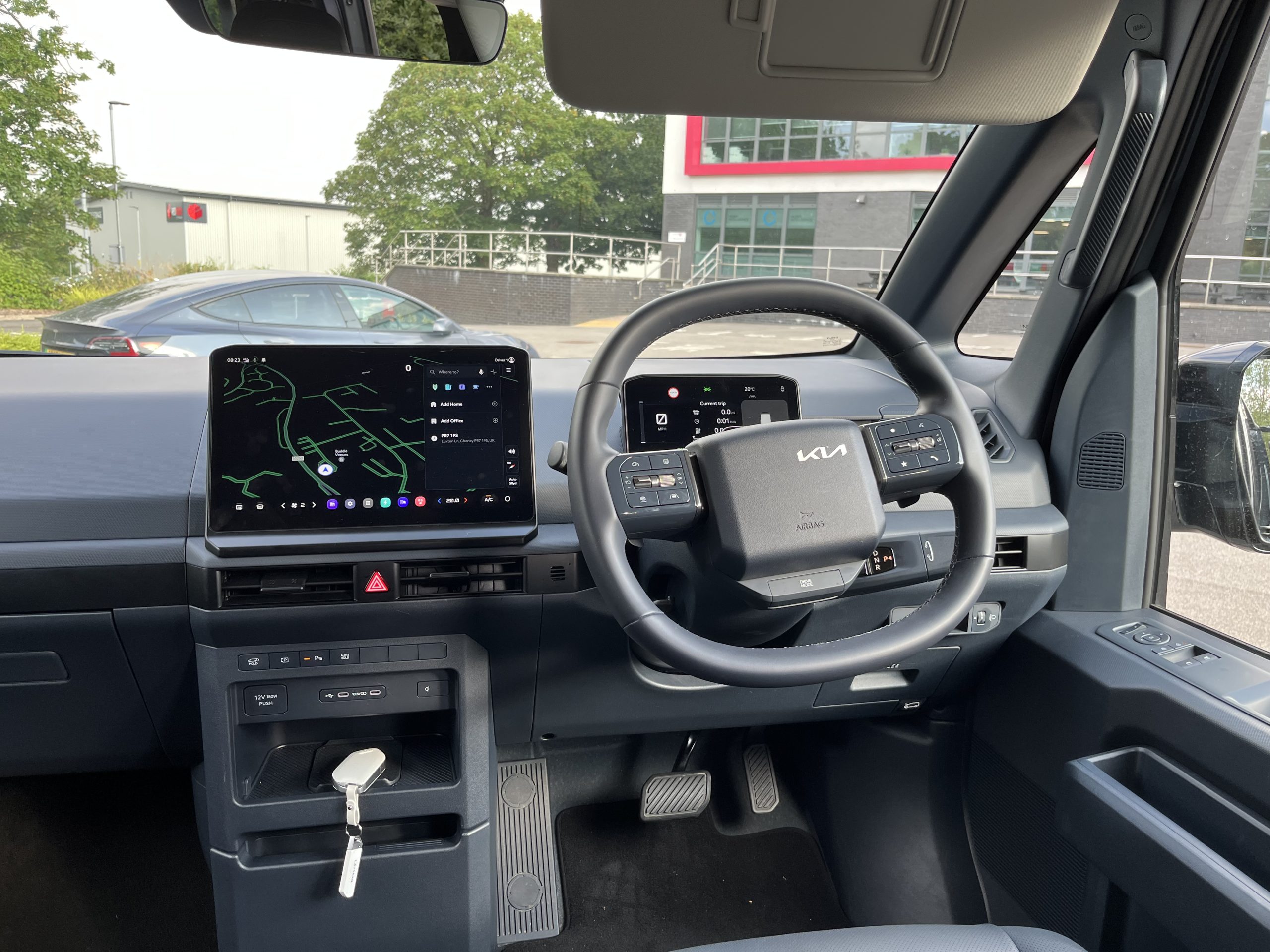
Image: Fleetpoint; all rights reserved
The dashboard is intuitive in that classic Kia way. Everything is where you expect it. The 12.9-inch central touchscreen sits above a proper strip of physical shortcut buttons, the driver display is clear and well laid out at 7.5 inches, and Kia has kept traditional column stalks rather than burying every function in menus. The interior materials are, I’ll grant you, a bit utilitarian — there’s more hard plastic on show than you’d find in the EV3 GT-Line I tested last month — but everything feels bomb-proof, wipe-clean and built for actual family life. My kids could not damage this cabin if you gave them a week and a hammer.
Now, the boot. With the second row up you’ve got 1,330 litres of near-perfectly square load space, which already puts most SUVs to shame. Flip the seats down and it opens up into a cavernous 2,300-litre load bay with a flat floor and a wide, low opening. I moved a full team’s worth of exhibition kit in one trip — a job that would have taken two runs in anything else. It’s the kind of space that fundamentally changes what your vehicle can do for you.
The “Laptop in the Back Seat” Moment
This is the moment that clinched the deal for me. Midway through the test week I found myself with a couple of hours to kill outside meetings. Rather than sit in a coffee shop I climbed into the back of the PV5, plugged my laptop into the standard three-pin UK plug socket in the boot, kicked off my shoes, put my feet up on the front seat, and got on with a chunk of proper work.
It was brilliant. The rear seats are spacious enough that I could stretch out completely, I was super comfortable, and I had genuine mains power at my disposal from the car’s Vehicle-to-Load system. Two hours flew by. I sent emails, took a video call, finished a document. When the meeting rolled round I was fresh, prepared and hadn’t spent £7 on a mediocre latte.
Fleet managers, sit up and take note. This isn’t a gimmick. If you’ve got field engineers, sales reps between calls, event teams setting up on remote sites, surveyors doing paperwork on location, or CEOs who bounce between meetings all day — the ability to turn the vehicle into a mobile office with real mains power is genuinely game-changing. And it’s standard from Plus trim upward. That single feature justifies the trim upgrade over the Essential all on its own.
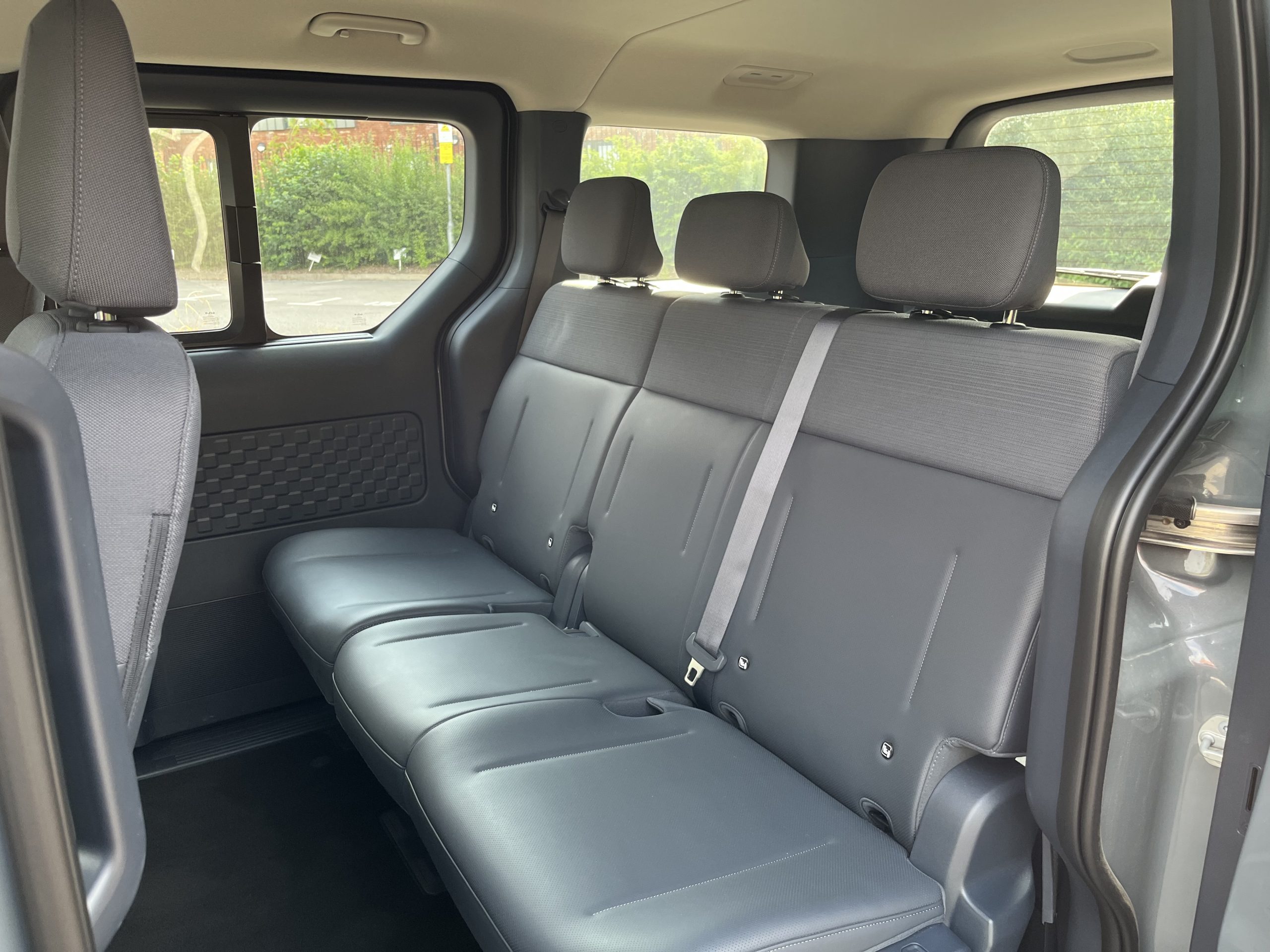
Image: Fleetpoint; all rights reserved
Infotainment and Fleet Tech
The 12.9-inch central touchscreen runs a new Android-based system that’s a departure from the Kia setup I praised in the EV3. It’s not quite as slick, and some of the menu icons are on the small side, but it’s intuitive and does what you need. Wireless Apple CarPlay and Android Auto are standard across the range and connect cleanly. The 7.5-inch driver display is easily read and gives you all the trip and range information you need at a glance.
Here’s where the PV5 passenger does something genuinely important for fleet buyers: the infotainment is integrated with Geotab, one of the world’s major fleet telematics platforms, straight from the factory. That means fleet managers can pull location, state of charge, driver behaviour and utilisation data across a PV5 fleet without retrofitting any hardware. If you’ve ever costed out a Geotab or Lightfoot install on a mixed fleet, you’ll appreciate what a serious value-add this is. It’s not a bolt-on — it’s in the DNA of the vehicle.
Wireless phone charging on the Plus trim worked reliably (Kia’s recent implementations have improved considerably), and the USB-C ports are scattered generously through the cabin. Every passenger has somewhere to plug in, which sounds obvious until you’ve been on the fifth motorway service station stop of a family trip and realised nobody’s device is fully charged.
On the Road
The Long Range Plus gets a 160hp electric motor driving the front wheels. Sub-40k this may be, but nobody’s buying this for the 0–62mph figure, and Kia doesn’t pretend otherwise — 10.6 seconds does the job. Top speed is a modest 84mph, which frankly is more than you’ll ever need in something this shape. Around town the PV5 is properly nippy off the mark, and the electric torque means you’re never left waiting when a gap opens up in traffic.
On the motorway it cruises beautifully. The high driving position gives you a lorry driver’s view of the road ahead; you can see over hedges, over car roofs, and well down the road which is genuinely restful over distance. The suspension is soft in a good way, soaking up B-road potholes and motorway expansion joints alike, and the light steering is well-judged for city work. Kia’s adaptive cruise control system is one of the best in the business and holds motorway station without drama.
The one honest niggle is wind noise at motorway speeds. The PV5’s bluff, boxy shape means there’s a bit more rustle around the A-pillars and door mirrors than you’d get in a more aerodynamic MPV. It’s not intrusive — you can still hold a normal conversation at 70mph without raising your voice — but it’s more present than it would be in an EV3 or a Sportage. Similarly, on a twisty B-road the PV5 will lean a little — it’s not designed for enthusiastic driving. But for the vast majority of journeys, and certainly for the fleet applications this vehicle is aimed at, none of that matters. It is comfort, comfort, comfort.
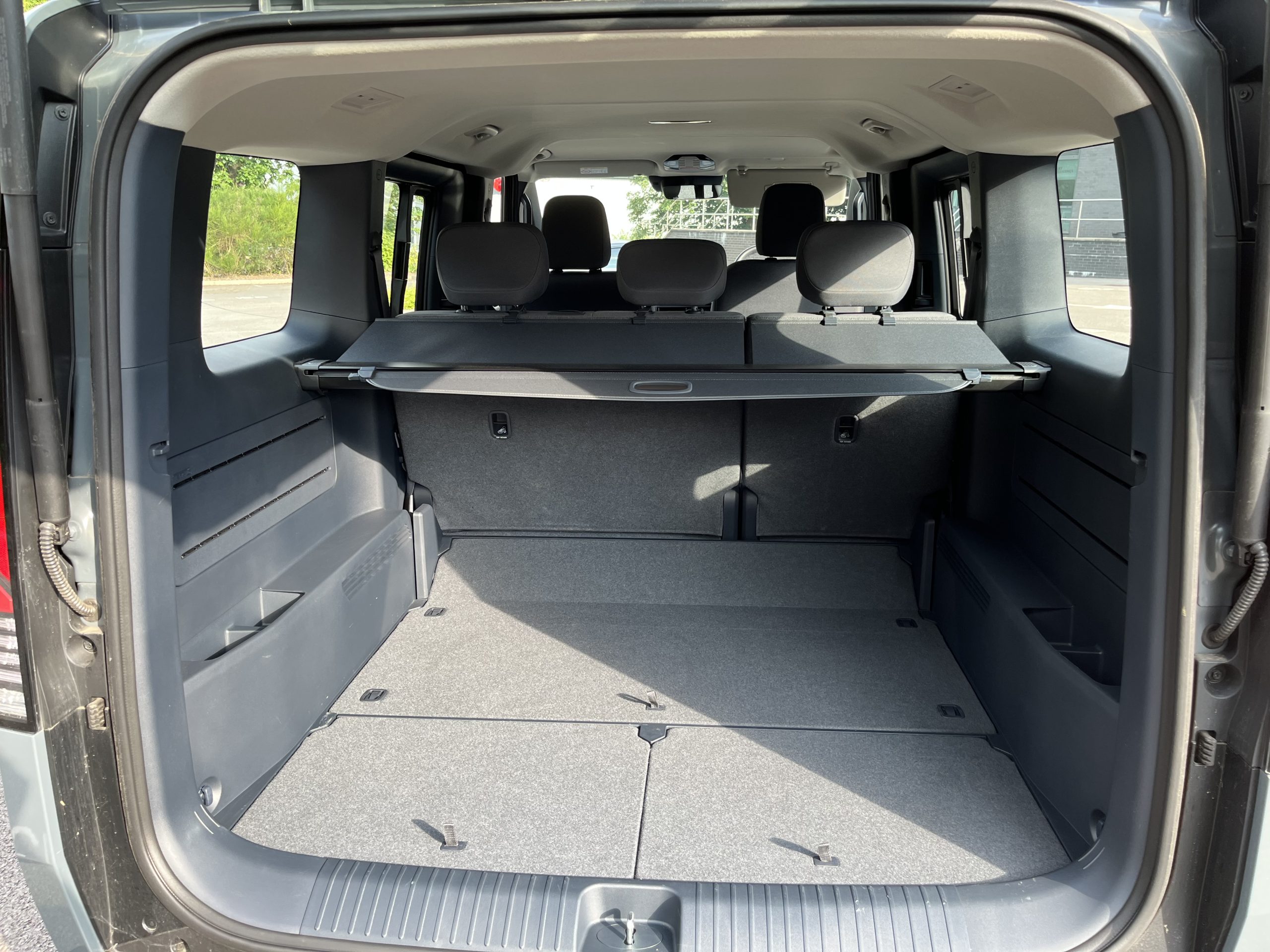
Image: Fleetpoint; all rights reserved
Battery, Range and Charging
The Long Range Plus gets a 71.2kWh NMC battery delivering an official 256 miles WLTP. In real-world driving I saw somewhere between 195 and 215 miles depending on the mix, which is entirely consistent with the ~3.0–3.2 miles/kWh figures I have seen quoted elsewhere. That’s enough for a decent working day for most drivers, and it’s more than adequate for the typical urban delivery, chauffeur or team transport patterns this vehicle is aimed at.
DC rapid charging peaks at 150kW, giving a 10–80% top-up in around 30 minutes. That’s properly quick for a vehicle in this segment, and importantly it’s achievable at almost any modern rapid charging site — no need to hunt out ultra-rapid Ionity locations. On a 7kW home wallbox you’re looking at around 10 hours for a full charge, or about six and a half hours at 11kW AC (the maximum the car will accept). Overnight top-ups are entirely comfortable.
The Essential Standard Range at 183 miles is fine for pure urban work but will start feeling short if drivers venture onto the motorway network. For any fleet mixing urban and inter-city work, the Long Range is the sensible pick, and Plus trim is where the meaningful equipment starts. There’s also a heat pump optional at £780, and word from Kia is that this will become standard from July 2026 orders — which is a genuine improvement over most rivals, where a heat pump is either optional-only or restricted to top-spec trims.
The Niggles
For once, there aren’t many. The wind noise at motorway speeds I’ve already flagged. The lane-keeping and driver alerts are as overzealous as they are on every new car and reset every ignition cycle. And the interior, while robust and practical, is undeniably a bit grey and utilitarian. Other markets get the PV5 Passenger in warmer tones with caramel seats and colourful trim inserts, and I’d urge Kia UK to consider bringing those over, it would move this car from “van-based MPV” into “aspirational family vehicle” in a heartbeat.
For a fleet magazine audience, none of these are close to being deal-breakers. They’re the sort of things you flag at the ordering conversation and move on.
Safety and Warranty
The PV5 earned a four-star Euro NCAP rating in 2025, which is the same score as the Ford Tourneo Custom, VW Multivan and Peugeot 5008. Given the PV5’s van-derived platform that’s a strong result. Every trim gets Kia’s full active safety suite: adaptive cruise control, forward collision avoidance with pedestrian and cyclist detection, lane-keeping assist, driver attention monitoring and rear cross-traffic alert. Blind-spot monitoring and the 360-degree camera are on Plus and Elite trims respectively.
The warranty remains Kia’s signature strength: seven years or 100,000 miles on most components, extended to eight years and 100,000 miles for the battery. For a fleet operator running a four-year, 80,000-mile cycle this means the vehicle will be inside warranty at defleet time. As with the EV3, that’s a genuine whole-life cost advantage that’s hard to argue with.
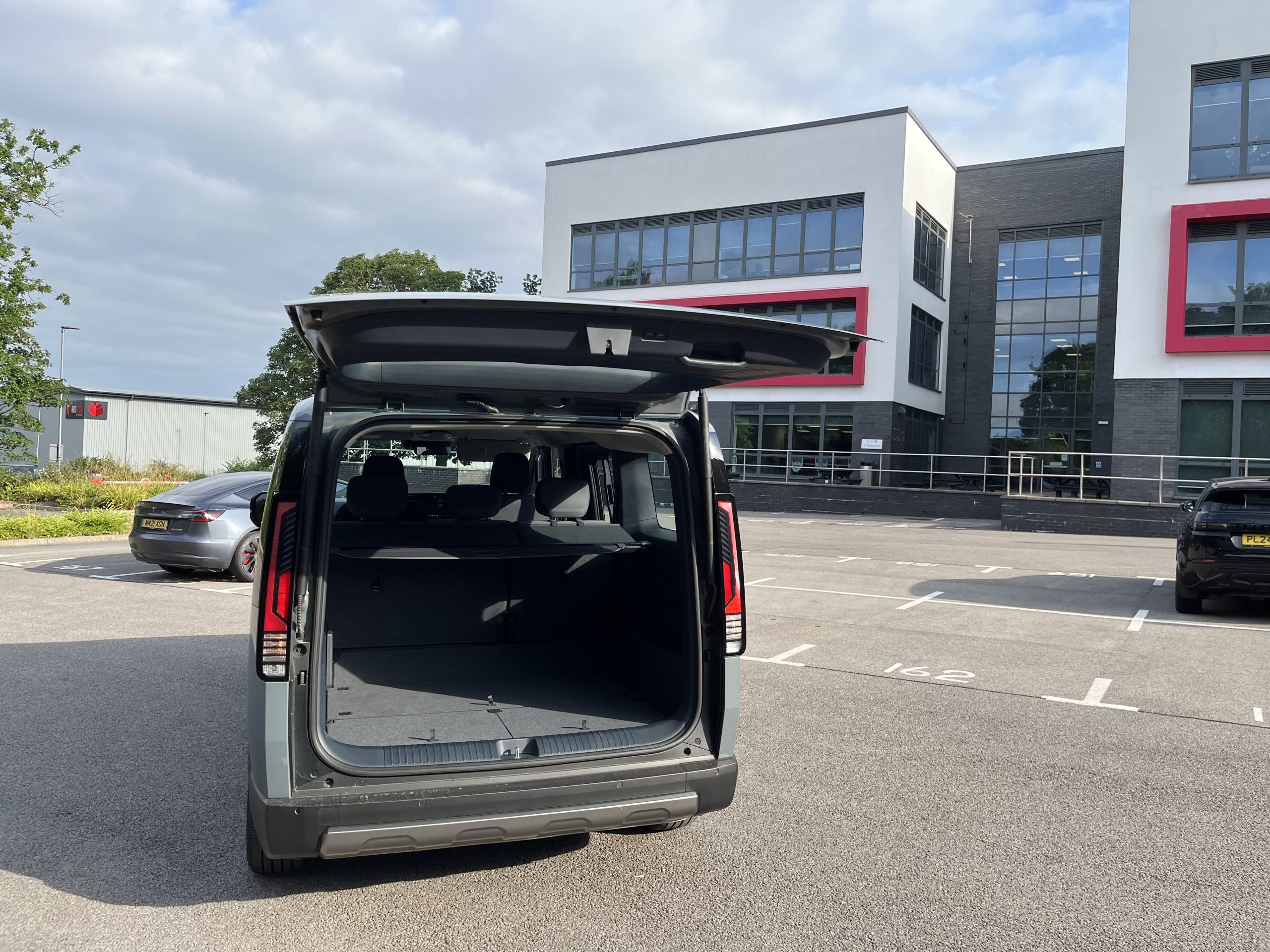
Image: Fleetpoint; all rights reserved
The Fleet and Sal-Sac Case
Right, this is where the PV5 Passenger Plus becomes genuinely serious for a Fleetpoint audience. Pure electric vehicles sit at 4% BiK for 2026/27, rising to 5% in 2027/28 and 6% in 2028/29. For the Plus trim at a P11D value of £39,475, that means:
- 20% taxpayer, 2026/27: around £26 per month in BiK (£316 per year) • 40% taxpayer, 2026/27: around £53 per month in BiK (£632 per year)
Now compare that to a diesel Ford Tourneo Custom or a Volkswagen ID.Buzz. The diesel Tourneo at 37% BiK on similar money is looking at £300+ per month for a 20% taxpayer. The ID.Buzz starts at nearly £60,000 — nearly double the PV5’s list price — and the ID.Buzz is above the £50,000 Expensive Car Supplement threshold, so buyers pay an extra £425 a year in road tax for years two to six. The PV5 sidesteps all of that. It’s not a like-for-like comparison, but it’s the right one for a fleet manager weighing options.
On salary sacrifice the maths gets even better. Broker-published figures I’ve seen for the PV5 Plus put the net cost at around £350–£450 per month for a 40% taxpayer through a typical scheme, all-inclusive of insurance, servicing, tyres and a home charger. A 20% taxpayer might see closer to £500. For that money you’re running a genuinely versatile vehicle that can do the school run, the client visit, the airport transfer, the load-lugging job and the mobile-office-between-meetings duty. There isn’t another vehicle at this price point that comes close.
Two more fleet-specific points to close on. Firstly, the Geotab integration I mentioned earlier means fleets running the PV5 get built-in telematics visibility from day one — a genuine cost saving for any operator that would otherwise be paying a subscription for third-party tracking. Secondly, Kia is developing a Wheelchair Accessible Vehicle (WAV) version of the PV5 Passenger due later in 2026, which will be significant for social care, community transport and health service fleets. If you’re running any kind of accessible transport operation, this is worth getting on the shortlist right now.
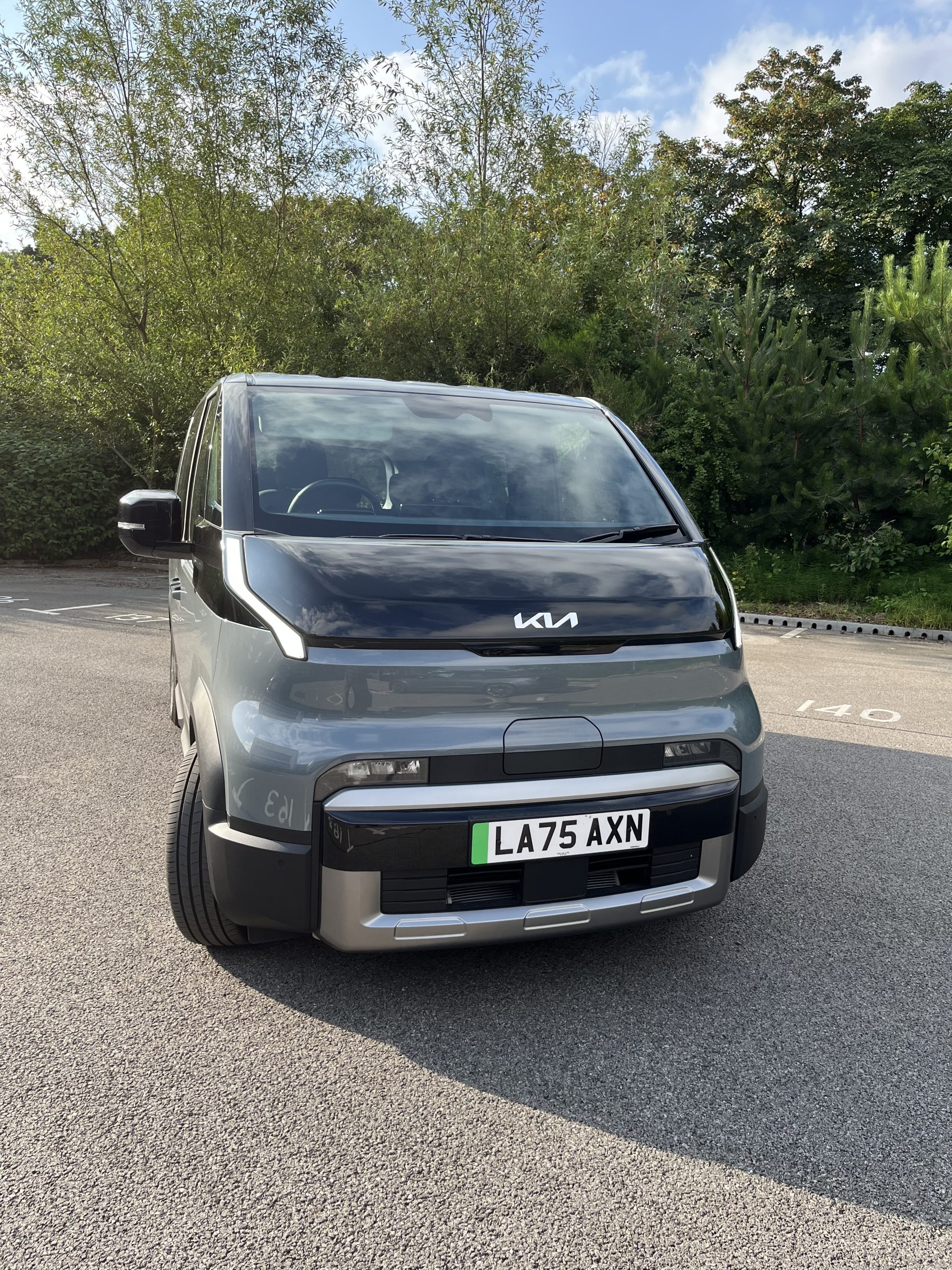
Image: Fleetpoint; all rights reserved
The Competition
Direct rivals are thin on the ground. The Volkswagen ID.Buzz is the obvious comparison and it’s a lovely car, but at nearly £60,000 to start it operates in a different financial universe. We are hoping to review this one in the next couple of months. The Ford E-Tourneo Custom and Citroen e-Spacetourer are more overtly van-based and lack the PV5’s design polish and technology package. Large seven-seat SUV alternatives like the Peugeot E-5008 or Hyundai Ioniq 9 offer more range but far less interior space and don’t give you the same mobile-office flexibility. The PV5 Passenger occupies a genuinely unique corner of the market at a genuinely surprising price.
The Verdict
The Kia PV5 Passenger Plus is the first vehicle I’ve tested in a very long time that made me rethink what a fleet vehicle actually needs to do. It moves people — up to seven of them in the forthcoming version — with real comfort. It moves gear with a boot that shames most SUVs. It looks properly modern. It costs less than £40,000. It sidesteps every tax trap that catches out rivals. It comes with the built-in Geotab telematics that fleet managers usually pay extra for, and it delivered me a two-hour mobile office session on a normal Tuesday with genuine mains power. Every single one of those things earns it stars.
It’s not perfect — the wind noise at 70mph is real, the interior is grey, and the ADAS alerts are the regulatory nuisance we’ve all learned to live with. But the balance of what it does well against what it does not is so lopsided in the PV5’s favour that I have no hesitation giving it the full five stars this month. Kia has genuinely nailed the fleet MPV brief — and possibly the family MPV brief too.
For fleet managers running a mixed operation, or those planning a salary sacrifice scheme where they want a headline vehicle that turns heads at the leadership team meeting, the PV5 Plus deserves to be at the very top of the list. If your requirement includes accessible transport, book time with Kia’s fleet team ahead of the WAV launch. And if you’ve been sitting on the fence about electric people-movers because the ID.Buzz was too expensive and everything else was too vanny — congratulations, the answer has arrived.