
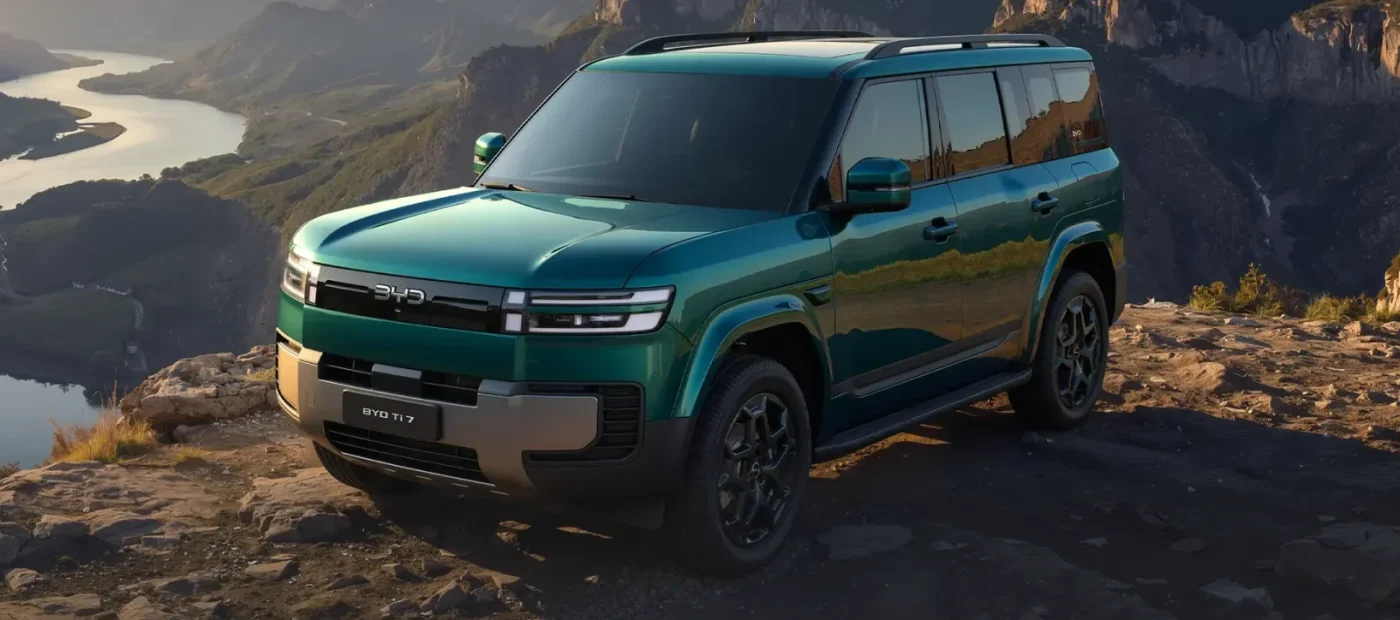
JLR takes BYD to court over “Defender Clone” Ti7 SUV
Jaguar Land Rover (JLR) is facing Chinese carmaker BYD in court over claims that the Ti7 SUV infringes the Defender’s intellectual property. The JLR BYD Ti7 dispute escalated after The Sunday Times reported that bailiffs had seized digital records from BYD’s Dutch offices. The case arrives just before the Ti7 reaches UK showrooms at more than £20,000 less than the Defender. Here is what we know so far.
What has happened in the JLR BYD Ti7 case?
Court-appointed bailiffs acting for JLR raided BYD’s offices in Schiedam and Hoofddorp in the Netherlands in August, according to The Sunday Times. They took digital records. JLR reportedly wanted to secure the material before anyone could destroy it.
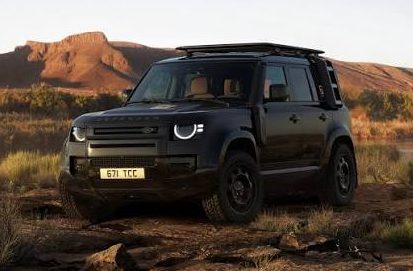
The dispute has since moved into a Dutch courtroom. A court in The Hague will decide whether BYD has a case to answer over the allegations. The two sides are also arguing over how the seized records can be used.
BYD has hit back hard. Its legal team described the action as a “fishing expedition” and argued that bailiffs had seized too many files. JLR’s lawyers see it differently. They accused the Chinese company of obstructing the process.
Neither company wants to say much in public. A JLR spokesperson said the company “does not comment on ongoing legal proceedings”, and BYD has also declined to comment.
Why JLR says the Ti7 goes beyond a similar shape
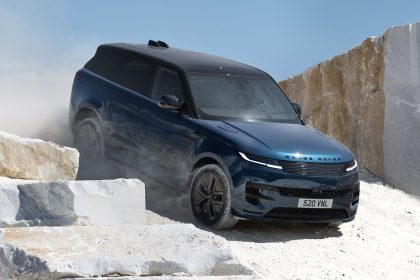
Observers have compared the Ti7 with the Defender since it went on sale in China. The seven-seat plug-in hybrid arrived there in September 2025. Its upright, boxy styling and five-metre length invite the obvious comparison.
However, JLR’s case appears to cover more than looks. British media reports say the claim focuses on alleged reverse-engineering of the Defender, not just the Ti7’s exterior design. JLR suspects BYD dismantled a Defender to study its technology and potentially use it in the Ti7.
That suspicion explains why the digital records matter so much. If they show how BYD’s engineers worked, JLR could argue that the copying went deeper than the bodywork. BYD has not publicly answered that specific claim.
JLR has good reason to protect its flagship. The Defender sold 29,500 units to retail customers between July and September, up from 25,370 a year earlier. Few models matter more to the company’s profits and image.
Ti7 vs Defender: price and specification
The price gap is the headline. BYD will launch the Ti7 in the UK at £47,995, while the Defender 110 starts at £68,465. That difference exceeds £20,000, although the two cars are not identical.
BYD sells the Ti7 in a single Excellence AWD specification. It pairs a turbocharged 1.5-litre petrol engine with electric motors and a 35.6kWh Blade Battery. BYD quotes 402bhp and a 0-60mph time of 4.5 seconds. The company also claims up to 74 miles of electric-only range.
The nearest Defender rival costs more and offers less outright pace. The Defender plug-in hybrid starts at £71,840, with 300hp, a 7.4-second 0-60mph time and 31 miles of electric range. Defender buyers can also choose six-cylinder and V8 engines that the Ti7 cannot match. Equipment levels differ too, so shoppers should compare carefully.
JLR has fought Chinese copycats before
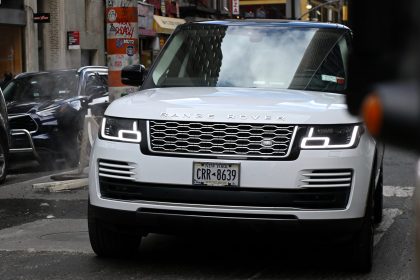
This is not JLR’s first fight of this kind. In 2019, JLR won a case to stop Jiangling Motor Corporation selling a copycat vehicle, after a three-year court battle. The car in question was the Landwind X7, which closely resembled the Range Rover Evoque.
The Beijing Chaoyang District Court found that the X7 copied five unique features from the Evoque. It ordered all sales, manufacturing and marketing to stop immediately and told Jiangling to pay compensation. The court also cited widespread consumer confusion. JLR described the result as a first for the global car industry.
The BYD case differs in important ways. The Landwind case centred on styling and took place in China. The Ti7 case takes place in the Netherlands and centres on alleged reverse-engineering.
That focus may reflect past setbacks. JLR previously failed in a UK High Court bid to trademark the shape of the Defender. Protecting a shape alone has proved hard, so evidence about technology could give JLR a stronger footing.
What the JLR BYD Ti7 dispute means for UK buyers
The Ti7 still looks on course for the UK. First showroom cars are due in November, with customer deliveries starting in January. The legal process is unlikely to reach a final resolution before that January launch.
JLR’s ultimate aim is clear, though. The company wants to prevent the competing model from entering the European market. A courtroom win could change BYD’s plans.
The timing adds pressure. Chinese brands are gaining ground fast in Britain. Chery’s Jaecoo, nicknamed the “Temu Range Rover”, was the UK’s best-selling car in October with 10,813 registrations. Established manufacturers clearly feel the threat.
For now, buyers can still order a Ti7. Keep an eye on The Hague, because the outcome could shape how far Chinese manufacturers can borrow from British icons.