
UK weighs tariffs on Chinese EVs as EU trade rules loom
Britain is considering tariffs on Chinese electric vehicles as the rapid growth of Chinese-owned brands intensifies pressure on the UK automotive industry.
According to reports, Business Secretary Jonathan Reynolds is drawing up options for additional duties on Chinese vehicle imports. The move follows concerns that heavily subsidised Chinese manufacturers could be “dumping” vehicles into the UK market.
No tariffs have yet been announced. A UK government spokesperson told
: “We continue to engage closely with industry so that our approach reflects the sector’s and UK’s national interests.”
The timing is significant for fleet operators. Chinese-owned brands are gaining market share rapidly, while the European Union is developing new measures designed to strengthen domestic automotive manufacturing and reduce reliance on Chinese supply chains.
Chinese cars surge in UK market
The strength of Chinese manufacturers in Britain was underlined by September’s new car registrations.
The SMMT reported 350,518 new cars registered during September, up 12.1% year on year. Battery electric registrations reached a record 99,199, up 36.3%, while plug-in hybrid registrations rose 55.7% to 59,563.
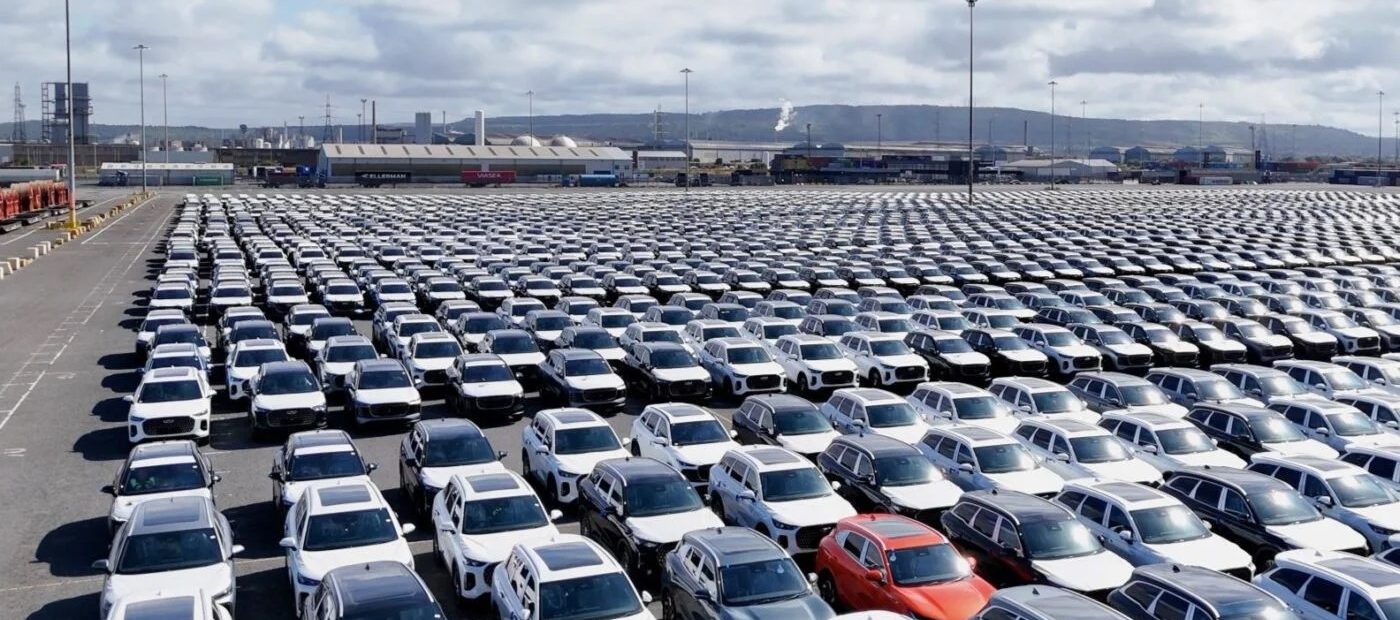
Chinese-owned brands accounted for 27.5% of the September market, according to analysis of the SMMT figures. That means more than one in four new cars registered during the crucial September plate-change month came from a Chinese-owned manufacturer. The year-to-date share has exceeded 21%.
BYD alone registered 20,140 cars in September, giving it a 5.75% market share. Chery recorded 9,788 registrations, while Chinese-owned brands including MG and Jaecoo also performed strongly.
The Jaecoo 7 was particularly notable. It became Britain’s best-selling new car in September, with more than 15,000 registrations according to SMMT data reported by the automotive press.
For fleet managers, the significance goes beyond brand recognition. Chinese manufacturers are increasingly competing through competitive pricing, extensive equipment levels and rapidly expanding dealer networks. They are also helping push down the cost of electric and plug-in hybrid vehicles.
Is Britain following the EU?
The answer is partly, but the situation is more complicated than simply copying Brussels.
The European Commission proposed its Industrial Accelerator Act in March. The legislation would introduce “Made in EU” and low-carbon requirements for public procurement and public support in strategic sectors, including cars and batteries. It is designed to strengthen European manufacturing and reduce strategic dependencies on non-EU suppliers.
The proposal is not, however, a blanket ban on Chinese vehicles or a general import tariff.
The concern for Britain comes from the potential consequences for UK manufacturers and supply chains. The EU is considering rules that could favour European production when public money is involved. UK-built vehicles, batteries and components could potentially receive less favourable treatment unless Britain secures an appropriate relationship with the new framework.
The SMMT has warned that excluding Britain would damage an automotive sector that remains deeply integrated with Europe. Its analysis says UK automotive production directly supports €24 billion of economic activity in the EU and 250,000 jobs.
SMMT chief executive Mike Hawes said: “Excluding the UK from ‘Made in Europe’ would be an own goal, weakening competitiveness, reducing scale and limiting consumer choice.”
The UK government is therefore seeking recognition as a “trusted partner” under the proposed EU arrangements.
There is another issue that matters even more immediately. From 1 January 2027, stricter rules of origin for electric vehicles under the UK-EU Trade and Cooperation Agreement are scheduled to apply. Vehicles that fail to meet the requirements could face a 10% tariff when traded between Britain and the EU.
This is separate from the Industrial Accelerator Act, but the two developments have become closely connected in the automotive sector.
Could Chinese EVs enter the EU through Britain?
This is one of Brussels’ concerns.
The EU has already imposed additional duties on Chinese battery electric vehicles following its investigation into Chinese government subsidies. The measures sit alongside the EU’s normal import duty and vary between manufacturers.
BYD faces a 17% countervailing duty, Geely 18.8% and SAIC 35.3%. Other cooperating manufacturers face 20.7%, while non-cooperating companies face 35.3%. The EU also applies its standard 10% import duty to these vehicles.
That means the effective EU tariff burden can reach about 45% for manufacturers subject to the highest additional duty.
Britain did not introduce equivalent measures. As a result, Chinese-built vehicles entering the UK face the standard UK tariff rather than an EU-style anti-subsidy duty.
That difference matters if the EU tightens its rules further. Brussels does not want Britain to become an easy route into the European market for vehicles that face substantially higher costs when entering the EU directly.
A Reuters report in September said the EU had urged Britain to raise tariffs on Chinese cars and align more closely with European trade policy. One EU official was quoted as saying: “A customs union would solve most of the problems of ‘made in Europe’.”
The UK government, however, has stressed that its trade policy will be determined independently.
Are Chinese manufacturers actually dumping cars?
This is perhaps the most important question.
“Dumping” has a specific meaning under trade law. It generally involves exporting goods at a price below their normal value, with evidence that this causes or threatens injury to domestic industry.
The EU has already concluded that Chinese BEV manufacturers benefit from government subsidies and that those subsidies threaten economic injury to European producers.
That does not automatically establish dumping in the UK.
In fact, the UK government confirmed in July that the independent Trade Remedies Authority had not initiated an investigation into Chinese electric vehicles. Ministers said Britain remained concerned about “overcapacity and underlying market distorting practices” but stressed that any action would have to serve UK industry.
That distinction is important. The rapid increase in Chinese vehicle registrations is clear evidence of competitive pressure, but high sales alone do not prove unlawful dumping.
Chinese manufacturers may also be winning customers because they offer competitive products at attractive prices. The September figures show that British buyers and fleet operators are responding strongly to that proposition.
What level could UK tariffs reach?
There is no confirmed UK tariff rate at present.
The most frequently discussed benchmark is the EU’s maximum effective rate of around 45%, combining the normal 10% import duty with the highest countervailing duty.
Reports suggest Britain could consider matching the EU approach. That does not necessarily mean every Chinese EV would attract a 45% tariff. A UK system could follow the EU model, with different rates according to manufacturer and the findings of a trade-remedies investigation.
The UK could therefore impose additional duties in the region of the EU’s 17% to 35.3% countervailing rates, on top of the existing 10% tariff. But any final figure would need to follow the UK’s own legal and economic assessment.
The government has already demonstrated that it is willing to use this mechanism. In August, the Trade Remedies Authority recommended provisional anti-dumping measures on Chinese boom lifts after finding that dumped imports had caused or were causing injury to UK industry.
That precedent suggests the UK has the machinery to act, but an automotive investigation would still require evidence.
What does this mean for fleets?
For fleet operators, tariffs could create both risks and opportunities.
Higher duties would probably increase the cost of affected Chinese-built vehicles, although manufacturers could absorb some of the increase to protect market share. Leasing companies and fleet buyers would also need to reassess whole-life costs, residual values and monthly rental rates.
There is also a wider question around competition.
Chinese manufacturers have helped accelerate the UK’s transition towards electrification by bringing more affordable EVs and PHEVs to the market. September’s figures demonstrate just how quickly customers are embracing that choice.
The government therefore faces a difficult balancing act. It wants to protect British automotive manufacturing and maintain access to the EU market without undermining competition or making electric vehicles less affordable.
For now, the key point is that Britain has not introduced tariffs on Chinese EVs. It is considering its options at a time when Chinese-owned brands are taking an increasingly large share of the UK market.
The eventual decision is likely to be shaped by three competing priorities: protecting UK automotive manufacturing, maintaining frictionless trade with Europe and keeping electric vehicles affordable for consumers and fleets.
The outcome could have a significant influence on Britain’s fleet market as the country moves towards its increasingly demanding zero-emission vehicle targets.