
The compounding effect of fleet fuelling
For fleet managers, the most disruptive problems are not always the biggest ones. Often, it is the smaller issues that demand attention, interrupt the flow of vehicles and leave less room to deal with whatever happens next.

Joost Jansen, Business Development Manager, Dover Fueling Solutions, discusses ways in which the refuelling of HGVs can be made more efficient.
Take the start of a morning shift, when several heavy goods vehicles (HGVs) are due out within the same departure window and a handful of minor delays begin to gather. One vehicle needs to reposition to reach its second tank. Another is taking longer than expected to fill. A third is held at the dispenser while a fuel card issue is being resolved. The queue grows and what should have been a routine part of the operation becomes another problem for a fleet manager.
Across a 50-vehicle fleet, just five extra minutes spent refuelling per vehicle adds up to more than four hours of lost fleet time, roughly equivalent to taking one driver off the road for half a standard nine-hour driving day. That makes the physical design of the fuelling operation an obvious place to start reducing avoidable delay.
Built around the way the fleet fuels
There is no single configuration that works for every operation. A smaller vehicle base may need little more than a single dispenser, while a larger transport depot may be dealing with concentrated HGV demand around shift changes and multiple fuelling positions.
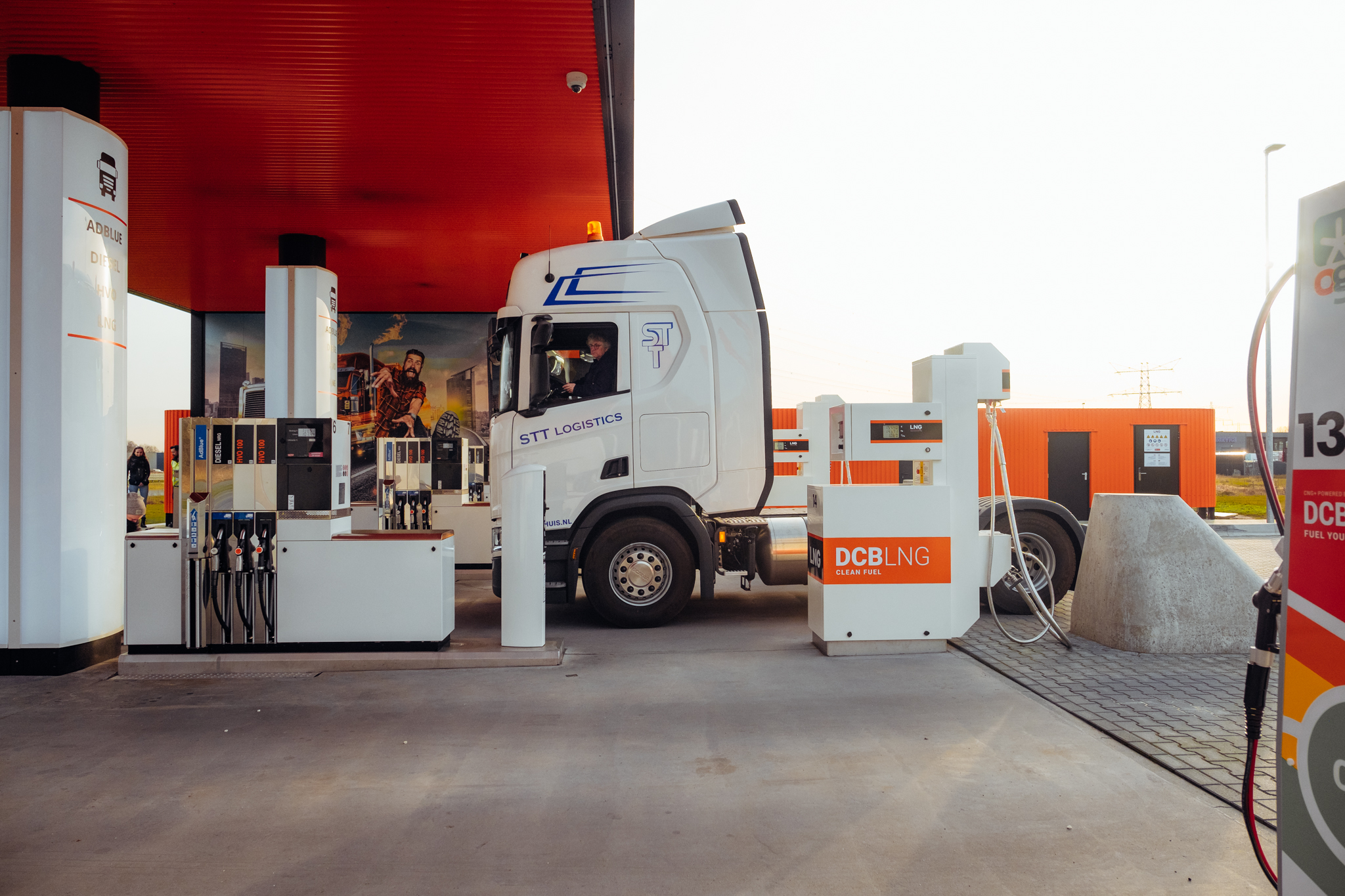
For HGVs, with saddle tanks on both sides, a master and satellite dispenser arrangement can allow both tanks to be filled during the same stop without repositioning the vehicle. Keeping both fills within a single transaction can also make the process easier to track and reconcile. Elsewhere, the priority may be making sure enough fuelling positions remain usable when demand peaks or finding a configuration that works within the existing site.
Capacity is part of that calculation. Average volumes can disguise the periods when the site is under greatest strain. Tank size and pumping capacity affect how quickly vehicles can be served, while the number of usable fuelling positions determines how well the site can cope when several arrive at once.
Where AdBlue® is also required, it needs to fit into that flow rather than becoming another stop within it. Compact solutions such as the Wayne Century® 3 AdBlue® dispenser and Tokheim Quantium® FS AdBlue® dispenser can provide on-site capability where space is limited, with satellite and other dispenser formats offering further flexibility.
But creating enough physical capacity only solves one part of the problem. Once a vehicle reaches the dispenser, every step required to release it again matters too. That makes the transaction itself the next potential constraint.
Every transaction has to work
Fuel-card transactions need to be secure and straightforward, while still leaving the operator with a clear record for reconciliation. The driver experiences payment as part of the wider fuelling stop, so a problem at this stage does not stay neatly contained as a payment issue.
A failed authorisation that adds several minutes can land on top of time already lost waiting for a fuelling position or filling the vehicle. At a busy point in the day, those delays can begin to stack, holding the vehicle at the dispenser for longer and creating another issue for the fleet team to resolve.
Systems such as DFS Crypto NOVA® can support secure transactions at the point of payment, while Tokheim OASE™ can support the authorisation and processing behind them across a broad range of fuel and bank cards, acting as the central gateway between the payment point and the card issuer. For fleet operators, that breadth of acceptance can reduce the risk of a payment issue holding up the refuelling process. Reducing friction at payment helps keep vehicles moving but another key factor is whether the fuel itself is available.
Knowing before it becomes urgent
Where fuel is stored on site, another key consideration is knowing what is happening inside the tanks before a discrepancy becomes something somebody must stop and deal with. Automatic Tank Gauging (ATG) can provide visibility over inventory levels and tank activity, while wetstock management can connect that picture with delivery and dispensing data.
A discrepancy may relate to a delivery issue, meter drift, water ingress, or potential fuel loss. Catching it early gives operators the chance to investigate while it is still a fuel-management issue rather than a problem affecting vehicles due to refuel. Solutions such as the ProGauge MagLink LX Ultimate® console and DX Wetstock® can support earlier intervention by monitoring tank inventory and deliveries, as well as water levels.
The important shift is from reacting at the point of disruption to dealing with the issue while there is still room to act. That reduces the chance of stock becoming the next thing that lands on the fleet manager’s desk. But keeping today’s operation under control is only part of the challenge. The infrastructure also has to remain useful as the operation around it changes.
Built to last and built to change
Fleet sites inevitably change over time as vehicle numbers fluctuate, sites are reorganised and new fuels or vehicle technologies are introduced. Infrastructure therefore needs to adapt as operators’ requirements evolve.

At one site, change might mean adding another fuelling position or satellite dispenser. At another, it could mean accommodating a different vehicle mix or adjusting the wider systems supporting the operation. Payment, ATG and wetstock systems need to remain useful through those changes too.
That is where modularity becomes useful. If individual components can be replaced or upgraded without requiring the wider system to be rebuilt, operators have more scope to adapt the infrastructure in stages as requirements change, rather than turning each change into a larger intervention.
Quality equipment still needs to withstand high-frequency use over a long working life, but longevity is not simply about how long the original equipment remains in place. It is also about whether the system can absorb change without every new requirement becoming a major intervention.
As the fleet changes, the pressure placed on the fuelling operation changes with it. Infrastructure that can adapt gives operators more room to respond before those changes start creating new constraints.
When the whole keeps working
A delay at the dispenser, a payment issue or a stock problem may begin in one place, but the effects can travel quickly through the rest of the operation. The more those issues stack up, the more likely they are to turn a routine fuelling stop into something the fleet team has to actively manage.
For fleet managers, the aim is to keep as much of that friction out of the day-to-day operation as possible. Good infrastructure will not remove every problem, but it can stop small issues becoming bigger ones and reduce the number of headaches that land on the fleet manager’s desk.