
Maritime Transport trials Renault Trucks E-Tech T eHGVs
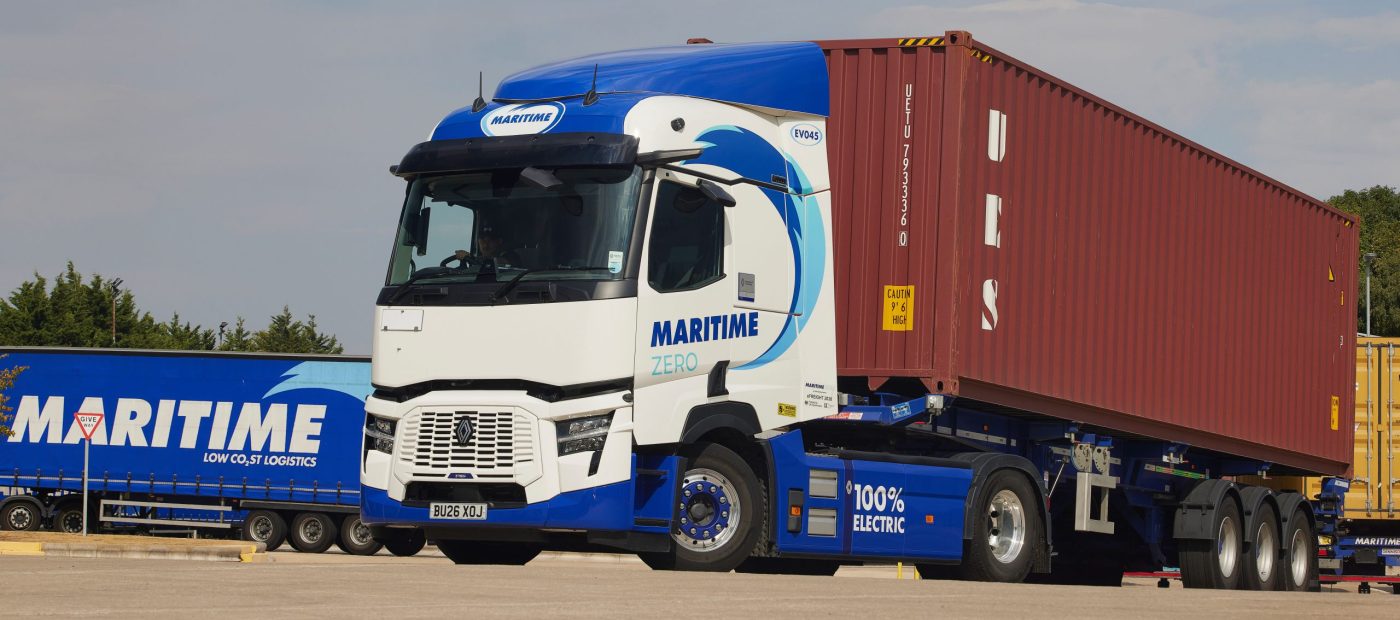
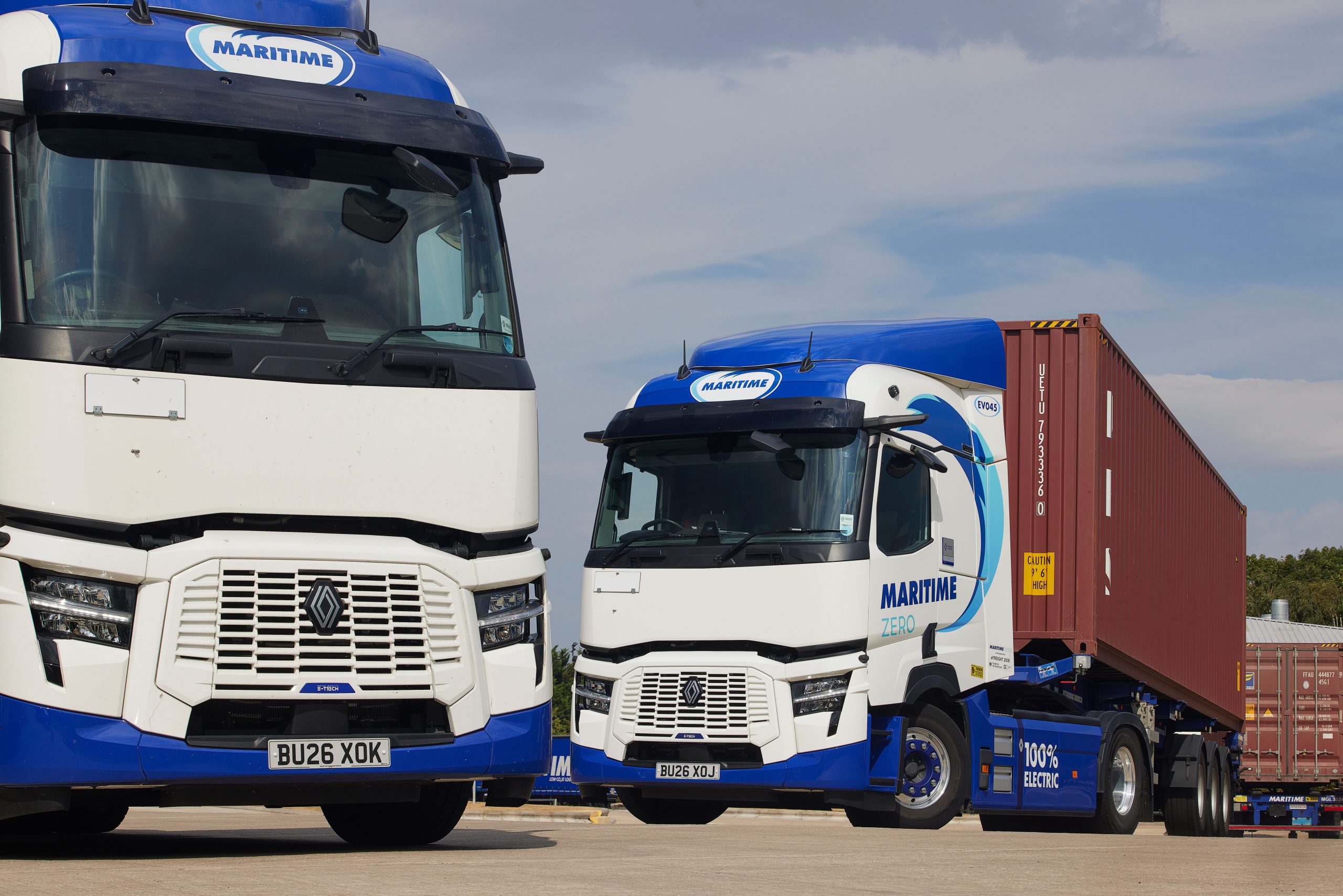
Maritime Transport has deployed five Renault Trucks E-Tech T 4×2 tractor units through eFREIGHT 2030, adding to a 56-strong electric HGV (eHGV) fleet that is helping the logistics specialist build real-world evidence on zero-emission haulage.
The vehicles are operated through Maritime ZERO, a dedicated division established in 2025 to oversee the company’s zero-emission activity across vehicles, charging infrastructure, software and data. The long-term aim is for Maritime ZERO to be fully integrated into Maritime’s day-to-day operation rather than remain a separate division.
Initial deployments have included Maritime’s Wakefield and Avonmouth operations, and the trucks will move around the network as its zero-emission operation develops. At Wakefield, the E-Tech Ts handle first and final mile container movements from the company’s inland rail terminal. Containers arriving by rail from deep-sea ports are transferred onto the electric tractor units for onward road delivery, including work for a major UK retailer.
The 42-tonne E-Tech Ts can travel up to 300km on a single charge. They are powered by six 90kWh batteries and three electric motors, delivering up to 490kW of continuous power and 2,400Nm of maximum torque. Power is transmitted through Renault Trucks’ Optidriver AT 2412 12-speed automated gearbox.
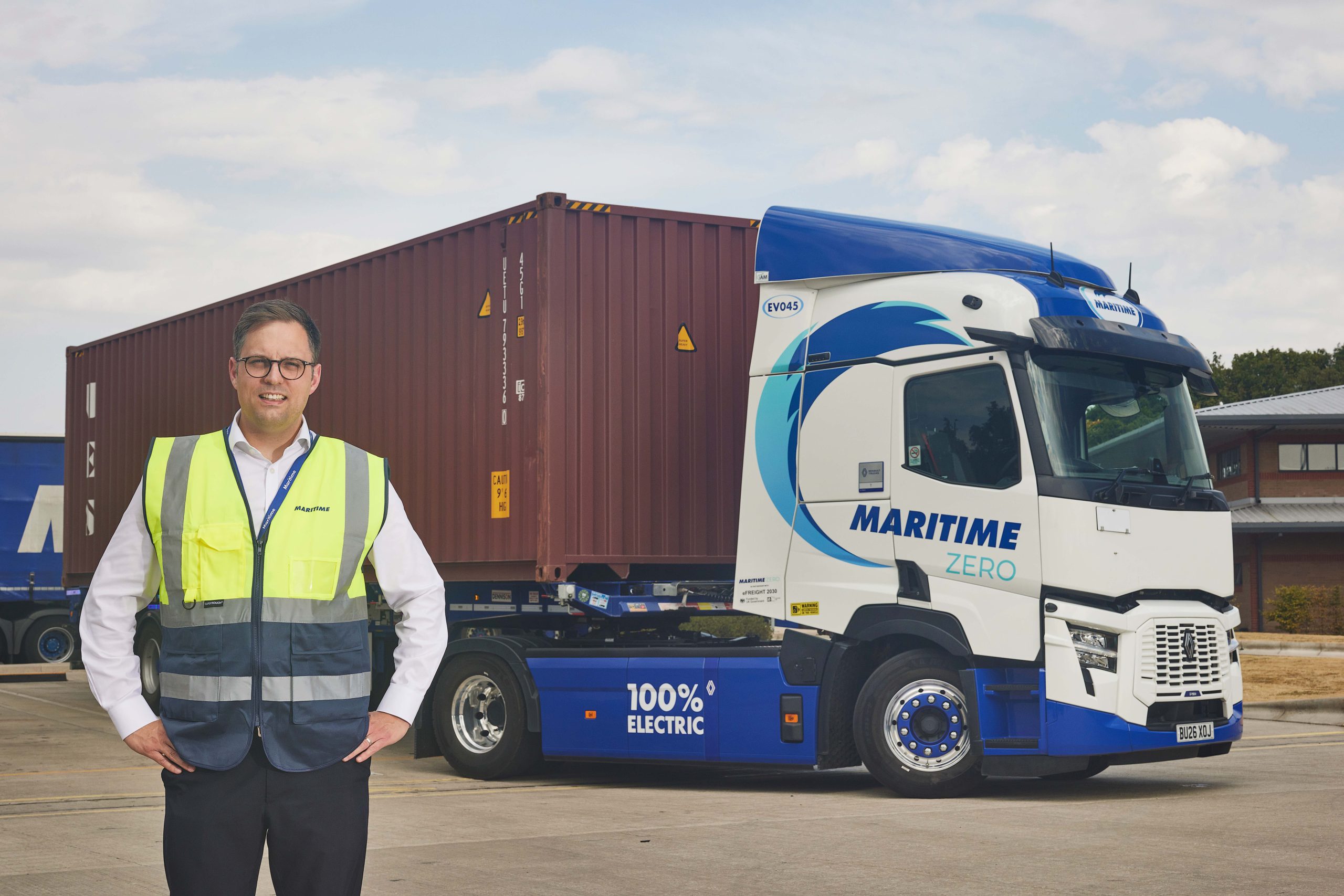
Chris Buck, EV Network Manager at Maritime Transport, said: “These new Renault Trucks E-Tech Ts have been put straight to work in our operation. If electric HGVs are going to become a viable alternative to diesel, we need to work them hard and understand exactly where and how they perform best.
“We’re currently using the Renault Trucks on first and final mile work from our rail terminals, where we know the routes, payloads and charging opportunities well. As we build our experience and charging network, we’ll continue to look at how we can increase their utilisation across the operation.”
Maritime began introducing eHGVs in January 2026 and has deliberately chosen vehicles from a range of manufacturers. This allows the business to assess how different trucks perform in day-to-day operating conditions before making longer-term fleet decisions.
Tom Williams, Deputy CEO at Maritime Transport, explained: “Electric HGV technology is still developing and we don’t yet know which trucks will prove the best fit for every part of our operation. We wanted to cast the net wide and understand what is available from a range of manufacturers.
“Building that experience across different vehicles will help us better understand their performance and give us the evidence to inform future fleet decisions.”
Maritime’s extensive road and rail freight network gives it a significant advantage in deploying electric trucks effectively. Long-distance container movements can be completed by rail, removing any range anxiety, while the E-Tech Ts undertake the onward road leg from strategically located inland terminals.
The company’s growing charging network also gives it increasing flexibility over how and where the vehicles operate. The Renault Trucks will predominantly charge overnight at their inland bases, but there are opportunities to charge during the day, when energy is often at its cheapest. As utilisation increases and the vehicles cover more miles, they will begin drawing on other charge points across Maritime’s national network.
Chris continued: “The more we run the eHGVs, the greater the potential operational and environmental benefit. We want to understand how far we can push them within the applications they are suited to, while continuing to learn where electric trucks can deliver most effectively.”
The E-Tech Ts are the first vehicles Maritime has purchased directly from Renault Trucks, although Renault Trucks vehicles have previously joined the fleet through business acquisitions. The evaluation is still at an early stage, but initial experience has been positive, particularly for reliability and driver acceptance.
Chris said: “Reliability has been very good so far, which is one of our most important KPIs. The truck has to perform on a par with, or better than, its diesel counterpart and remain available for work.
“The drivers have taken to them well too. There can be some caution when you introduce new technology or a different manufacturer, but once drivers get into electric trucks and experience them for themselves, that tends to disappear very quickly.”
Maritime is also using Renault Trucks’ Optifleet connected fleet management system to monitor the E-Tech Ts, providing data on vehicle efficiency, driver behaviour and location.
Chris added: “Optifleet gives us a lot of information and we can select what is most useful to us. Efficiency is particularly important with an electric truck, and the data adds to what we are learning operationally about how the vehicles perform.”
Over the longer term, Maritime will assess uptime and maintenance performance alongside battery degradation, vehicle longevity and residual values.
Tom explained: “Electric trucks represent a significant capital investment, so whole-life performance really matters. We need to understand how well the vehicles stand up over time, and those findings will be important when we come to assess the next phase of our fleet.”
Renault Truck Commercials and Renault Trucks are supporting Maritime throughout the introduction and operation of the E-Tech Ts, with maintenance handled by Renault Truck Commercials. At an operational level, Renault Trucks E-Mobility Transition Manager Jack Millington has worked closely with Maritime on vehicle familiarisation, charging and technical support as the business builds its experience of electric HGVs.
Matt Sadler, Sales Director, Eastern Region at Renault Truck Commercials, commented: “Maritime is taking a rigorous, operationally focused approach to electrification, and the early feedback on the E-Tech Ts is encouraging. Our focus is on supporting Maritime throughout the evaluation and helping the business get the best from the vehicles as its experience of electric HGVs grows.”
eFREIGHT 2030 forms part of the UK Government’s Zero Emission HGV and Infrastructure Demonstrator (ZEHID) Programme, funded by the Department for Transport and delivered in partnership with Innovate UK. As a lead contributor, Maritime is playing a central role in building the real-world evidence that will determine where and how zero-emission HGVs can operate most effectively across UK logistics. The five E-Tech Ts will continue to operate throughout the five-year trial, generating performance data that will help inform the wider ZEHID programme.