

Making charging infrastructure work harder for electric HGVs
Ask a UK haulier why they haven’t gone electric and the answer is rarely “the vehicles can’t do the job”. Electric HGVs now exist that can cover medium- and long-haul work within legal driving limits, where there is suitable charging in depots and along routes. The question of whether an electric HGV can do the job has largely been answered. What remains is the question of whether the investment makes sense, and that is where the UK market is stuck.
Moritz Vornfeld, Head of Fleet Charging at Kempower, looks at how can fleet operators make charging infrastructure commercially viable while the market is still transitioning.
Support is in place, but momentum isn’t
The UK has built an extensive incentive framework. The Zero Emission Truck and Van Grant offers up to £81,000 towards the heaviest trucks, as part of an £877 million programme running to 2030. The first round of the Depot Charging Scheme covered 70% of charge point and civil costs, up to a maximum of £1 million per organisation. For cars and vans, there are the Electric Car and Van Grants, while the LEVI fund, Home Chargepoint Grant and Workplace Charging Scheme support infrastructure and Benefit in Kind rates make electric company cars more attractive.
Yet in the first half of 2026, zero-emission HGV registrations in the UK fell 6.6%, leaving them at under 1% of the market. Across the EU, electric and plug-in hybrid truck registrations grew by almost 48% over the same period. The UK is not short of incentives, it is short of momentum.
The barrier, increasingly, is not technical. It is psychological and commercial: operators are faced with a long-term capex decision in a sector where low operating margins leave little room for a bet that doesn’t pay back.
What the Depot Charging Scheme tells us
The Depot Charging Scheme shows what targeted funding can do. It has helped stimulate early demand in a market that needed a push. But it also shows the downside. Grants are capped, time-limited and oversubscribed by nature, and if an operator misses one round, their project can sit on hold until the next. That’s the subsidy paradox: funding that speeds the market up can also keep things on hold.
No haulier should plan around the next round turning up on time. The best depot projects are the ones that would still make sense without a grant, and that comes down to how much the charging infrastructure gets used.
Utilisation is the metric that matters
A high-power charging site that sits idle overnight or between shifts is stranded capital, regardless of how it was funded. The depots that make the numbers work are designed to be used more: serving their own fleets, then opening spare capacity to other fleet operators through special agreements.
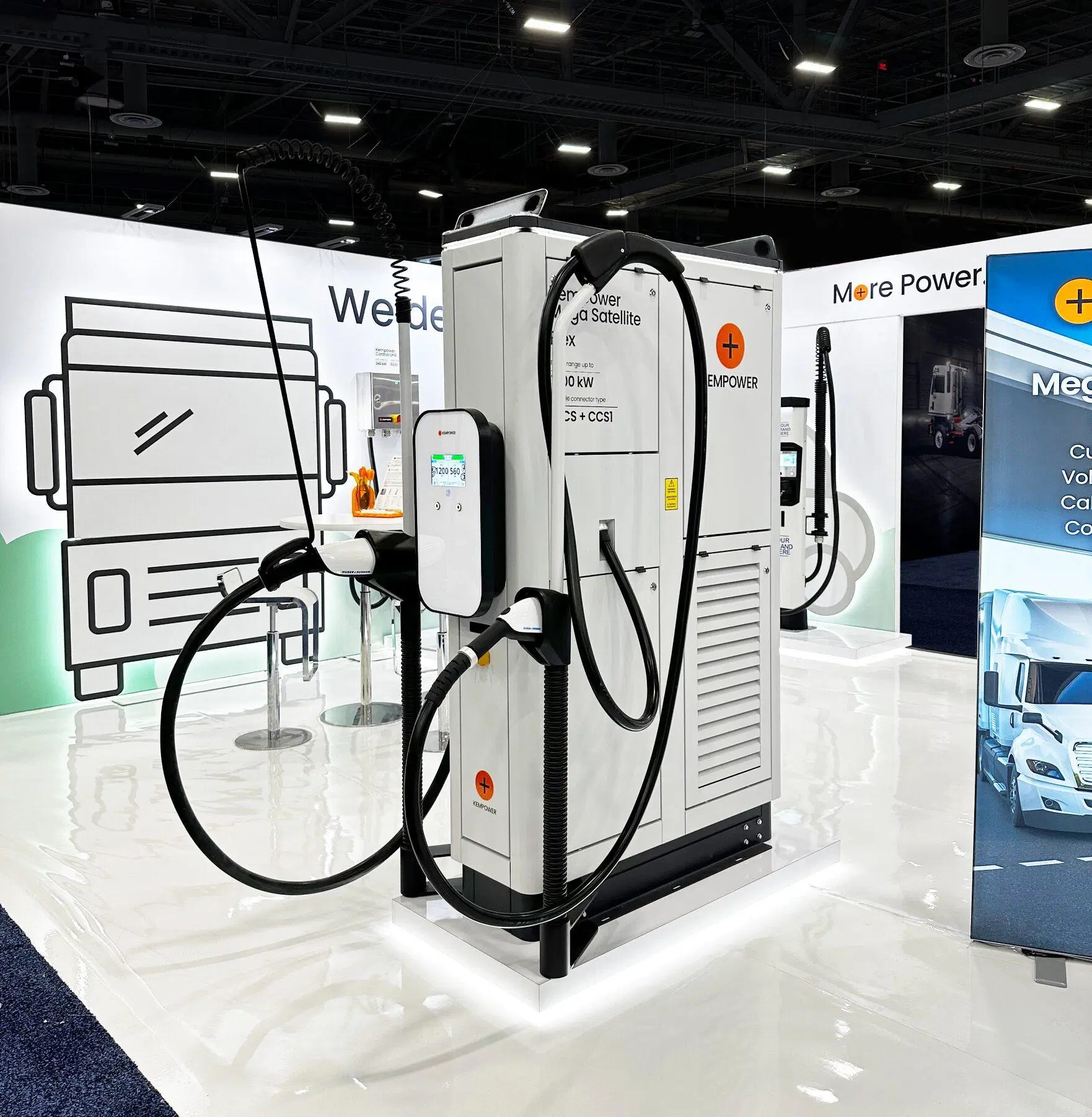
The hardware matters here too: sites need to be flexible to prepare for the changing fleet mix, from CCS today, through interim options such as double-gun CCS charging, to the Megawatt Charging System (MCS), which delivers over 1MW through a single connector and can fully recharge a heavy vehicle within a driver’s break and short turnarounds. Dynamic power sharing technology also plays into flexibility – the ability to distribute power to where it’s needed in real time optimizes charging time, increases utilization and reduces oversizing (installing more capacity than the site needs).
The UK has a natural advantage. The average domestic HGV haul is around 105km (134km for articulated vehicles), so for many operations the question is less about range than about having power at the depot. Compared with a country like Norway, where distances are far greater, the UK’s compact geography suits electric HGVs well.
Grid connection is another frequent objection, and rightly so: queues for connections can hold up projects for years. But it is a problem with a proven workaround: battery storage can bridge the gap while grid upgrades catch up, and shave peak demand costs once they arrive.
What it looks like in practice
At the Alfredsson Transport depot in Norrköping, Sweden, owner Erik Alfredsson built a site to serve his own fleet and offer a public megawatt charging stop to other fleets passing through. Powered by a 1.2 MW Kempower Power Unit, it ran one of the first public MCS sessions using the official communication protocol, delivering a peak of 728 kW to an MCS-equipped Scania e-truck while charging a second vehicle over CCS, for a combined 864 kW. The site’s software can give priority to MCS-equipped vehicles, so long-haul drivers get a full charge within their break while CCS vehicles still get served.
Rather than wait for a grid upgrade, the depot paired its chargers with a 1.2 MW battery energy storage system and a 400 kW solar park, coordinated by an energy management system that shaves peak demand costs and can trade into local energy markets. The result is a site designed to cut running costs and bring in extra income, which can help the investment pay back sooner.
What the market needs next
Two things would change the picture. The first is robust policy that lasts. The UK has announced clear dates for ending sales of new non-zero-emission HGVs: 2035 for those up to 26 tonnes and 2040 for all new HGVs, and operators need confidence that the path to them will hold steady through political change. Long-term fleet investment depends on this.
The second sits with operators. They should run the total cost of ownership numbers for electric HGVs against their own routes and duty cycles, factoring in available grants and, crucially, how a shared, well-utilised depot changes the equation. For many, the figures will look better than they may think.
The technology is ready, the vehicles are on sale and the funding exists. The operators who move first will be the ones who treat the depot as a commercial asset rather than waiting for the next grant round.