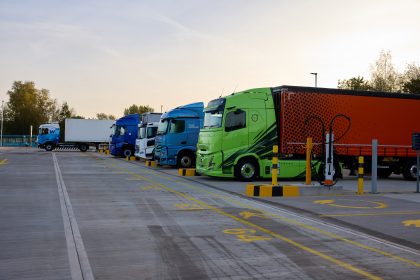


EV charger load balancing to keep commercial fleets moving
The electrification of commercial fleets is creating a new challenge for fleet managers looking to charge more vehicles without driving up electricity costs or investing heavily in additional power capacity. As businesses add electric vehicles, the pressure on depot charging infrastructure is increasing, making the way electricity is distributed as important as the number of charging points installed, but there is a solution. It is called load balancing and it offers a realistic way to manage that demand, writes Phil Wiltshire, contracts manager at Pensdown, the electrical people.
The transition to electric vehicles presents fleet managers with a number of practical challenges. In addition to selecting the right vehicles and planning routes, businesses need to consider how and where their vehicles will be charged, how much electricity will be required and whether their existing electrical infrastructure can cope with the additional demand.
For businesses operating fleets of electric cars, vans or other commercial vehicles, the challenge can be particularly significant. Vehicles may return to the depot at similar times, creating a concentrated demand for electricity as drivers plug in to recharge. As fleets grow, the pressure on the site’s electrical supply increases.
Installing more charging points might appear to be the obvious solution, but the number of chargers a site can support is often limited by the capacity of its existing electrical infrastructure. Upgrading that infrastructure can be expensive and may involve considerable disruption.
What is EV charger load balancing?
This is where EV charger load balancing comes into play. By intelligently managing the electricity available to charging points, businesses can accommodate more vehicles without necessarily having to increase their incoming electricity supply.
Load balancing is a system that controls how much electricity is supplied to individual EV chargers at any given time. It monitors the available electrical capacity and distributes it across the connected chargers, ensuring that the total demand remains within the site’s limits.
For a fleet operator, this is particularly relevant when several vehicles return to the depot together. Without load balancing, simultaneous charging can place considerable pressure on the electrical supply. In some cases, the installation may not have sufficient capacity to support every vehicle charging at full power.
A load balancing system manages this demand automatically. If electricity consumption elsewhere on the site increases, the system can reduce the power available to EV chargers. When demand falls, more capacity becomes available for charging. This means that charging rates can change throughout the day and night, depending on the electricity available and the requirements of the wider site.
For fleet managers, the important consideration is not necessarily charging every vehicle at maximum speed. It is ensuring that vehicles receive sufficient charge within the time available, so they are ready for their next shift.
Static and dynamic load balancing
There are two main approaches to load balancing: static and dynamic. Static load balancing allocates a fixed amount of electricity to each charger. The allocation remains unchanged, regardless of how much electricity the rest of the site is using or how many vehicles are connected.
Although this approach is relatively straightforward, it offers limited flexibility. A fixed allocation may restrict charging capacity when additional power is available, while the electrical infrastructure may need to be sized to accommodate anticipated demand.
Dynamic load balancing takes a more responsive approach. It monitors the site’s overall electricity consumption and adjusts the power available to each charger in real time. For example, if a depot’s electricity demand increases because of other equipment or building operations, the system can reduce the charging load. When that demand falls, additional power can be made available to the vehicles.
For fleet operators with changing charging requirements, dynamic load balancing can provide greater flexibility. It allows available electrical capacity to be used more effectively, rather than allocating the same amount of power to every charger regardless of demand.
Keeping vehicles ready for the next shift
For fleet managers, one of the most important considerations is vehicle availability. A vehicle that has not received sufficient charge overnight may be unable to complete its scheduled work the following day.
This is particularly relevant to delivery companies, logistics operators and businesses running large fleets of electric vans. Vehicles may return to the depot within a relatively short period, creating a significant demand for charging overnight.
Load balancing can help manage this demand by distributing the available power across the charging network. Where the system allows, charging can also be prioritised according to operational requirements.
For example, vehicles scheduled to leave early in the morning may need to receive priority over those that will not be required until later in the day. This can help fleet operators make better use of the available charging capacity.
However, effective load balancing needs to be supported by careful planning. Fleet managers should consider vehicle usage, return times, departure schedules and the amount of charge required. These factors will help determine the number of chargers needed and how the available electricity should be distributed.
The objective is to develop a charging system that reflects the way the fleet actually operates, rather than relying solely on the number of vehicles or charging points.
Controlling installation and energy costs
Installing EV charging infrastructure can represent a substantial investment, particularly for businesses planning to electrify a large fleet. One of the main considerations is the capacity of the site’s existing electrical supply. If it cannot support the anticipated charging demand, an upgrade may be required. Depending on the site, this could involve new distribution boards, cabling or even a new substation. Such work can add significantly to installation costs and extend project timescales.
Load balancing can help reduce the need for these upgrades by managing the available capacity more efficiently. While it cannot remove the need for additional infrastructure in every situation, it can allow businesses to install more charging points within the limits of their existing supply.
There are also potential benefits in managing electricity costs. By moving non-urgent charging to periods when electricity is cheaper, businesses may be able to take advantage of off-peak rates and time-of-use tariffs.
For fleets that charge predominantly overnight, this can be particularly relevant. A suitable charging strategy can help ensure that vehicles receive the power they need while making better use of lower-cost electricity periods. The potential savings will depend on the site’s electricity tariff, charging requirements and the way the system is configured.
Planning for future fleet growth
Fleet electrification is unlikely to be a one-off exercise for many businesses. As more vehicles are replaced with electric alternatives, the demand for charging infrastructure will increase. Installing a charging system that only meets immediate requirements could leave companies facing further investment as their fleets expand.
Load balancing can provide greater flexibility by allowing additional charging points to be integrated into an existing system, subject to the site’s available electrical capacity and the charging requirements of the fleet.
This does not mean that an unlimited number of chargers can be installed without upgrading the supply. Rather, it allows businesses to make better use of the capacity they have and plan future expansion more effectively.
For fleet managers, this makes it important to consider longer-term requirements when planning an installation. The number of vehicles expected to be electrified, their daily mileage and their charging schedules should all inform the design.
Connecting charging with renewable energy
Some businesses are also looking at ways to reduce the cost and environmental impact of charging by integrating EV infrastructure with renewable energy and battery storage. Solar photovoltaic panels, for example, can provide electricity for vehicle charging when sufficient generation is available. Load balancing can help manage how that electricity is distributed alongside the site’s other energy requirements. Battery storage can further provide additional flexibility by storing electricity for use at a later time, including during periods of higher demand.
For fleet operators, the benefits will depend on the site’s energy infrastructure, vehicle schedules and the availability of renewable generation. However, integrating these systems into the initial design can provide opportunities to manage energy use more effectively.
Planning your EV charging installation
Successful EV charging installations begin with a clear understanding of how a fleet operates and the electrical capacity available at the site. Fleet managers should consider how many vehicles will need charging, when they return to the depot, how long they remain there and how much charge they require before their next journey. These operational requirements need to be considered alongside the site’s existing electricity consumption.
An electrical contractor experienced in commercial EV charging can assess the available supply, recommend an appropriate charging configuration and determine whether load balancing is suitable for the installation. It is also important to consider how the system could accommodate future changes in fleet size and charging demand.
Making load balancing work for your fleet
As companies continue to transition to electric vehicles, charging infrastructure will become an increasingly important part of fleet operations. Load balancing offers a way to manage electrical demand, make better use of existing capacity and support the expansion of charging facilities.
For fleet managers, the priority is to ensure that the charging system works around the operational needs of the business. With careful planning and the right infrastructure, it is possible to provide the charging capacity needed today while allowing for the demands of an increasingly electric fleet.