
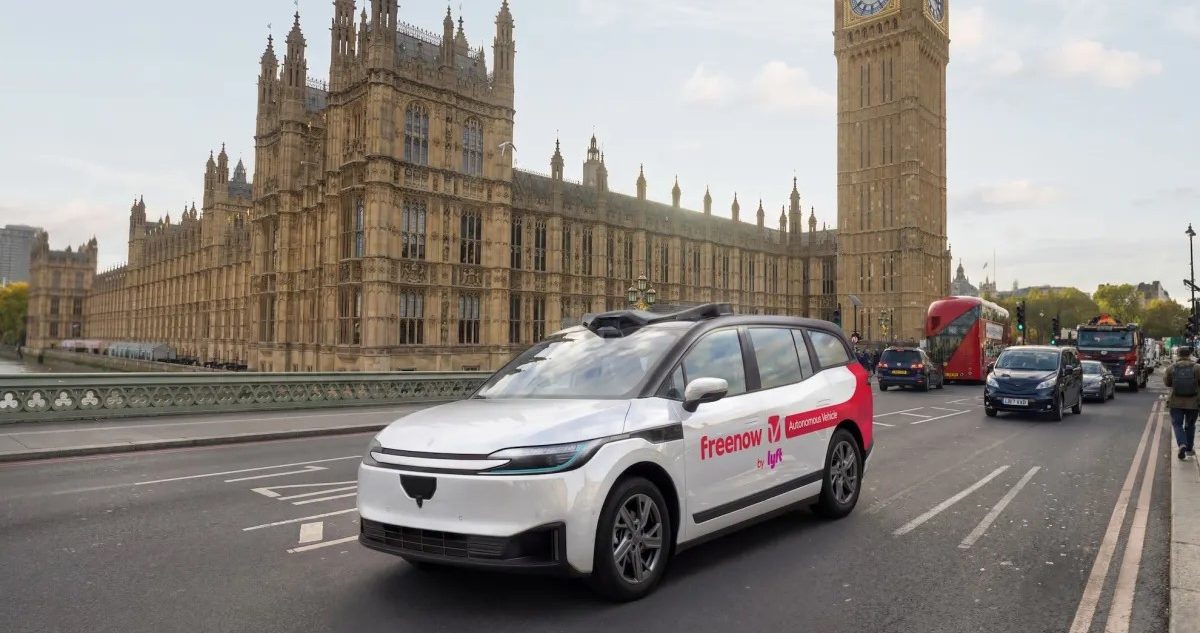
Baidu has officially begun testing its autonomous vehicles on London’s streets, marking another significant milestone in the UK’s journey towards self-driving transport. The Chinese technology giant’s Apollo Go robotaxi started trials this week in partnership with Freenow by Lyft, adding further momentum to an increasingly competitive market that already includes Waymo and Wayve, which are both preparing autonomous taxi services for the capital.
The launch underlines London’s growing importance as a proving ground for autonomous vehicle technology, with the city now attracting some of the world’s largest self-driving developers as the UK positions itself as a leader in connected and automated mobility.
https://depositphotos.com/portfolio-29839682.html?content=photo
Testing began on Tuesday, 28 July, with Apollo Go’s sixth-generation RT6 autonomous vehicles operating in the London Borough of Brent. The vehicles are currently accompanied by trained safety operators while they collect data and adapt to one of the world’s most demanding urban driving environments. Public passenger services are expected to begin during 2027, subject to regulatory approval.
Apollo Go has already accumulated millions of autonomous journeys across China, making Baidu one of the world’s largest commercial robotaxi operators. London represents one of its most significant international expansions to date.
Thomas Zimmermann, CEO of Freenow by Lyft, stressed that the technology is intended to complement, rather than replace, professional drivers.
“As a platform with deep roots in the taxi industry, our priority is ensuring that autonomous technology supports the professional drivers who keep London moving.
“By integrating these purpose-built, autonomous vehicles from Baidu’s Apollo Go into the Freenow by Lyft ecosystem, we will give Londoners more sustainable choices to travel, encouraging them to choose shared mobility services over personally-owned vehicles.”
Freenow said the autonomous vehicles will operate alongside its existing network of black cabs and private hire vehicles, creating a hybrid platform designed to improve vehicle availability and reduce waiting times rather than replace traditional services.
Nan Yang, Vice President of Baidu and General Manager of the company’s Intelligent Driving Group overseas business, described the London trials as a major international milestone; “The arrival of Apollo Go vehicles in London marks a defining milestone in our global expansion.
“Testing our autonomous fleet in one of the world’s most iconic and complex urban environments validates our technology’s maturity and our commitment to this market. By combining our cutting-edge autonomous driving technology with Freenow by Lyft’s local operational expertise, we are officially moving from vision to reality, together.”
London becomes the global autonomous vehicle battleground
Baidu’s arrival means London is rapidly becoming one of the most closely watched cities in the autonomous vehicle industry.
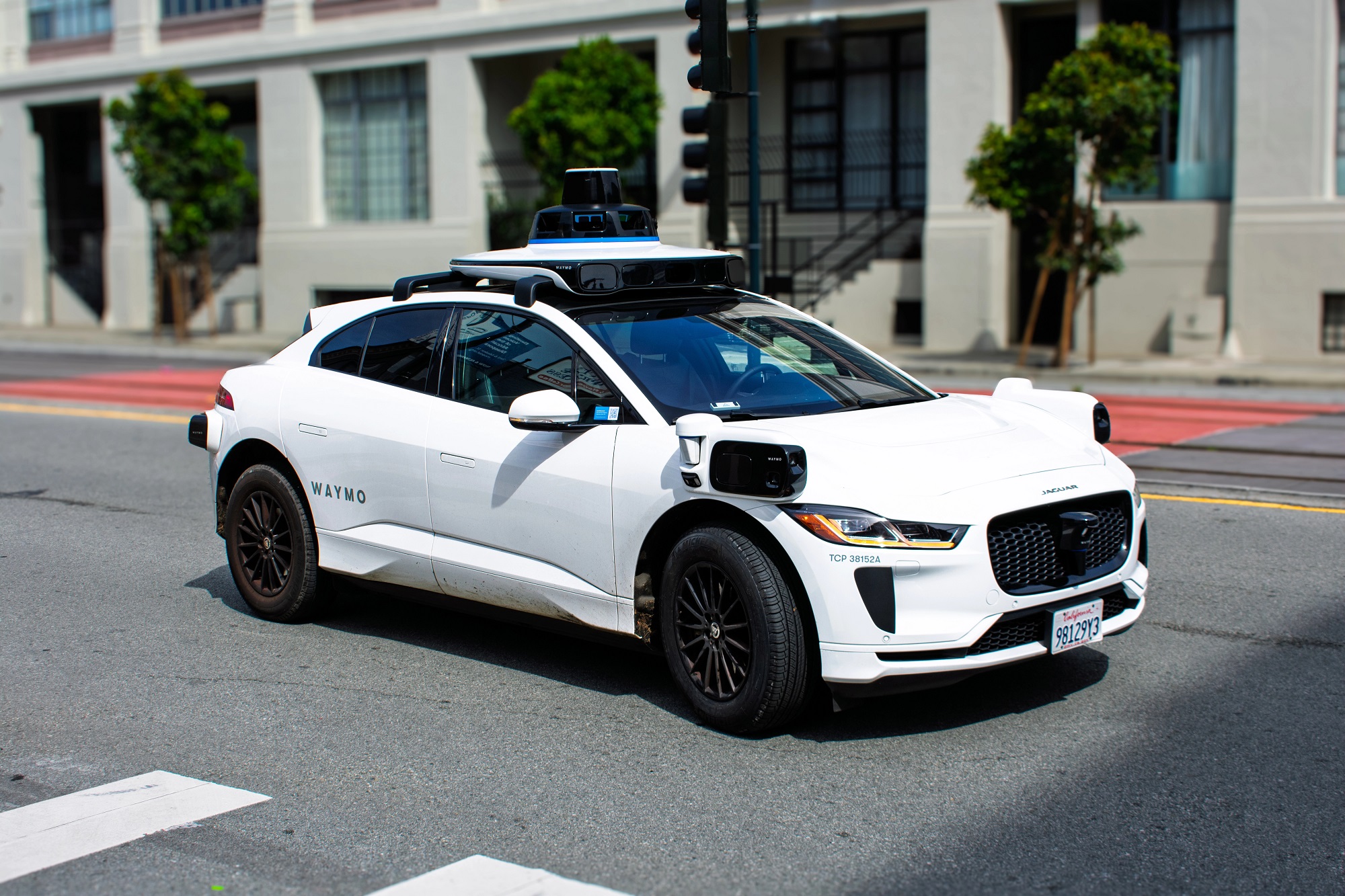
Alphabet-owned Waymo has already begun testing its Jaguar I-PACE robotaxis in the capital, while British autonomous driving specialist Wayve, working alongside Uber, is preparing to launch its own commercial robotaxi service. Unlike many competitors, Wayve’s artificial intelligence system relies less on high-definition mapping and instead learns through real-world driving experience, an approach designed to better handle complex and unpredictable roads.
The growing number of operators reflects confidence in the UK’s regulatory framework, particularly following the Automated Vehicles Act, which has created a pathway for commercial autonomous passenger services.
However, London’s congested roads, complex junctions, cyclists, pedestrians and famously demanding traffic conditions will provide one of the toughest real-world tests for any autonomous driving system.
Fleet operators will also be watching closely. If robotaxi services prove safe and commercially viable, the technologies developed for passenger transport are expected to accelerate wider deployment of autonomous systems across logistics, delivery fleets and commercial vehicles.
Public confidence remains crucial
Alongside the technical challenge lies the equally important task of winning public trust.
Research commissioned by Freenow found that 58% of Londoners would be willing to ride in an autonomous vehicle, rising to nearly two-thirds of those under 35. More than half of respondents said their interest stemmed from excitement about the technology, while many also cited improved reliability and the opportunity to enjoy quiet time during journeys
Nevertheless, industry observers acknowledge that widespread adoption will depend not only on safety records but also on how autonomous vehicles coexist with professional drivers and existing transport networks.
For fleet managers, transport operators and policymakers, the next 12 months could prove decisive. With Baidu, Waymo and Wayve all testing on London’s streets, the capital is becoming a real-world laboratory for autonomous mobility, offering valuable insight into whether driverless technology is finally ready for mainstream deployment.
We recently examined this question in detail in its feature, “Are Britain’s Roads Ready for Autonomous Vehicles?“, which explores the opportunities and challenges facing the technology’s rollout in the UK.