
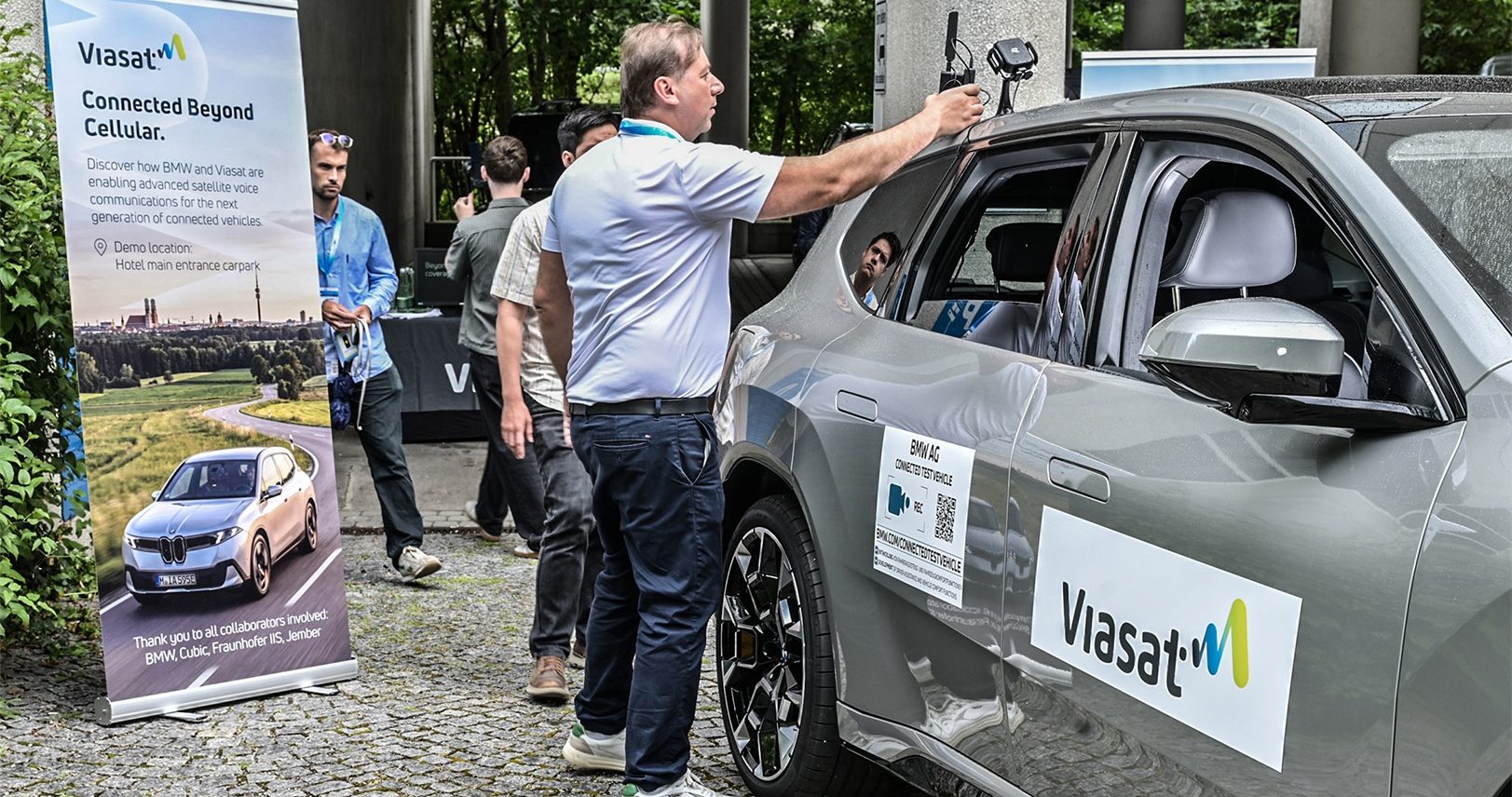
Viasat has successfully demonstrated the automotive industry’s first satellite voice calls fully integrated into a BMW Group vehicle platform, marking a major milestone in the development of satellite connectivity for connected cars.
The demonstration showcases how Non-Terrestrial Network (NTN) technology can extend voice communications beyond traditional mobile coverage, allowing drivers and passengers to stay connected in remote or underserved areas where terrestrial networks are unavailable.
The project builds on an earlier demonstration using eSIM technology from software-defined vehicle (SDV) specialist Cubic³. Engineers at Viasat’s Munich facility combined Qualcomm Technologies’ Snapdragon Auto 5G Modem-RF Gen 2 platform with the Fraunhofer IIS NESC AI voice codec to transmit voice calls using the Narrowband Internet of Things (NB-IoT) communications protocol over Viasat’s L-band satellite network.
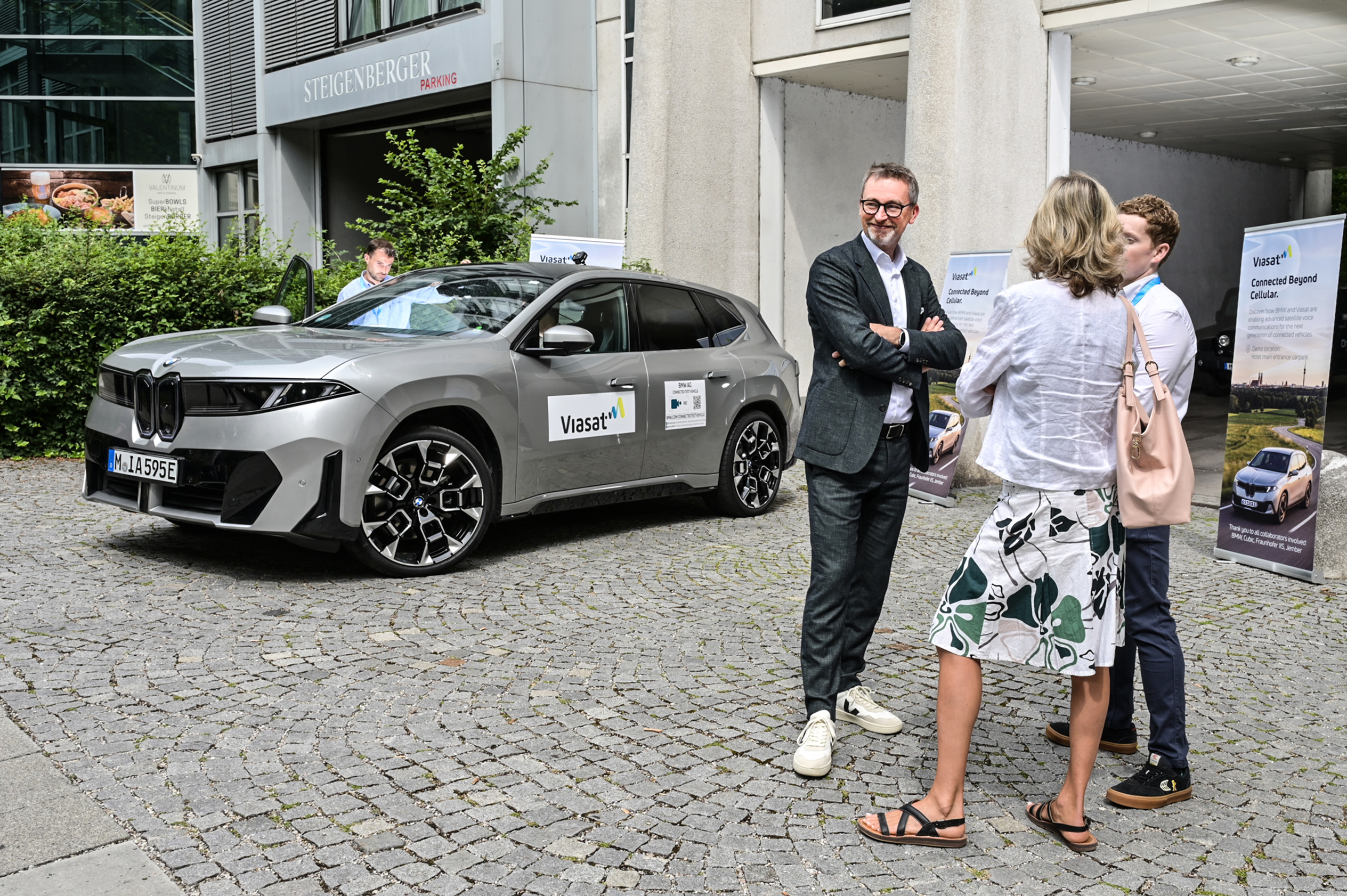
Image: Viasat
For the first time, the technology has been integrated directly into BMW Group’s vehicle architecture, enabling drivers to make and manage satellite voice calls through the vehicle’s existing infotainment interface.
The development could significantly improve vehicle connectivity in areas with poor or no mobile network coverage, supporting emergency communications, safety services and other connected vehicle applications.
Sandeep Moorthy, Senior Vice President, Advanced Non-Terrestrial Solutions at Viasat, said: “This demonstration reflects broader industry excitement to ensure consistent, resilient satellite capabilities for next-generation vehicles.
“By bringing standards-based NTN to vehicles, we can integrate satellite voice and messaging and ultimately enable a future where drivers can remain connected — wherever the journey takes them.”
Viasat, BMW Group, Cubic³ and Fraunhofer IIS are all members of the 5G Automotive Association (5GAA), which brings together automotive manufacturers and technology companies to develop scalable connected mobility solutions.
Satellite-enabled connectivity is expected to play an increasingly important role in future vehicles, supporting applications such as emergency voice and messaging services, fleet management, remote diagnostics and over-the-air software updates in regions with limited mobile coverage.
The demonstration uses the globally recognised 3GPP Narrowband Internet of Things (NB-IoT) standard, which is designed for low-bandwidth communications. Future developments in the 3GPP standard are expected to enable satellite-based 5G New Radio (5G-NR) services, paving the way for higher-bandwidth applications including video streaming and seamless switching between terrestrial mobile networks and satellite connectivity.