
The Port of Dover has issued a stark warning to the haulage industry: this summer could bring serious freight disruption — not because HGV drivers themselves are caught up in the EU’s new Entry/Exit System (EES), but because they risk being trapped behind the tourist traffic that is.
The warning, delivered by Dover Port chief executive Doug Bannister to the Business and Trade Committee chair, Liam Byrne MP, comes at a critical moment. The EES became fully operational across the Schengen area on 10 April 2026, replacing manual passport stamping for non-EU nationals on short stays. It records passport details, entry and exit data, facial images and fingerprints. At Dover, those checks happen on the UK side of the Channel, because French border controls operate under juxtaposed arrangements before departure.
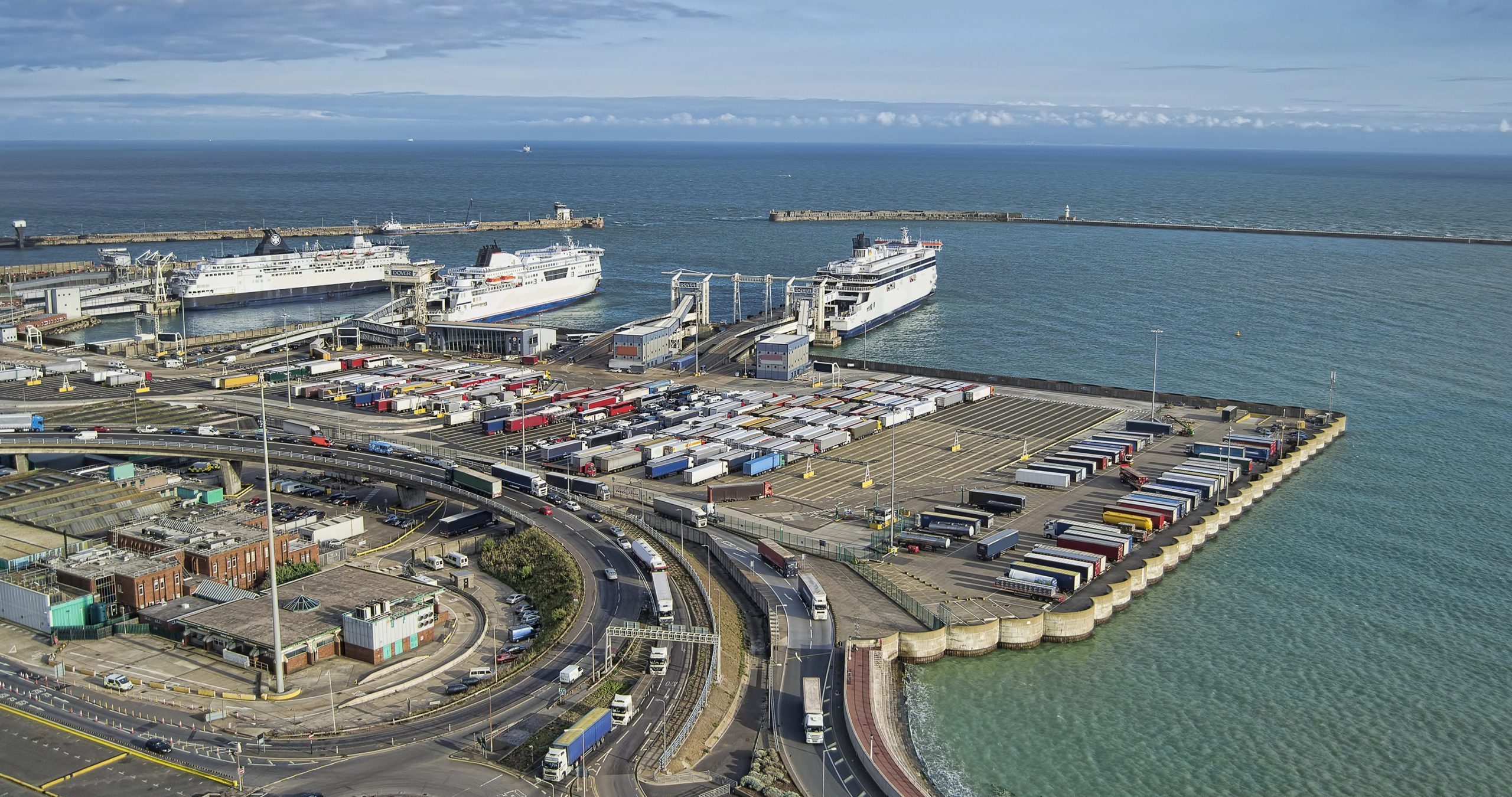
The particular concern for freight operators is the indirect nature of the threat. Most drivers leaving the UK through Dover hold European passports and do not need to complete EES registration. But their vehicles could still be caught in wider congestion if passenger traffic backs up on the approaches to the port; a scenario that would hit time-sensitive freight including medicines, automotive components and fresh food.
Bannister told the Business and Trade Committee: “Behind the British tourist and community disruption will be the freight traffic, with HGVs being held on the M20 motorway whilst the authorities attempt to clear the disruption. The vast majority of hauliers exiting the UK hold European passports and so do not need to get caught up in EES, but will do so because of the inability to bypass the queues of tourist and local traffic.”
The concern is not hypothetical. During the May half-term, a Critical Incident was declared after queues hit around four and a half hours, the result of just a few hours of EES processing on a day with roughly 8,500 tourist vehicles. Summer days regularly bring more than 12,000 vehicles, and freight movements through Dover do not pause for holiday peaks.
Dover has built a £40 million EES facility at the Western Docks, with 84 kiosks designed to process passenger data away from the most constrained part of the ferry terminal. The facility is not being used as intended. Interoperability problems with EES kiosk technology mean French policy currently requires car EES profile creation to happen at the Eastern Docks Ferry Terminal instead, a location with far less traffic space, and one where queues are more likely to disrupt wider port operations.
During the May bank holiday, biometric kiosks were never switched on. Officers had to create traveller records by hand, which dragged out the wait. France invoked an emergency clause to temporarily suspend the extra biometric registration step, but the underlying bottleneck was not resolved. As of early July 2026, most cross-Channel tourist cars at Dover were still being processed manually due to technical issues, and full biometric enrolment for all passenger groups has not yet been activated.
Liam Byrne MP responded to Bannister’s warning with his own call to action: “The Port of Dover has sounded the alarm. Without an agreement with France to pause the new EU border tech this summer, Britain risks border chaos again. Ministers must urgently secure that agreement now. Once queues stretch for miles through Kent, it will be too late.”
Dover has raised the issue with the Department for Transport, the Home Office, the Prime Minister, the European Union, the French Ministry of Interior, Police aux Frontières and the Calais prefecture. French border police have indicated they will provide additional resources, but Dover maintains that staffing alone will not solve a problem rooted in where and how EES processing happens.
Dover wants EES suspended for the summer period entirely. Failing that, it is calling for a system that allows processing to be stood down selectively whenever traffic forecasts point to a serious congestion risk, with contingency measures needing to kick in before queues form — not after.
The freight industry has been warning of exactly this scenario for months. Logistics UK said that disruption was “inevitable as travellers register their details on the system,” urging member businesses moving goods to the continent to allow additional journey time. Its UK policy manager for trade, customs and borders Josh Fenton warned: “The additional time required for passengers to register biometric details when they leave the UK has the potential to cause knock-on delays for freight traffic and disrupt the UK’s supply chain. It is more than just an inconvenience: our analysis shows that even a 90-minute delay for the 3.35 million HGVs that pass through the Short Straits would cost the economy £400 million per year.”
The Road Haulage Association has warned that freight and coach drivers will face delays, expecting queues at Eurotunnel and Dover despite government investment. The British International Freight Association has pointed out that the success of the rollout depends on French border staffing, noting that even with kiosks, shortages of trained officers could slow traffic.
While lorries do not share the same lanes as tourist traffic, they share the same approach infrastructure and surrounding road network. When that network seizes, the knock-on effects for freight scheduling are significant. For just-in-time supply chains, those moving perishable goods, pharmaceutical products or automotive components, even a few hours of delay can have consequences that ripple far beyond the port itself.
Every additional hour of friction at the Short Straits makes alternative routing more attractive, and if the summer of 2026 delivers the kind of disruption Dover is warning about, it may accelerate the structural rerouting of Irish freight away from the UK land bridge faster than any commercial calculation alone would have done.
For hauliers planning cross-Channel movements in the weeks ahead, the message from Dover is clear: the risk this summer is real, it is imminent, and it requires urgent political action before, not after, the M20 grinds to a halt.