
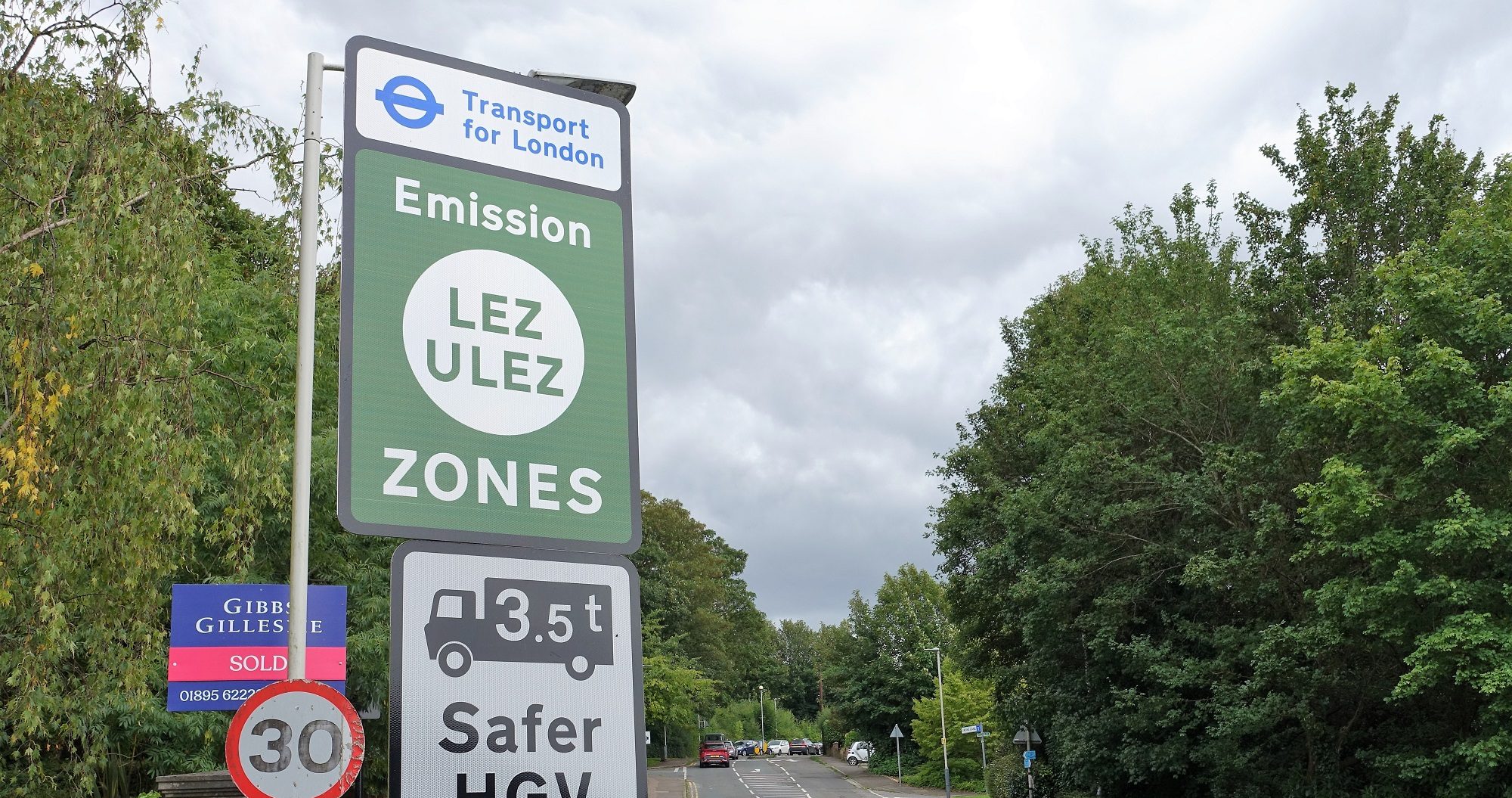
Hillingdon Council has paid £499,090 in Ultra Low Emission Zone (ULEZ) charges since the scheme was expanded across outer London in August 2023, according to newly released data. The figure has reignited debate around the practical and financial challenges local authorities face as they transition vehicle fleets to meet increasingly stringent emissions standards.
The west London borough’s fleet currently consists of 295 vehicles, of which only three are electric and six are hybrid. The remaining 286 vehicles are diesel-powered, with 26 failing to meet ULEZ emissions requirements and therefore attracting daily charges when operating within the zone.
The cost has drawn criticism from campaigners who argue that public money should not be spent on avoidable emissions charges. However, council leaders maintain that the reality of delivering frontline services across one of London’s largest boroughs requires a pragmatic approach to fleet management.
“As one of London’s largest boroughs, with one of the capital’s longest road networks, Hillingdon needs a substantial and varied fleet, including specialist vehicles, to deliver essential services across greater distances,” explained a Hillingdon Council spokesperson.
“While electric vehicle technology is improving, diesel still offers the best balance of performance and value for money versus investment for parts of the fleet.”
The spokesperson added: “The council is phasing out older vehicles to ensure the fleet is as efficient as possible and as a result, ULEZ costs are continuing to decrease, and all vehicles will be ULEZ compliant by the end of the year.”
The situation highlights a growing challenge facing local authorities across the UK. While councils are under pressure to reduce emissions and support air quality objectives, many continue to rely on specialist diesel-powered vehicles for waste collection, highways maintenance and other essential public services. The high upfront cost of electric alternatives, combined with concerns around range, charging infrastructure and vehicle availability, continues to slow fleet electrification in some sectors.
Hillingdon’s experience is not unique. Birmingham City Council has accumulated £472,253 in charges and fines through its own Clean Air Zone (CAZ) after non-compliant council vehicles entered the charging area. Data shows the authority’s fleet generated 3,262 charges and penalties since the scheme was introduced in 2021. The majority of those charges were linked to vehicles operated by the waste department.
A Birmingham City Council spokesperson said the authority had historically operated a fleet of more than 1,100 vehicles, many of which were not compliant when the Clean Air Zone was introduced. The council added that an extensive replacement programme has been undertaken, with waste, street cleansing and grounds maintenance fleets now fully compliant and the remaining non-compliant vehicles under review.
The parallel cases underline the balancing act councils face between environmental targets and operational realities. Local authorities must maintain service delivery while replacing ageing vehicles during a period of significant budgetary pressure and rising costs.
Supporters of clean air initiatives argue that the schemes are delivering measurable environmental benefits. Following the expansion of London’s ULEZ, Transport for London reported a significant reduction in the number of non-compliant vehicles entering the capital, contributing to improved air quality outcomes. Meanwhile, Birmingham introduced its Clean Air Zone to address harmful levels of nitrogen dioxide and other pollutants in the city centre.
For fleet operators, the Hillingdon and Birmingham cases serve as a reminder that compliance planning is becoming an increasingly important aspect of vehicle procurement strategies. As more cities introduce low-emission and clean air zones, organisations operating large fleets will need to weigh the costs of upgrading vehicles against the financial burden of ongoing emissions charges.
With Hillingdon expecting its fleet to become fully ULEZ compliant by the end of the year, the borough hopes the near half-a-million-pound bill will soon become a thing of the past. However, the broader debate over how quickly public sector fleets can realistically transition away from diesel is unlikely to disappear anytime soon.