
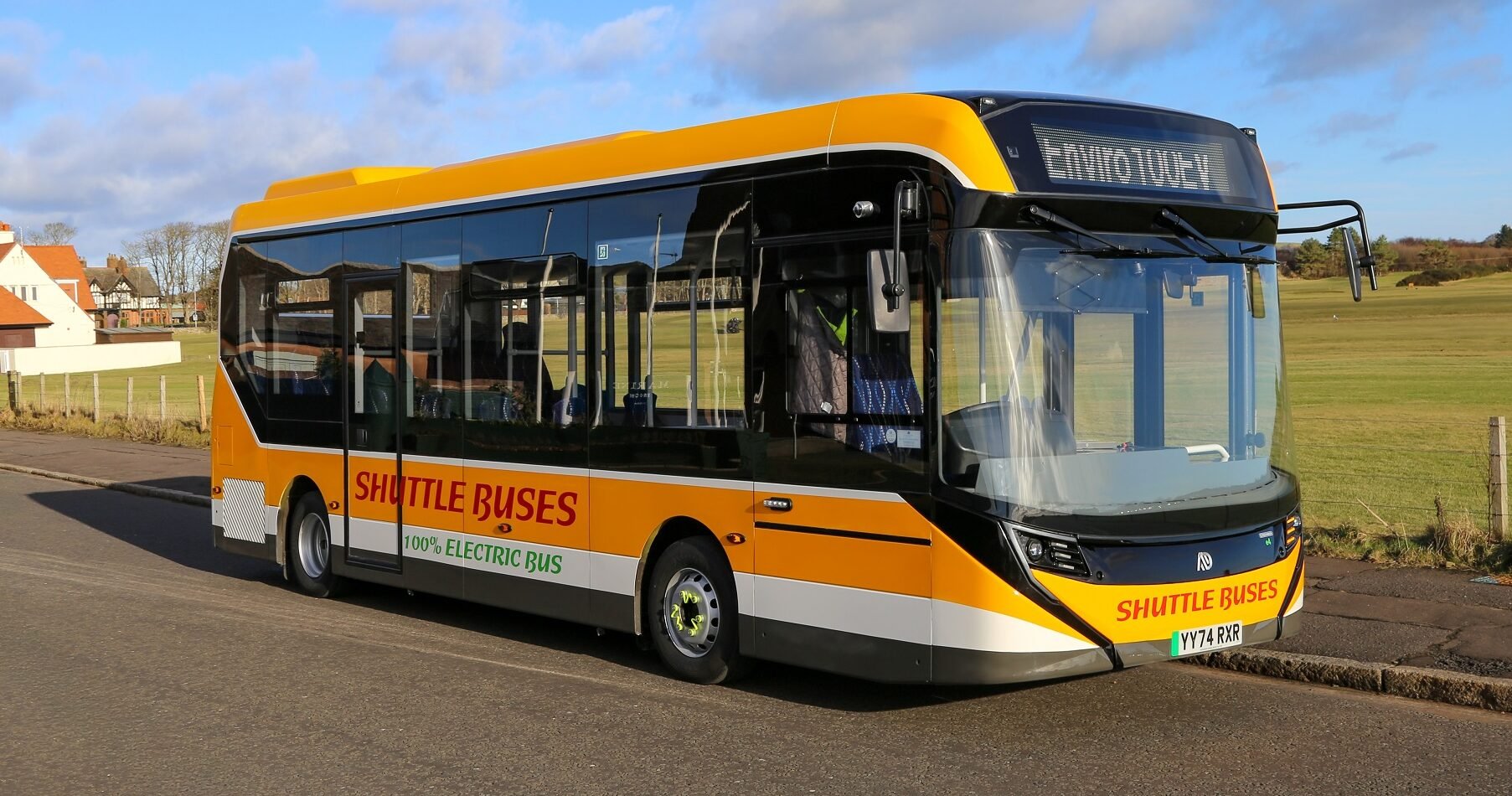
Giving buses greater priority on England’s roads could unlock £5 billion in economic benefits and transform public transport nationwide, according to new analysis commissioned by the Confederation of Passenger Transport.
The independent report found that a 10% increase in bus speeds, achieved through measures such as expanded bus lanes, traffic light priority and better co-ordination of roadworks, would significantly improve journey times, reliability and efficiency for millions of passengers.
Bus services in England currently operate at average speeds of just 7.1mph in London and 11.7mph outside the capital. The study argues that relatively modest improvements in road priority could comfortably increase those speeds by a tenth, helping people reach work, education and appointments more quickly while reducing wasted time caused by congestion.
The analysis estimates that faster and more reliable services would improve 2.6 billion of the 3.7 billion bus journeys already made in England each year. Better services would also encourage greater public transport use, generating an additional 147 million passenger journeys annually; equivalent to the total number of bus journeys currently taken across Greater Manchester each year.
Improved bus speeds would also reduce operating costs for local authorities and commercial operators. A 10% increase in speed could cut running costs by 7.5%, creating annual savings of £511 million. Passenger growth would generate a further £164 million in revenue, resulting in a combined £674 million available for reinvestment in bus services.
According to the report, that level of funding could pay for 1,600 new zero-emission buses or support an additional 135 million miles of bus services; enough to travel around the world 5,400 times.
Overall, the study concludes that increased productivity, reduced delays and more efficient transport networks would generate economic benefits worth £210 for every household in England.
Graham Vidler, Chief Executive of CPT, said: “Buses are England’s most popular form of public transport but too often they slow to a crawl – stuck in traffic jams or disrupted by roadworks. That’s particularly evident in London.
“Passengers often tell us that if they could rely on shorter, more consistent journey times, they’d travel by bus more frequently. This analysis sets out the true prize within our grasp if local authorities took bolder steps in prioritising buses.
“A 10% improvement in bus speeds would be a true game changer – it would create a virtuous circle by attracting more customers, generating more ticket revenue and unlocking investment for new vehicles and more frequent services. At a time when the Government is keen for ideas to improve productivity, this is a clear and evident way to generate a £5 billion boost to the economy.”
The report, produced by transport consultant Chris Cheek for CPT, found that average bus speeds vary significantly across England. Services travel at 7.8mph in congested urban areas, 9.5mph in other cities and conurbations, 11.5mph in suburban locations and 13.2mph on rural and inter-urban routes.
CPT said the findings build on similar research previously carried out in Scotland and Wales, strengthening the case for bus priority measures across the UK.