
Sustainability needs to start paying its way
Sustainability has become very good at producing targets, reports, dashboards and promises. What it isn’t always as good at doing is changing the decisions made at 8am on a Monday morning, when a refrigerated vehicle leaves the depot, a driver is delayed on a route, or a refrigeration unit appears to be working harder or for longer than expected.
In this article, Derek Hart, Sales Director at Pace Technology UK, discusses how fleets can make better use of the data they are already accumulating.
That’s where I think businesses should be looking much harder at connected technology. If a company can use the data it already collects to stop wasting energy, mileage, vehicle capacity or product, there’s a commercial reason to do it as well as an environmental one.
Too much of the sustainability conversation still happens at reporting level. Businesses measure emissions, set reduction targets and produce increasingly detailed accounts of their environmental performance. All of that has its place, but measuring waste doesn’t remove it.
The harder question is what happens after the number appears on the spreadsheet. If the answer isn’t a change to the way vehicles are operated, goods are transported or energy is consumed, then we’re measuring the problem rather than solving it.
Turning fleet data into action
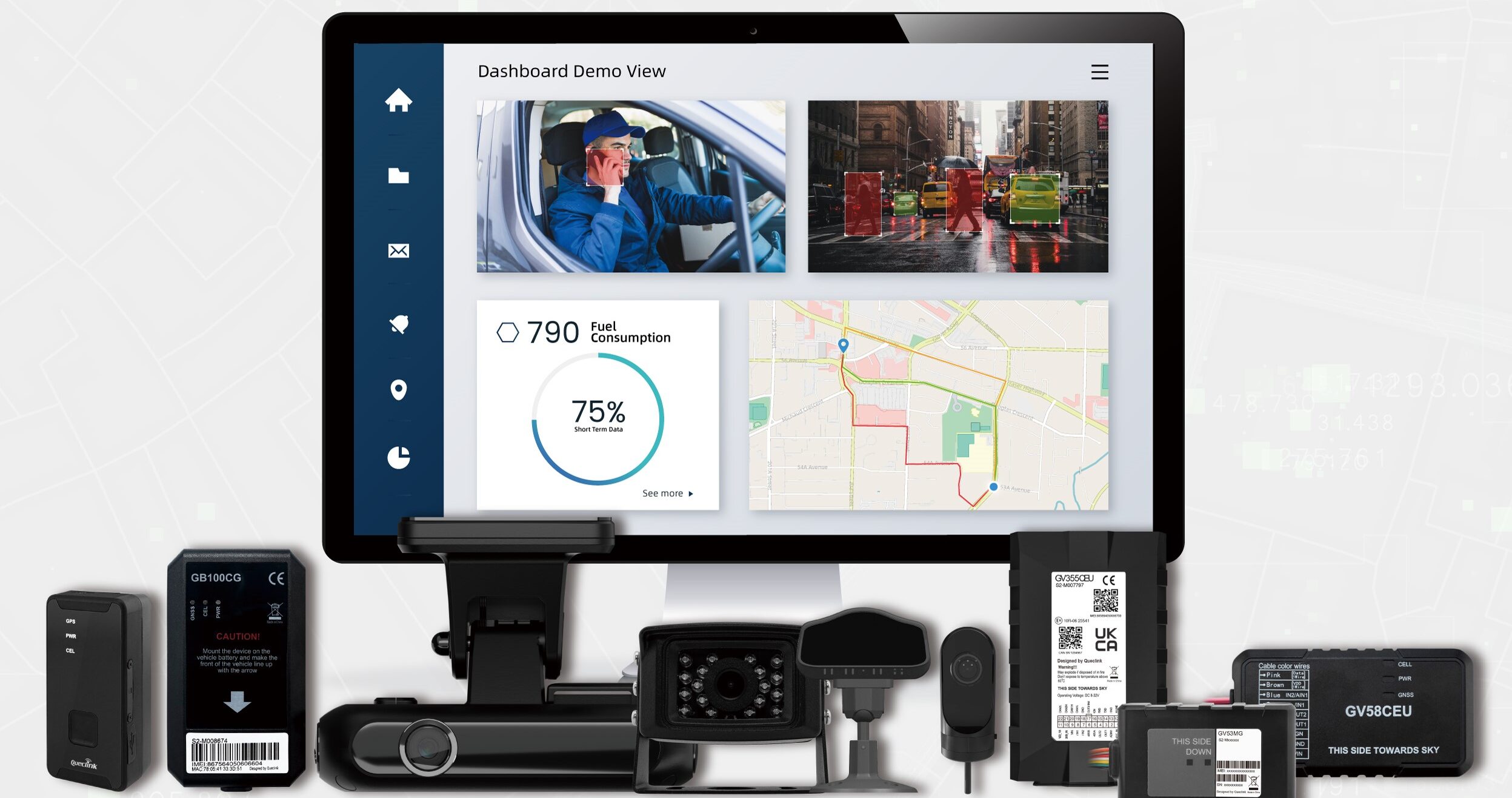
Connected technology gives operators the chance to get much closer to the causes of waste. Depending on the systems installed, a vehicle can generate huge amounts of information during a working day, from location and mileage to temperature, refrigeration activity, vehicle utilisation and, in some cases, energy consumption.
Most businesses aren’t short of data; the issue is whether they’re joining it together and using it to make better operational decisions. That’s where the sustainability argument becomes much more interesting commercially.
Take refrigeration. Nobody disputes that temperature-controlled transport needs refrigeration, particularly when the goods being moved are medicines, healthcare products or other sensitive stock.
What deserves more scrutiny is whether refrigeration is operating more than the conditions genuinely require, and whether operators have enough information to identify it. If temperature, vehicle activity, door openings, journey data and refrigeration performance can be monitored together, businesses can start asking why equipment is working harder than expected and whether there’s a recurring reason behind it.
That matters because energy waste rarely announces itself as a major event. It can come from small inefficiencies repeated across hundreds or thousands of journeys, vehicles spending longer than expected at stops, equipment operating when it isn’t needed, or refrigeration systems working harder because something isn’t performing correctly.
One vehicle might only waste a modest amount of energy; across a large fleet, the cost becomes much harder to ignore. The environmental saving follows the commercial saving because both are being driven by the same underlying waste.
Preventing temperature-related product loss
Product waste is even harder to justify. When a temperature-sensitive product ultimately has to be discarded following an excursion that could potentially have been prevented, the business loses the value of the stock, but that’s only part of the cost.
The energy and materials used to manufacture it, package it, store it and transport it have also been wasted. Replacing it may then require another production cycle and another journey.
If technology can identify a temperature problem while goods are still in transit, operators have an opportunity to intervene before an operational issue becomes a product loss.
This is where temperature monitoring needs to be treated as an active management system rather than a historical record. An alert that arrives after a delivery has finished can help explain what happened, but an alert received while the vehicle is still moving can give someone the chance to do something about it.
When that alert is supported by location, journey history, refrigeration information or door activity, the operator has much more useful information to work with. That can help reduce the risk of product loss, shorten investigations and reduce the time spent reconstructing events after the fact.
Making better use of vehicle capacity
The same thinking applies to vehicle utilisation, and I think this is an area where fleet operators should be much more demanding of their data.
A vehicle travelling empty, sitting unused for long periods or being sent out on a journey that could have been combined with another delivery represents wasted capacity. Yet businesses can be reluctant to question established patterns because they don’t always have a clear picture of what their fleet is actually doing.
Good telematics data makes those patterns visible. It can show where capacity exists and where mileage is being generated without enough operational value coming back.
That has an obvious environmental benefit, but the commercial argument is stronger. Every unnecessary mile carries a cost, whether the vehicle is powered by diesel, electricity or something else; there’s still driver time, tyre wear, servicing, depreciation and vehicle availability to consider.
Reducing a journey can therefore remove several costs at once. Where better planning allows the existing fleet to complete more work without adding vehicles, the business may also be able to delay capital expenditure and make better use of assets it already owns.
Understanding energy consumption
Energy consumption deserves the same level of scrutiny. Modern commercial vehicles increasingly carry equipment beyond the drivetrain, including refrigeration systems, tracking hardware, cameras, auxiliary batteries, inverters and other electrical systems.
Those systems are useful, but they still place demands on the vehicle’s electrical system. Where suitable monitoring is available, businesses can understand when equipment is operating, the demands it is placing on available power and whether that usage makes operational sense.
Connected monitoring and sensible power management can help turn energy demand from an assumed cost into something operators can actually examine.
Avoidable journeys are another obvious source of waste, yet they can be surprisingly difficult to identify without reliable data.
A return to a depot, an inefficient delivery sequence, a failed collection or a poorly planned route might look like an isolated inconvenience; repeated across a fleet, it becomes an operating model that is costing more than it should.
Tracking and journey history can expose those patterns, allowing businesses to question why the mileage exists in the first place. That doesn’t mean every extra mile can be eliminated, but it does mean operators can distinguish necessary travel from travel created by poor planning or limited visibility.
Making sustainability part of fleet operations
This is why I don’t think sustainability should sit in a separate part of the business.
The people responsible for environmental reporting shouldn’t be the only ones thinking about energy, waste and emissions; fleet managers, transport planners, engineers and operations teams make decisions every day that directly affect all three.
Connected data gives those teams something far more useful than another target to work towards. It gives them evidence they can use to challenge inefficient practices and see whether a change has actually made a difference.
Pace Technology‘s work across connected fleet systems reflects that approach. Cold Logic can provide temperature visibility alongside journey information, alerts and reporting, while Pace Track provides vehicle location and journey data that can help operators understand how vehicles are being used.
Pace’s wider fleet hardware offering also includes inverters, auxiliary batteries and power management solutions; these are practical areas where energy use and vehicle operation can be examined together rather than treated as separate issues.
Technology, of course, isn’t going to make an inefficient operation efficient by itself. There’s no shortage of businesses collecting vast amounts of telematics data without making meaningful changes to how their fleets operate.
The value comes when someone looks at the information, asks why a particular pattern exists, makes a decision and then checks whether the result improved. Without that final step, connected technology risks becoming another reporting system rather than a tool for changing the operation.
I also think this changes how businesses should talk about the cost of sustainability.
The strongest environmental initiatives often aren’t the ones requiring the largest new investment; they’re the ones that expose costs the business was already carrying unnecessarily.
Less wasted refrigeration means less energy expenditure, fewer temperature-related losses help protect stock, and better vehicle utilisation can reduce mileage and the need for additional capacity.
Those aren’t abstract environmental benefits; they’re operational savings that happen to reduce environmental impact at the same time.
There will always be a place for sustainability targets, carbon reporting and formal environmental commitments. But businesses shouldn’t confuse measuring their environmental impact with managing it.
The real opportunity is much more practical: use connected data to find where resources are being wasted, change the operation that is causing the waste and measure the result.
If sustainability isn’t influencing those everyday decisions, it’s fair to ask whether the business is capturing all of the operational benefit it could.
For fleet and cold chain operators, the case for connected technology shouldn’t therefore start with an environmental report.
It should start with a question about the operation: where are we wasting money, energy, capacity or product that we could reasonably prevent from being wasted?
Once that question is being asked properly, the environmental benefits tend to follow. That’s a much more useful version of sustainability because it isn’t dependent on goodwill alone; it makes the business itself more efficient.