
Cespira launches HPDI 3.0 to boost low-carbon HGV performance
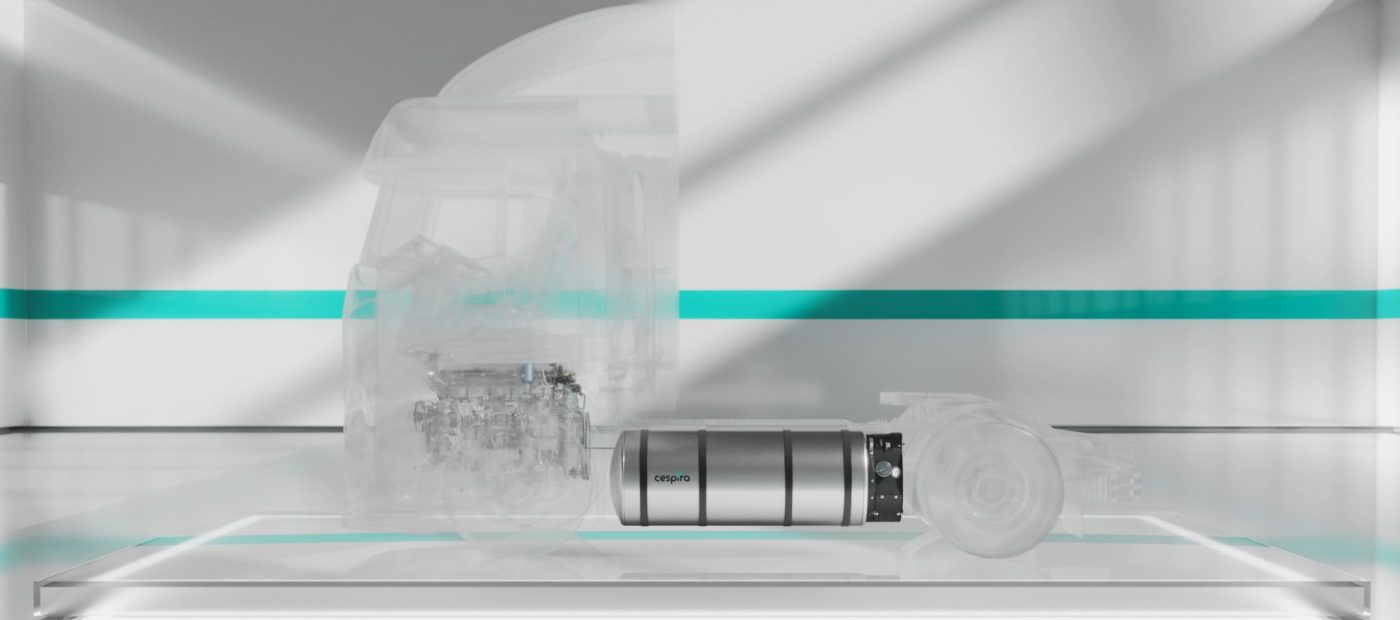
Cespira is launching HPDI 3.0, the latest generation of its High Pressure Direct Injection fuel system, at IAA Transportation 2026 in Hannover, as the company targets the growing demand for lower-carbon heavy-duty powertrains.
The new system allows compression-ignition internal combustion engines (ICE) to operate on a range of low-carbon fuels, including LNG and bioLNG, while retaining the performance required for demanding heavy-duty applications.
Cespira says HPDI technology has already accumulated more than 3 billion kilometres of real-world operation across more than 10,000 trucks in over 30 countries.
HPDI 3.0 retains the established High Pressure Direct Injection combustion principles but introduces developments designed to improve fuel economy, engine performance, durability and integration flexibility. The system also supports a range of zero-carbon and low-carbon fuels.
A key development is a new fuel rail-pressure control architecture designed to improve fuel economy and engine performance while simplifying OEM calibration.
Higher injection pressure capability is intended to unlock additional power and efficiency from the latest high-performance compression-ignition engines. Cespira says the architecture has also been developed to support compliance with future global emissions regulations.
The latest hardware incorporates Cespira’s proven HPDI injector dynamic sealing technology, which is designed to improve component service life and enhance durability.
The modular fuel rail-pressure control architecture also gives vehicle manufacturers greater flexibility when integrating the system into different engine layouts. It can support larger engines, including V12 and other multi-bank configurations, by enabling fuel pressure control across separate cylinder banks.
This could broaden the potential application of HPDI 3.0 beyond conventional on-road trucks and into demanding off-road heavy-duty applications.
Cespira has also designed the new fuel system with future hydrogen applications in mind. More broadly, its architecture is intended to provide greater adaptability for fuel-specific applications as low-carbon and zero-carbon fuel technologies develop.
For OEMs, this means adopting HPDI technology for LNG and bioLNG applications today could provide a route towards expanding future product portfolios as alternative fuel markets mature.
Scott Baker, CTO of Cespira, said: “HPDI 3.0 strengthens both the immediate and long-term business case for OEMs. More precise fuel rail pressure control, higher injection pressure capability, enhanced durability and improved fuel economy make HPDI 3.0 a more compelling proposition for LNG and BioLNG applications. The architecture is also more readily adaptable to future fuel-specific systems for hydrogen and low-carbon fuels, giving OEMs greater flexibility to build on their HPDI investment and expand their product portfolios as those fuel markets develop.”
The launch comes as heavy-duty vehicle manufacturers face increasing pressure to reduce carbon emissions while maintaining the range, payload capability, uptime and performance expected from commercial vehicles.
While battery-electric and hydrogen fuel-cell technologies are gaining momentum, alternative fuels such as bioLNG can provide another route to reducing emissions from heavy-duty applications, particularly where long-distance operation and high energy demands present challenges for electrification.
HPDI 3.0 production starts in 2026
Cespira will begin production of HPDI 3.0 in the fourth quarter of 2026, with the first vehicles equipped with the new system expected to enter service in early 2027.
The technology is being unveiled at Cespira’s stand at IAA Transportation 2026 in Hannover, Germany, which runs from 14-20 September.
The launch highlights the continuing role of advanced internal combustion technology in the transition towards lower-carbon heavy-duty transport, particularly where renewable and low-carbon fuels can deliver emissions reductions without requiring fundamental changes to vehicle operating patterns.
For fleet operators, the ability to retain familiar compression-ignition engine characteristics while moving towards lower-carbon fuels could provide an additional option as manufacturers and fleets navigate increasingly stringent emissions regulations and the costs associated with fleet decarbonisation.