
Be.EV introduces UK’s first EV charging pass
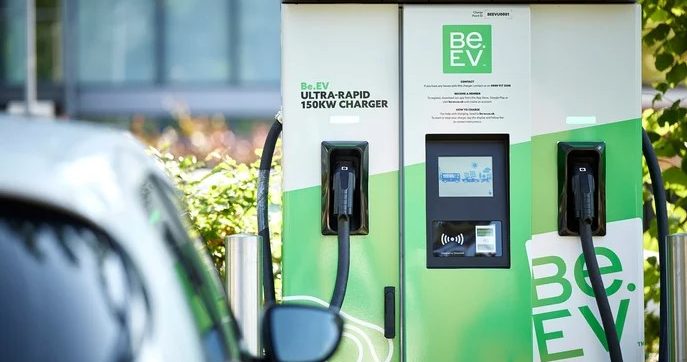
EV charging network Be.EV has launched what it describes as the UK’s first EV charging pass, giving drivers a fixed monthly charging allowance for a set fee rather than requiring them to track changing peak, off-peak or per-kWh rates.
The new charging passes are designed to make public EV charging costs more predictable, particularly for drivers who rely heavily on the public charging network. The move also reflects the growing use of subscription and allowance-based charging models in more mature European EV markets.
For fleet operators and businesses running electric cars and vans, greater certainty over charging expenditure could make it easier to forecast running costs, particularly where drivers do not have access to workplace or home charging.
Be.EV says subscription-based charging is already well established in some European markets. Denmark, which has one of Europe’s more mature EV markets, has seen major charging networks adopt subscription models as electric vehicle adoption has increased and drivers have sought simpler ways to manage charging costs.
The company expects a similar trend to develop in the UK as the electric vehicle market expands.
“Subscription and allowance-based charging is becoming the norm in Europe’s most mature EV markets, and it’s the direction the UK is heading in too. As adoption grows, drivers want the same simplicity they get from a mobile phone contract: one fee, a set amount of charging, no surprises. That’s what Charging Passes give them,” said Asif Ghafoor, CEO of Be.EV.
Be.EV has introduced two Charging Pass options at launch, aimed at drivers with different levels of public charging demand.
The Go Pass costs £49 a month and includes a 120kWh charging allowance. According to Be.EV, this is sufficient for around 400 miles of driving, although the actual distance achieved will vary according to the vehicle, driving conditions and efficiency.
The Go Further Pass costs £89 a month and provides a 250kWh monthly allowance, which Be.EV estimates could cover around 800 miles.
Once a driver has used their full monthly allowance, charging continues at Be.EV’s 49p/kWh Off-Peak rate for the remainder of the billing period. The company says this remains below its standard pay-as-you-go rate.
For drivers using their entire monthly allowance, Be.EV calculates that the Go Pass represents a 51% saving compared with the UK average public ultra-rapid charging price of 83p/kWh. The Go Further Pass represents a 57% saving against the same benchmark.
The value of the passes will therefore depend heavily on how much of the included allowance is used. For high-mileage drivers and fleet vehicles that regularly rely on public ultra-rapid charging, a fixed monthly allowance could provide a more straightforward alternative to paying standard public charging rates for every session.
For lower-mileage users, however, the economics will depend on whether the charging allowance is sufficiently utilised during each billing period.
The charging pass launch forms part of a wider change to Be.EV’s pricing structure.
The company’s Mega subscription, which it says has been its most popular subscription since launch, is being renamed Flexi Pass. The subscription continues to provide charging at 39p/kWh at any time of day, but its monthly price increases from £9.99 to £13.99.
Be.EV says Flexi Pass customers can still save 25% against the UK average pay-as-you-go charging price after their second charge.
The revised pricing structure is intended to give drivers a choice between paying a monthly fee for a defined charging allowance or using a subscription that provides a lower fixed charging rate.
This could also have implications for businesses operating mixed-use EV fleets, where individual drivers have different charging requirements. A mileage-based or allowance-based approach could provide a more predictable budget for drivers who regularly use public charging infrastructure, while a fixed per-kWh subscription may suit vehicles with less predictable charging patterns.
Be.EV is also introducing a single standard price across daytime pay-as-you-go and Member charging, alongside a new Member Off-Peak rate.
The Member Off-Peak rate is 49p/kWh and applies between 7pm and 7am. Be.EV says this remains the longest off-peak charging window offered by any public charging network in the UK.
For fleet managers, the extended overnight window could be particularly relevant for vehicles returning to depots or drivers completing journeys later in the day. Where operational schedules allow charging to be delayed until the evening, the lower rate could help reduce public charging costs.
However, the practical benefit will depend on vehicle utilisation and whether drivers can consistently plan charging sessions within the available off-peak period. Fleets using vehicles continuously throughout the day may have less flexibility to take advantage of overnight pricing.
The revised Be.EV membership offering also introduces Clubcard points on every charging session for members, regardless of whether charging takes place during the day or overnight.
The addition provides another incentive for regular users to join the network’s membership programme, while bringing charging into a wider rewards-based consumer proposition.
For business and fleet drivers, the significance of rewards will depend on how individual organisations manage charging accounts and whether benefits can be retained by the business or driver.
The broader change nevertheless reflects the increasingly competitive nature of the UK public EV charging market. As the number of electric vehicles on UK roads grows, charging operators are moving beyond simply providing access to charging infrastructure and are increasingly competing on pricing structures, memberships, rewards and convenience.
Be.EV’s new Charging Passes represent a further shift towards subscription-based public EV charging in the UK. Rather than paying a variable amount each time a vehicle connects to a charger, drivers can choose a monthly package with a defined charging allowance and a known upfront cost.
That approach could be particularly relevant as fleets transition more vehicles to electric power and public charging becomes a greater component of operating costs.
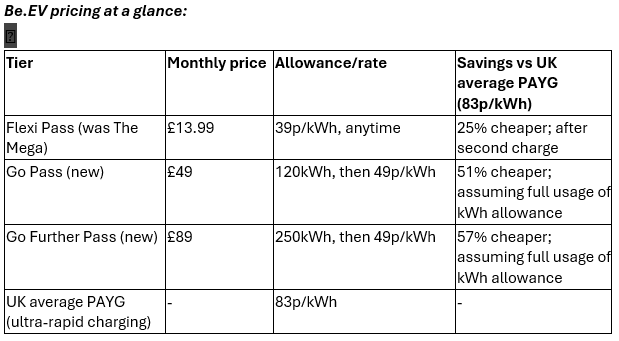
The Go Pass and Go Further Pass provide different levels of monthly charging, while the Flexi Pass offers a lower fixed charging rate for users who prefer to pay according to the electricity consumed.
For fleet managers, the key consideration will be matching the charging model to actual vehicle usage. Where drivers regularly use public ultra-rapid chargers and consume most of their monthly allowance, an EV charging pass could offer greater cost predictability and potentially lower charging costs.
As the UK electric vehicle market continues to mature, Be.EV’s move also suggests that the way drivers pay for public charging is beginning to evolve alongside the charging infrastructure itself.