

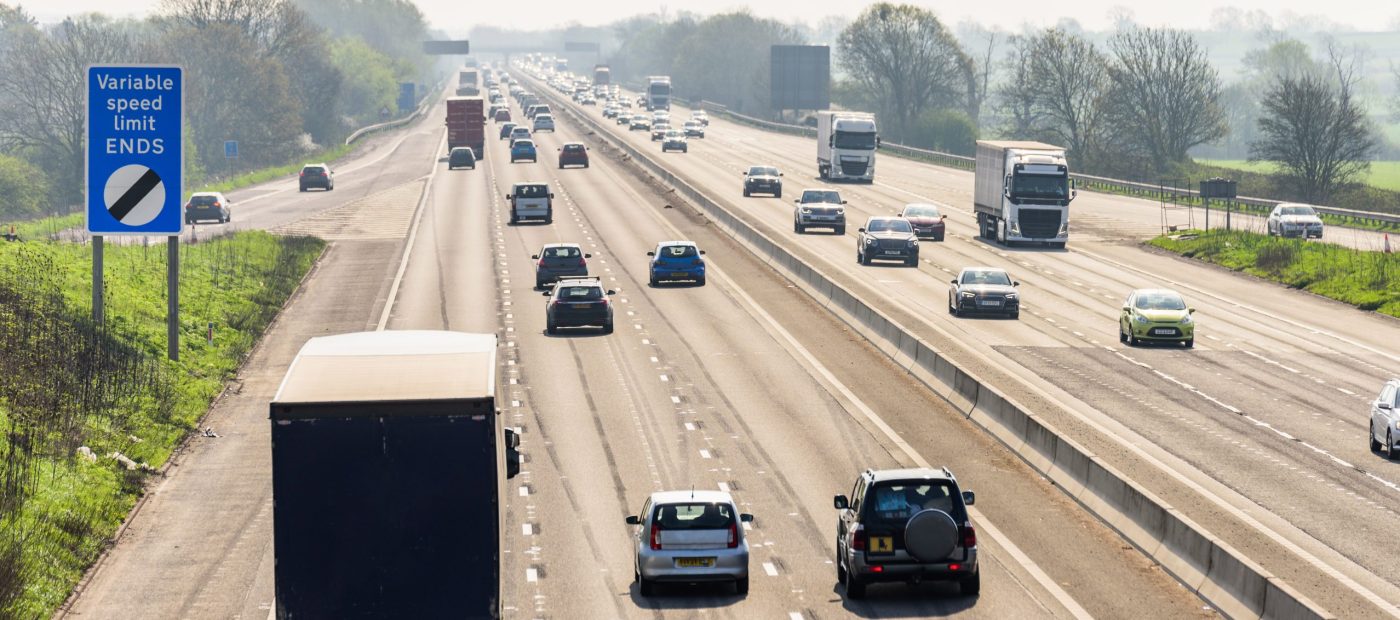
Older drivers are likely to reject 80mph motorway speed proposal
The prospect of raising the UK motorway speed limit from 70mph to 80mph has exposed a clear generational divide, with older drivers significantly more likely to oppose an increase.
An in-depth survey of more than 2,000 people commissioned by DrivingExperience.com found that 54% of respondents would prefer to retain the current 70mph motorway speed limit, which has been in place for almost 60 years.
However, the biggest differences emerged when the results were broken down by age. Almost two-thirds (64%) of people aged over 65 said they did not want the motorway speed limit increased to 80mph. That compares with less than half (47%) of those aged between 18 and 24.
The findings highlight the continuing debate around whether improvements in vehicle safety and technology justify allowing motorists to travel faster on UK motorways.
Imran Malek, corporate sales manager at DrivingExperience.com, said: “It’s clear to see that 70mph is plenty for many in the UK, the current speed limit that has been in place for nearly 60 years.
“Perhaps it is a reflection, especially among the older generation, that despite modern cars being much safer, lots of drivers still believe that human response to driving hazards is just as important, so increasing the speed limit could increase driving risk.”
Regional Differences Over 80mph Motorway Limit
The survey also revealed significant regional differences in attitudes towards increasing the motorway speed limit.
Respondents in Northern Ireland were the most likely to support retaining the existing 70mph limit, with 70% saying they did not want it increased.
At the other end of the scale, drivers in the South East of England were considerably more open to a change, although even here fewer than half of respondents (49%) said they were happy to retain the current maximum speed.
The findings suggest that support for an 80mph motorway speed limit remains far from universal, despite modern vehicles offering increasingly sophisticated safety systems, improved braking performance and advanced driver assistance technology.
For fleet operators and professional drivers, any change to the national motorway speed limit could also have implications for journey times, fuel consumption, vehicle operating costs and road safety.
While travelling at 80mph could potentially reduce journey times on longer motorway routes, higher speeds can also increase energy consumption and braking distances. The potential benefits therefore need to be balanced against the safety and environmental consequences.
Safer Driving Beyond the Motorway
For motorists who want to experience higher speeds without doing so on public roads, Malek says there are alternatives that allow drivers to develop their skills in controlled environments.
“Those wanting to put pedal to the metal can still do so by booking a supercar driving experience at a race circuit or airfield.
“These take place in a safe environment, with expert instructors offering guidance and advice to improve driving techniques.”
He also points to driver training as another way motorists can improve their ability to deal with challenging road conditions.
“There are also other ways to become a safer driver, such as with a skid pan experience, where the focus is on learning skid control.”
The survey suggests that, for now, the UK’s 70mph motorway speed limit retains majority support. While younger motorists appear more receptive to an increase, opposition is particularly strong among older drivers, highlighting the different attitudes towards speed, safety and modern vehicle technology across generations.

5 comments
Not all of us……83 and very happy with 80. but do agree does nothing to relieve the problem of those who do 50 now !!!
The issue isn’t the speed it is the drivers hogging the over taking lane, going to slow, not moving over when someone is coming down the slip roads. It is the drivers that are the issue. Old people 70+, should be doing test every 5 years.
speed doesn’t kill bad drivers do.
in most cases speed used correctly doesn’t use more fuel it can save fuel by reducing the over acceleration again by poor driving habits. but its no use thinking about it .the powers to be spent years deciding to up the limit through road works .only once it had been passed and it was working very well.they reduced most roadworks down to 40./30 what a total waste of time and money. the longer journeys take the more fuel you burn and the cost trebles. back the the days of the horse and cart.🫏🙄
Definitely need to increase the limit to 80mph. However a variable limit might be good for certain roads
On an empty road why not. Most would be nearly at that speed anyway.
If it a crowded road then perhaps not.
The increase in fuel consumption would be minimal for most cars
setting a speed limit is just a challenge to some drivers ss they’ll bteak it no matter what! 70 is ample and i dont evet want to put to the test my car’s safety features. My body’s organs dont come with airbags and i’d like to keep them in good nick! if it’s not broken don’t fix it I say. Leave well alone.
Comments are closed on this article.