
The introduction of Bus Safety Standard 2 (BSS2) marks a significant step forward for the UK bus industry, with driver personalisation now becoming a formal requirement in future vehicle design. Roger Brereton, Head of Sales at steering components manufacturer Pailton Engineering, explains how Transport for London’s (TfL) updated procurement standards could reshape the way bus cabs are designed.
When Pailton Engineering first unveiled its electric memory steering column concept at Busworld 2019, the idea of personalised driver settings was still relatively new within the bus sector.
Unlike office-based employees who can adjust their workstation to suit their individual requirements, bus drivers often share vehicles throughout the day and spend long periods working in environments that may not be optimised for their body shape, posture or comfort.
Improved adjustability, personalised settings and better ergonomics have long been viewed as important factors in creating safer and healthier working environments for drivers. Six years after Pailton introduced its concept, TfL’s BSS2 standard has helped move driver-focused design firmly into the mainstream.
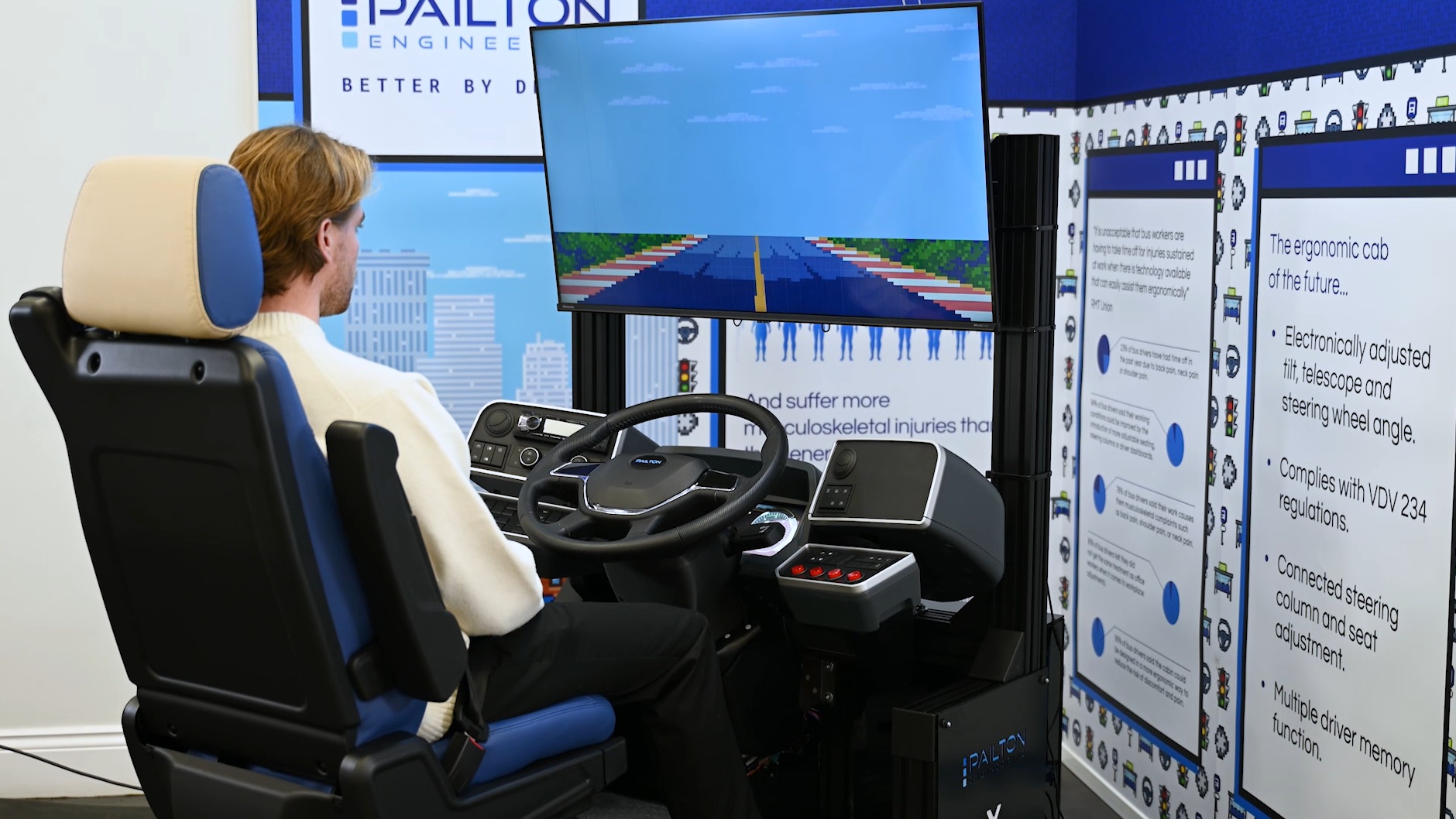
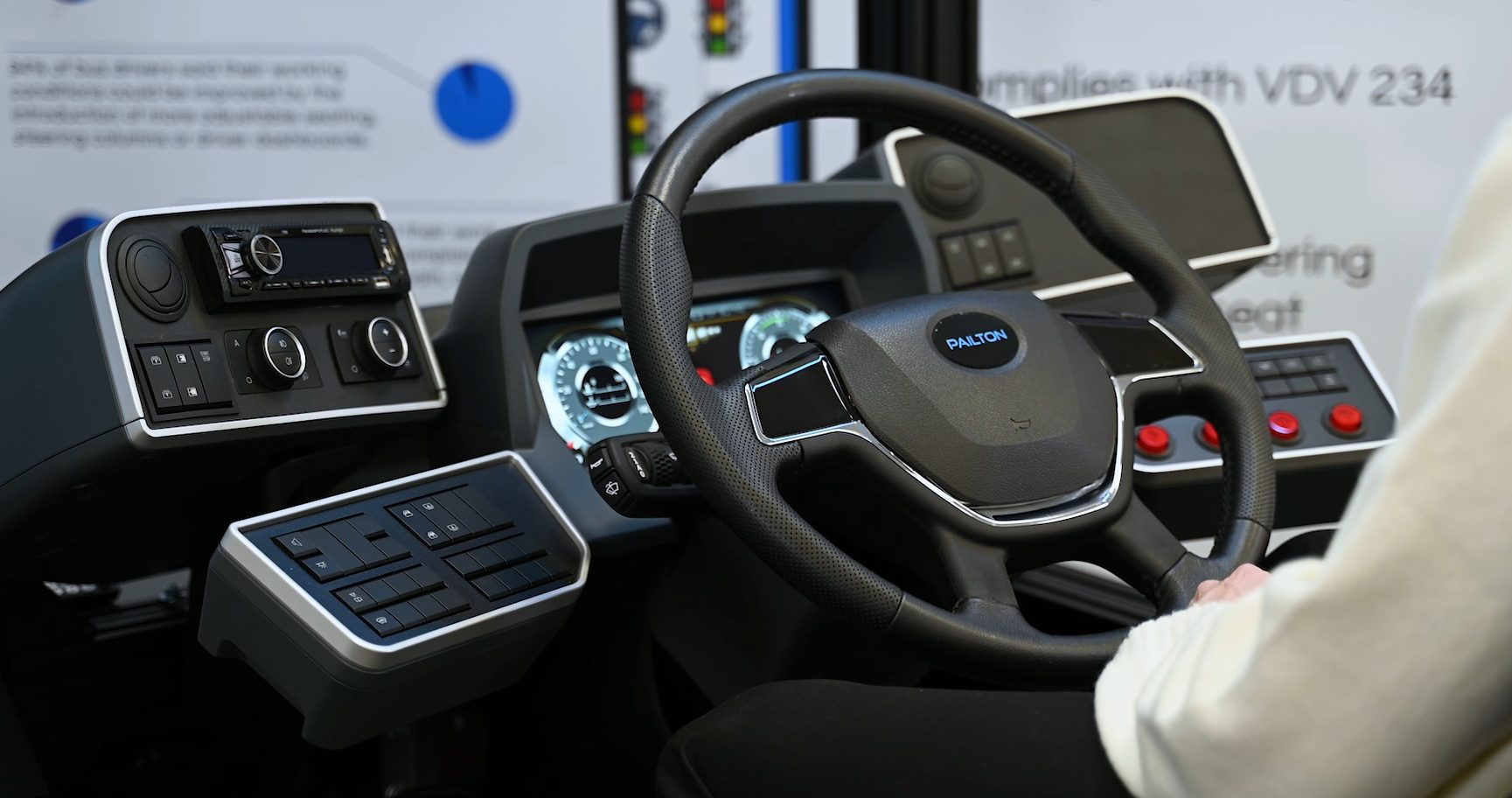
Image: Pailton Engineering
The Evolution of Driver Personalisation
At Busworld 2019, Pailton Engineering presented the concept of an electric steering column capable of storing individual driver preferences and automatically returning to those settings at the touch of a button.
The idea addressed a common challenge across the bus industry. Drivers come in a wide range of shapes and sizes, but many work in cabs that require manual adjustment every time a vehicle is shared.
With frequent driver and vehicle changes, operators often find that drivers accept uncomfortable driving positions rather than spend time making repeated adjustments before each shift.
The principle behind driver personalisation was simple: allow every driver to quickly achieve a suitable ergonomic position, improving comfort, safety and wellbeing while reducing the risk of physical strain.
Research Highlights Driver Ergonomic Challenges
The importance of improved ergonomics has been reinforced by research carried out by the RMT Union and Pailton Engineering, involving almost 400 UK bus and coach drivers.
The survey explored musculoskeletal (MSK) issues, including back, neck and shoulder pain, at a time when the industry continues to face driver recruitment and retention challenges.
The findings showed that more than 78% of respondents had experienced work-related musculoskeletal complaints, including back pain, neck pain and shoulder discomfort. Almost a quarter had taken time away from work during the previous year because of these conditions.
The research also highlighted concerns around workplace equality, with 95% of respondents saying bus drivers do not receive the same consideration as office workers when it comes to ergonomic adjustments, while 97% believed they should.
In addition, 94% of drivers said working conditions could be improved through more adjustable seating, steering columns and dashboards, while more than 95% believed better cab design could reduce discomfort and the risk of injury.
BSS2 Makes Driver-Centred Design a Requirement
TfL’s introduction of Bus Safety Standard 2 represents a major milestone in recognising the importance of driver wellbeing alongside passenger safety.
The updated standard states that “personalisation settings for seat and other controls” will be mandated for bus procurement from 2029-30, ensuring future vehicles are designed with greater consideration for individual driver requirements.
The original Bus Safety Standard, introduced in 2018, focused primarily on reducing fatalities and serious injuries involving buses. Independent analysis found that casualty numbers on routes operated by BSS-compliant buses fell by approximately 41% during the assessment period.
BSS2 builds on these safety improvements while placing greater emphasis on the driver environment. As TfL explains: “we must ensure that their workplace – the bus cab – is comfortable, inclusive and ergonomically designed. Just as in any other workplace, the quality of employees’ surroundings matters for inclusion, wellbeing, recruitment, retention, job satisfaction and comfort.”
The move reflects a wider recognition that driver wellbeing is closely linked to operational safety, staff retention and the ability to attract new employees into the sector.
A New Benchmark for Bus Design
Given TfL’s influence on UK bus procurement, many of the principles introduced through BSS2 are expected to become a benchmark for future vehicle design beyond London.
What was once considered an emerging concept has now become an accepted requirement for modern bus development. Driver personalisation, adjustable controls and improved cab ergonomics are increasingly viewed as essential elements of a safer, more inclusive workplace.
For Pailton Engineering, the progress made since Busworld 2019 demonstrates the value of listening to drivers and operators when developing new technology.
The journey from a prototype electric memory steering column to a recognised industry priority highlights how collaboration between suppliers, manufacturers, operators and drivers can help shape the future of public transport.