
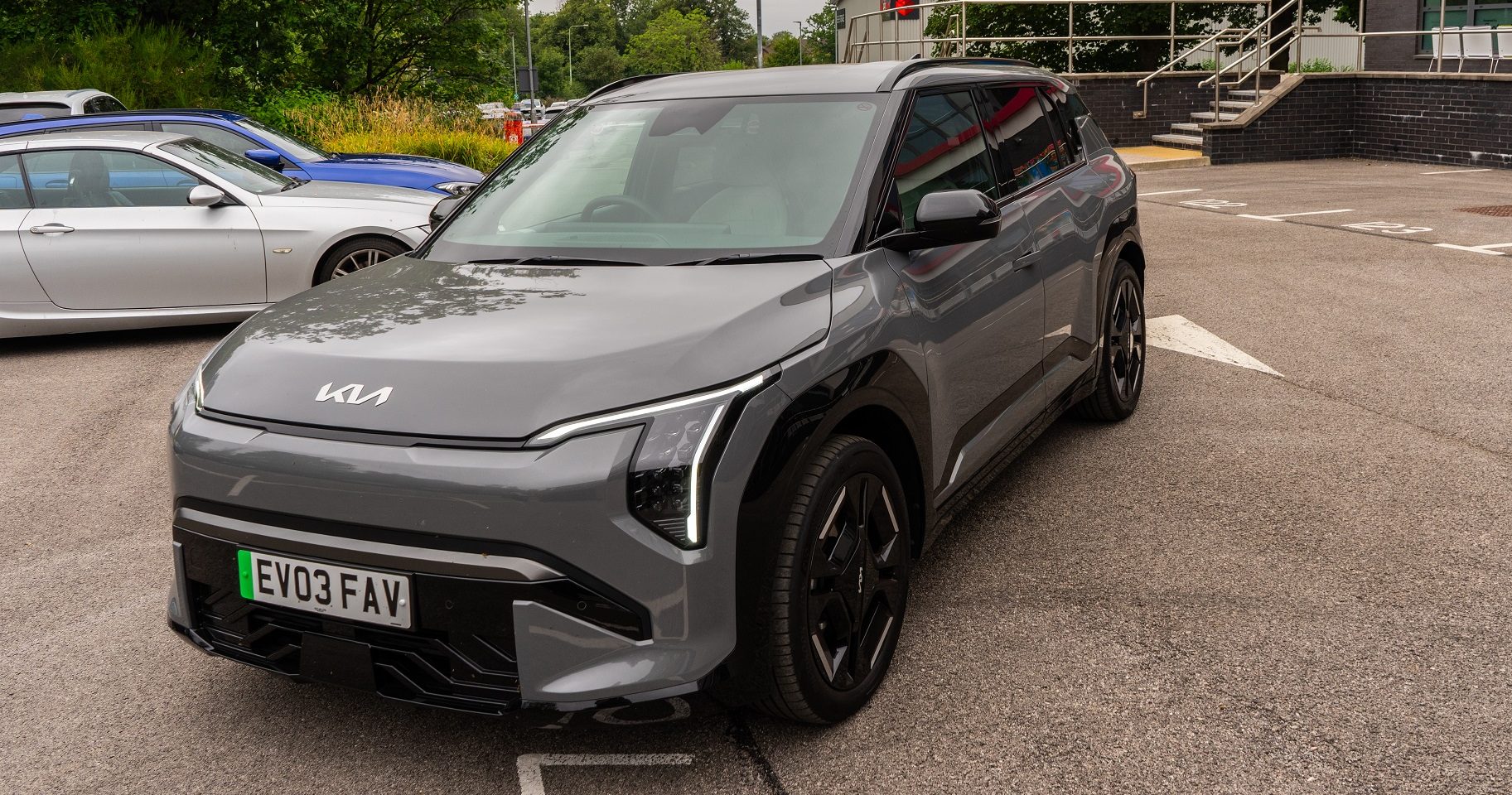
A week with the Soul EV’s successor — Kia EV3 GT-Line, reviewed by Ian Campbell.
First Impressions
After a couple of months looking at newer names on UK forecourts, it was refreshing to spend a week in something from a brand that’s already deeply embedded in the fleet scene. The Kia EV3 GT-Line landed on the drive as the spiritual replacement for the little Soul EV, and I have to say Kia has taken a much more grown-up approach to filling that gap. The EV3 is a proper compact electric SUV — not a quirky niche play like the Soul was — and after a week of daily driving, I came away calling it a solid, seriously well-judged bit of kit.
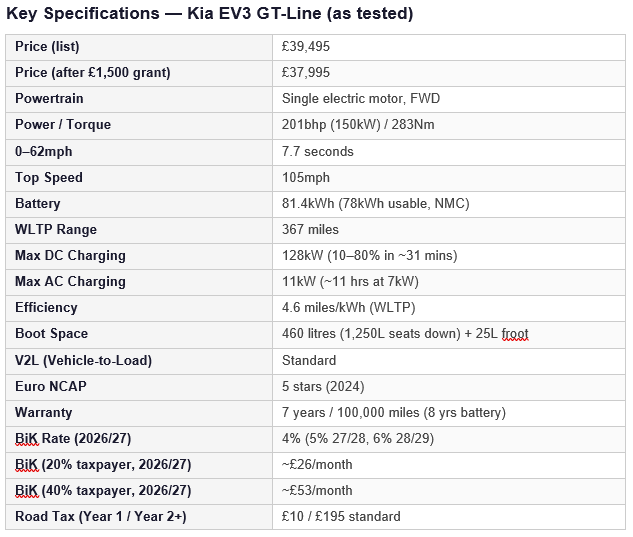
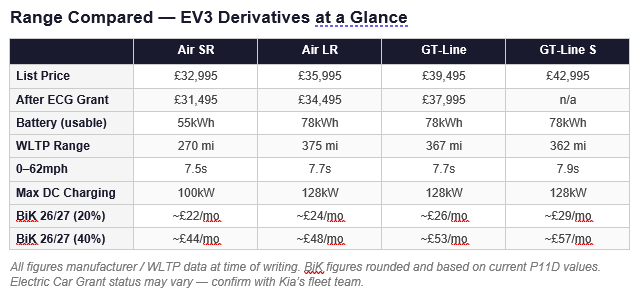
Let’s put things into context. The EV3 range starts at £32,995 for the Air Standard Range and tops out at £42,995 for the range-topping GT-Line S. My GT-Line test car sits between at £39,495, and comes as standard with the larger 81.4kWh Long Range battery (78kWh usable), a 375-mile-adjacent WLTP range figure of 367 miles, 19-inch alloys, faux-leather seats, sportier body styling, tinted rear glass, wireless phone charging and Kia’s excellent infotainment package. On paper alone, it’s already a compelling proposition. In the metal, it’s even better.
And here’s the fleet headline: at 4% Benefit-in-Kind for the 2026/27 tax year, a 20% taxpayer is going to pay around £26 a month in BiK on this car. A 40% taxpayer, roughly £53. That’s not a typo. On salary sacrifice, the maths gets even more interesting — but I’ll come to that.
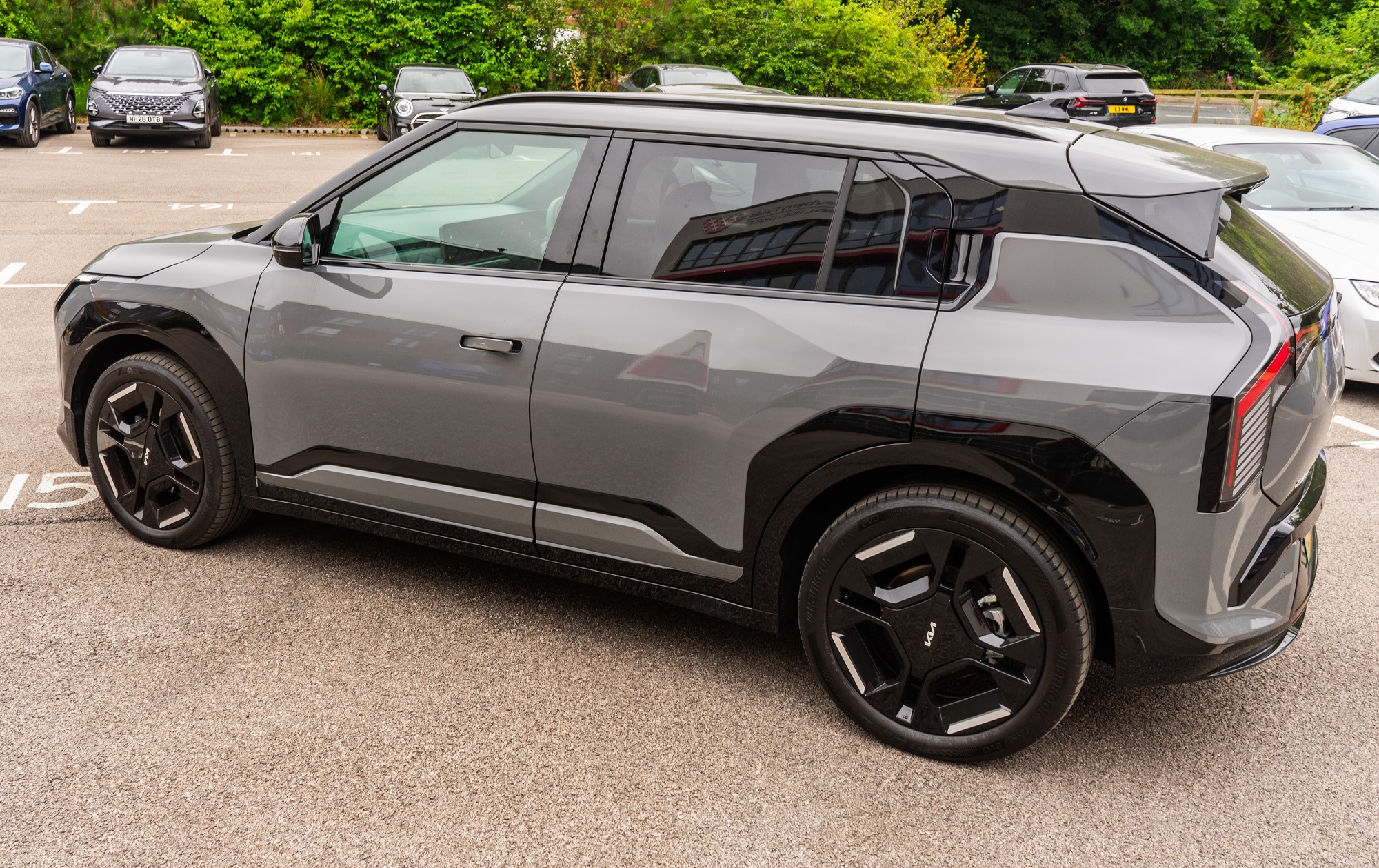
Image: Fleetpoint
Design and Interior
The KiaEV3 borrows heavily from its bigger EV9 sibling, and that’s no bad thing. The square-jawed, upright stance and the vertical LED signature at the corners give it a genuine road presence that the Soul EV never quite managed. The GT-Line trim adds the more aggressive body kit, gloss black detailing and 19-inch alloys — it looks the part on a driveway.
Inside, the driving position is elevated in that proper SUV way that is high in by this class standard, and forward visibility is genuinely excellent. The seat was, if I’m honest, a touch firm when I first climbed in — I wondered whether I’d get on with it for a week. But by the end of my first long run I was completely won over. The seat adjustment range is brilliant and once you’ve dialled it in properly, it’s the kind of seat that just supports you for hours. On a two-hundred mile round trip I got out fresher than I usually do.
Materials are a mixed bag. There are some harder plastics on show — the doors and lower dash aren’t exactly plush — but the fabric-wrapped upper dash and door tops on GT-Line trim lift the ambience considerably. It doesn’t feel cheap, and Kia’s obvious focus on recycled materials adds a genuine sense of purpose to the cabin rather than penny-pinching. The 12.3-inch driver display and 12.3-inch central touchscreen sit under a shared curved bezel and look sharp.
Space is impressive for a car of this size. Two adults fit comfortably in the back with knees well clear of the front seats, and the flat floor — a benefit of being built on a dedicated EV platform — means the middle passenger isn’t straddling a transmission tunnel. Boot space comes in at 460 litres with the seats up, expanding to 1,250 litres with them folded. There’s also a 25-litre ‘frunk’ up front, which is where the charging cables live in this house.
The wife test, for the third month running, was passed without complaint. Everything within reach, seat comfortable, no drama with the warning chimes. I’m starting to think it’s just me.
Infotainment and Physical Controls
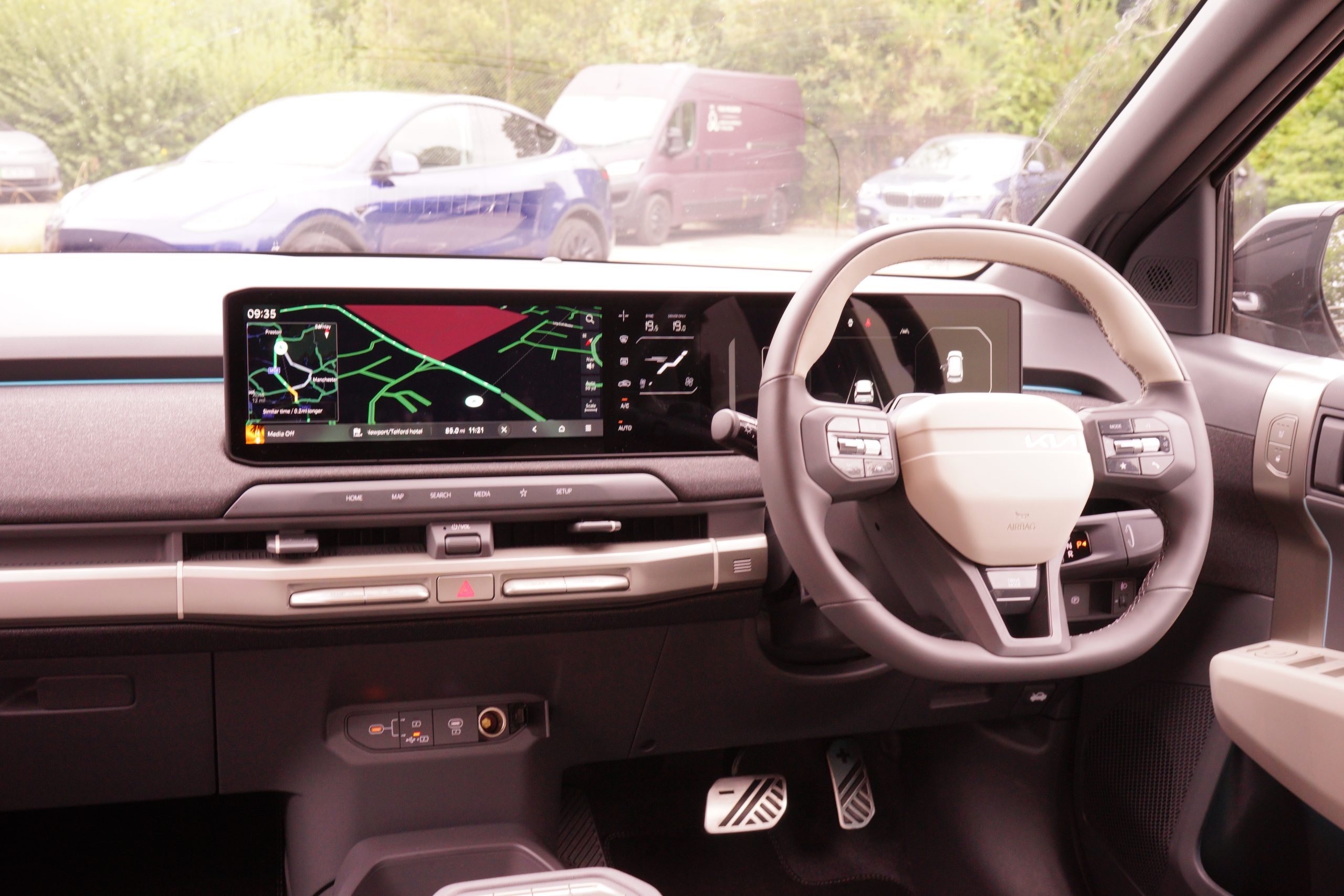
Image: Fleetpoint
This is where the Kia EV3 pulled properly ahead of the Chinese competition for me. The infotainment is intuitive, sharp, and — crucially — everything is where you’d expect it to be. There’s none of that hunting through menus to find something that ought to be one tap away. Wireless Apple CarPlay and Android Auto are standard across the range, and both connect cleanly.
What genuinely delighted me were the physical switches and levers. In an industry rushing to bury every function behind a screen, Kia has kept dedicated climate controls, hazard switches and audio controls on the dashboard. There’s a proper strip of buttons for the essentials, and a genuinely useful set of steering-wheel controls including a rocker for switching between Eco, Normal and Sport drive modes. That last one I used constantly — I loved the sharp response in Sport but generally left it in Eco for proper day-to-day driving. Being able to swap in a heartbeat, without diving into a menu, is exactly how it should be.
One small niggle on the built-in sat nav: the dark background makes it hard to read in bright daylight. That’s partly a design choice and partly the way the sun hits the screen, and it may just be my eyes. Truth is, most of us are on CarPlay anyway, and the CarPlay implementation here is bulletproof.
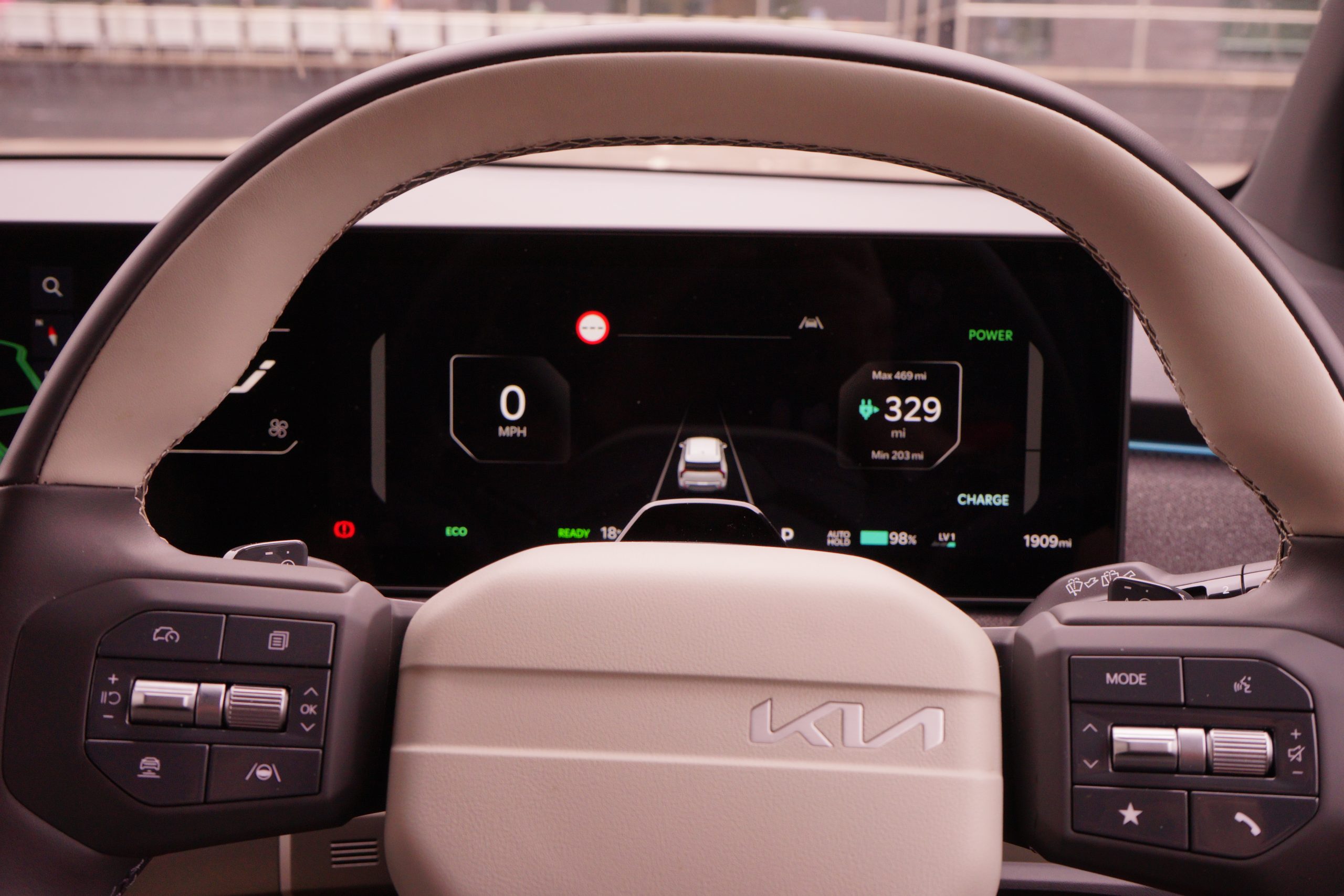
Image: Fleetpoint
The wireless charging pad is another lovely detail. Drop the phone on the pad, and if it’s correctly positioned and charging, a small indicator light appears so you know it’s doing its job. It sounds trivial, but it saves the classic company-car moment of arriving at your next meeting to find your phone at 3% because it was on the pad but not lined up properly.
On the Road
Every EV3 comes with the same 201bhp front-mounted electric motor producing 283Nm of torque. In the GT-Line with the Long Range battery, 0–62mph is dispatched in a claimed 7.7 seconds, though it feels quicker than that from the driver’s seat. Kia has tuned the throttle response nicely, and the car feels genuinely nippy off the line — particularly in Sport mode, where the initial shove is meaningful without being neck-snapping.
Away from the traffic lights, the EV3 is at its best on the motorway. It cruises very smoothly, feels planted, and Kia’s adaptive cruise control is one of the better systems I’ve used — it holds its distance sensibly and doesn’t get twitchy in traffic. I did notice a build-up of road noise as I approached 70mph, which is worth flagging. It’s not intrusive, but it’s more present than in some competitors. Could just be me, or the tyre choice on the GT-Line’s 19-inch alloys — the smaller-wheeled Air trim will almost certainly be a touch quieter.
Around town, the EV3 handles Lancashire’s decaying road surfaces really well. I hit a couple of the usual craters at unusual angles and the suspension just soaked them up without transmitting the impact through the wheel or the seat. My soul, unlike the car it replaced, remained firmly inside my body throughout. Nippy around town and nicely smooth on motorways.
Where the EV3 is honest about its limitations is on a twisty B-road. It leans a bit, and there’s some nose-dive under heavy braking. It’s not a car that begs to be hustled. But then this is a family SUV for a company car scheme, not a hot hatch, and the vast majority of its owners won’t care in the slightest. Comfort and refinement are the priority, and it nails both.
Battery, Range and Charging
The GT-Line’s 81.4kWh battery (78kWh usable) delivers an official 367 miles WLTP. Real-world testing in the more equipment-heavy GT-Line S returned around 260 miles in mixed driving, and my figures broadly matched. On a full charge with the sat nav showing 330 miles indicated after I’d topped up, I was genuinely impressed by how quickly the state-of-charge climbed.
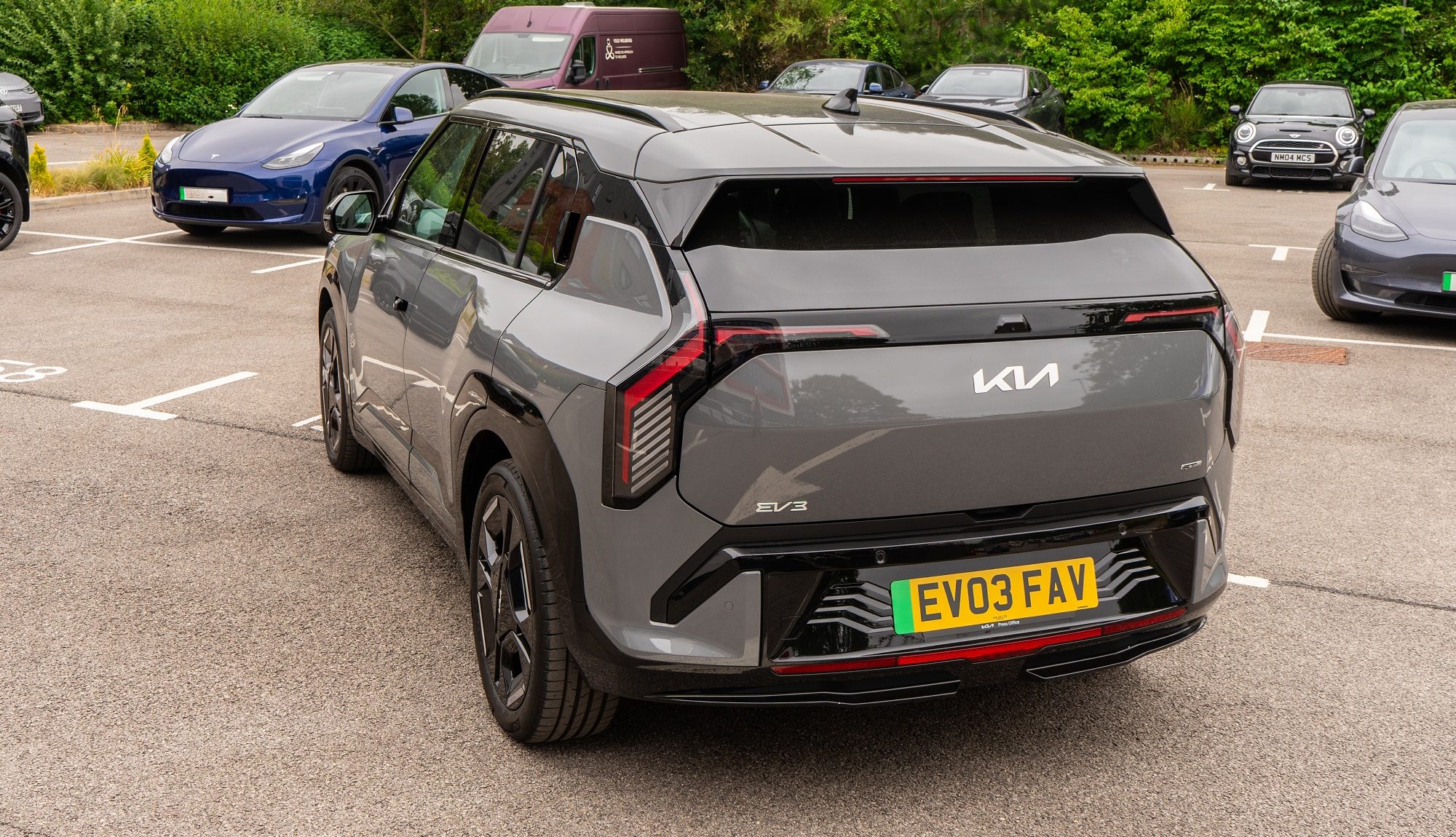
Image: Fleetpoint
DC rapid charging peaks at 128kW on the Long Range models. That translates to a 10–80% top-up in around 31 minutes on a suitable charger — not class-leading in the age of 800V architecture, but perfectly usable for a fleet driver stopping for a coffee on a long trip. At home on a 7kW wallbox, you’re looking at about 11 hours for a full charge, which is fine for overnight top-ups but does mean you need a wallbox rather than a three-pin cable if you’re serious about this being your only car.
Standard Range Air customers get a smaller 58.3kWh battery (55kWh usable) with 270 miles WLTP and 100kW DC charging, which will suit shorter-commute company car drivers just as well. There’s no bad choice in the range — just different sweet spots.
The Niggles
Same complaint I’ve been making for three months running: the driver alerts. Speed warnings, lane-keep chimes, attention monitoring — all present, all overzealous, and all reset every time you turn the car off. This is a regulatory issue, not a Kia one, but the fact that no manufacturer has yet solved the persistent-settings problem tells you something about how the mandate has been implemented. I fell its tedious and needing a recalibration so owners won’t automatically switch off the safety and assistance alerts.
Beyond that, the niggles are minor. The road noise creeping in above 70mph, the daylight-legibility issue with the built-in sat nav, and a small climate touchscreen that’s partially blocked by the steering wheel from the driver’s seat. None of these are deal-breakers.
Safety and Warranty
The EV3 earned a full five-star Euro NCAP rating in 2024, and comes with an impressive suite of standard safety kit: adaptive cruise control, lane-keep assist, blind-spot monitoring, forward collision avoidance with pedestrian and cyclist detection, driver attention monitoring, and rear cross-traffic alert. GT-Line adds blind-spot cameras and a 360-degree parking camera on the S trim.
Kia’s warranty package remains one of the strongest in the business: seven years or 100,000 miles of cover on most components, extended to eight years or 100,000 miles for the battery. For fleet operators — particularly those looking at four-year, 80,000-mile cycles — that means the car should still be inside warranty at defleet time. Peace of mind you don’t get from most European rivals.
The Fleet and Sal-Sac Case
Right, this is where the EV3 GT-Line gets genuinely exciting for a Fleetpoint audience. Pure electric cars sit in the 4% Benefit-in-Kind band for the 2026/27 tax year, rising to 5% in 2027/28 and 6% in 2028/29. For the GT-Line at a P11D value of £39,390, that translates to:
- 20% taxpayer, 2026/27: around £26 per month in BiK (£315 per year) • 40% taxpayer, 2026/27: around £53 per month in BiK (£630 per year)
Compare that to a similarly-priced petrol SUV and you’re typically saving £200–£300 a month in BiK alone. Over a four-year contract, we’re talking north of £10,000 in tax savings for a higher-rate taxpayer. That’s the number that gets HR directors’ attention.
Where salary sacrifice really sharpens the pencil is when you compare the total cost of running an EV3 against a petrol equivalent bought privately. Broker-published sal-sac figures I’ve seen for the GT-Line come in around £350–£400 per month net for a 40% taxpayer on a typical scheme, which includes the lease, insurance, servicing, tyres and often a home charger. A 20% taxpayer might see closer to £450–£500. Compare that to the true cost of ownership of a similarly-specced petrol SUV bought outright and it’s frequently cheaper by £100–£200 a month, once you factor in fuel.
Kia’s own fleet team have been active in the market for years, and the dealer network is well-established. That’s a genuinely important consideration when set against the newer Chinese entrants I’ve reviewed in recent issues. For a first-time EV fleet, that infrastructure matters.
Image: Fleetpoint
The Competition
The EV3 sits in one of the most contested segments in the UK market, and it earns its shortlist place in most of the comparisons I’ve run through. It undercuts the Volvo EX30 on running costs and beats it comfortably on range. It matches the Skoda Elroq for practicality while offering marginally better range on the top trim. The Hyundai Kona Electric — which sits on similar platform DNA — is a close cousin but doesn’t quite match the EV3’s range figures. The Renault Scenic E-Tech offers more rear space but costs more. And the incoming Chinese contenders like the BYD Atto 3 and Leapmotor C10 are cheaper but don’t yet have the warranty package or dealer network to reassure a fleet manager. For a mainstream, well-established, low-risk fleet EV, the EV3 is right at the top of the shortlist.
The Verdict
The Kia EV3 GT-Line is exactly what a modern fleet EV should be: comfortable, well-equipped, sensibly priced, and blessed with the sort of tax profile that makes salary sacrifice a genuine no-brainer for higher-rate taxpayers. The seat that won me over, the physical switches I loved, the wireless charging pad with its considerate little indicator light, the nippy Sport mode I kept dipping into — these are the details that make a car pleasant to live with day to day.
For fleet managers looking to add a compact electric SUV to their choice list, particularly if you’re running or considering a salary sacrifice scheme, the EV3 GT-Line deserves serious consideration. Kia’s established fleet operation, the industry-leading warranty, the 4% BiK band and the sensible list price make this one of the strongest small EV propositions on the market right now. Four stars from me, and it only misses the fifth on the road noise, the sat nav visibility, and Kia’s reluctance to fit a heat pump as standard — which, for a car of this quality, feels like a genuine oversight.

![Carrier Transicold launches [R]eCool](https://www.fleetpoint.org/wp-content/uploads/2026/07/010-03-Carrier-Transicold-ReCool-Launch-1200x849-1-e1785319567169-100x70.jpg)