
The UK’s transition to eHGVs is being held back by outdated grid connection rules that leave freight depots waiting years for electricity capacity while much of the network’s reserved power remains unused, according to a new report from TwentyForty, the freight infrastructure body.
 In its report, 12 Pillars of Change: Power In, TwentyForty argues that reforming the way electricity network capacity is allocated is essential if the Government is to support the decarbonisation of the haulage sector. Alongside the report, the organisation has also published a free Operators’ Guide, offering practical advice to fleet operators on securing power under the current regulatory framework.
TwentyForty’s research analysed more than five million half-hourly meter readings from all 96 data centres connected to UK Power Networks’ distribution network, which covers London, the East and South East of England. The findings revealed that, over a three-year period, the average site used just 18% of the electricity capacity it had reserved.
Despite this, grid connection queues continue to be based on the amount of capacity businesses have booked rather than what they actually consume. According to the report, this leaves freight depots, where eHGVs would typically be charged overnight during periods of lower electricity demand, waiting behind speculative or underused reservations.
The report warns that timing is becoming increasingly critical for fleet operators. While obtaining a new grid connection can take between 18 and 36 months, purchasing new trucks typically takes only a few months. TwentyForty believes that once the total operating cost of an eHGV falls below that of diesel, many operators could transition their fleets within just one or two vehicle replacement cycles, creating a surge in demand for grid capacity.
To address the issue, TwentyForty is urging the Government and energy regulator to introduce a series of reforms. These include requiring electricity network operators to offer flexible grid connections for freight depots, recognising freight infrastructure within strategic grid priority criteria, and giving commercial tenants a statutory right to install EV charging infrastructure where they fund the installation themselves.
However, the organisation acknowledges that regulatory reform will take time, which is why it has simultaneously published its Operators’ Guide to help businesses navigate the existing system.
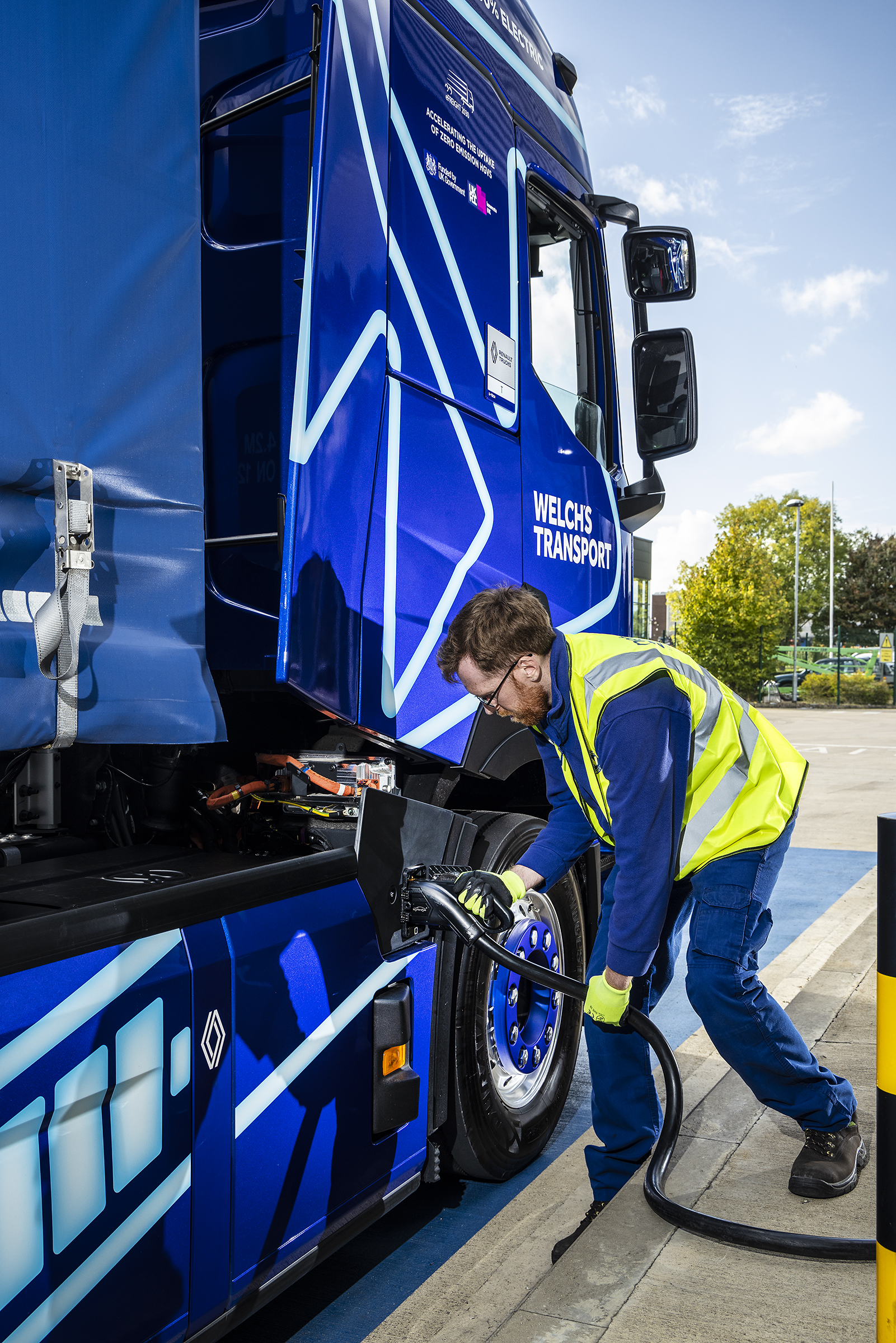
Image: Welch Group/TwentyForty
The guide advises fleet operators to prioritise understanding their electricity connection options before investing in charging infrastructure or ordering electric vehicles. It recommends obtaining a budget estimate from the local distribution network operator at the earliest stage, warning that securing sufficient grid capacity is often the longest lead-time item in any depot electrification project.
It also challenges several common misconceptions. According to the guide, electricity network operators cannot legally refuse a connection request, while both connection costs and delivery times can often be negotiated. It notes that many network reinforcement costs are shared across all electricity users rather than being borne solely by the depot, and that operators are entitled to request flexible connections that make use of spare network capacity during quieter overnight periods.
While technologies such as battery energy storage can help overcome temporary connection constraints, the guide stresses that they should be viewed as interim solutions rather than replacements for permanent grid upgrades. It also cautions that some remote depot locations may never receive economically viable electricity connections without wider infrastructure investment.
Jamie Sands, Founder of TwentyForty, said: “The grid is handing its scarcest resource to whoever asks for it first, not those that will use it. Most trucks charge overnight, when the network is quietest, but depots are waiting in a queue for increased grid connectivity behind reservations for capacity that are pure speculation.
“Government has to fix who gets the power and in what order, and the report clearly puts that case forward. However, hauliers cannot put their fleet plans on hold while Whitehall consults. The Operators’ Guide covers what hauliers can control today, while the report deals with what they can’t.”
TwentyForty’s report highlights a growing challenge for the UK’s freight sector. As more operators prepare to electrify their fleets, access to electricity infrastructure risks becoming a greater barrier than vehicle availability or charging technology. Without reforms to grid allocation, the organisation argues, the UK’s ambitions for zero-emission road freight could be significantly delayed.
The 12 Pillars of Change: Power In report, the accompanying Operators’ Guide and TwentyForty’s new AI-powered chat tool are available to download via the organisation’s website, providing fleet operators with practical guidance while longer-term policy reforms are debated.