

Operators of heavy goods vehicles carrying dangerous goods face a small but important change to the ADR testing process, with the Driver and Vehicle Standards Agency (DVSA) introducing stricter requirements for declaring inaccessible starter and auxiliary batteries.
The revised rules are designed to tackle the growing number of incorrect declarations submitted during ADR applications, ensuring inspectors can carry out tests more efficiently while maintaining the highest safety standards.
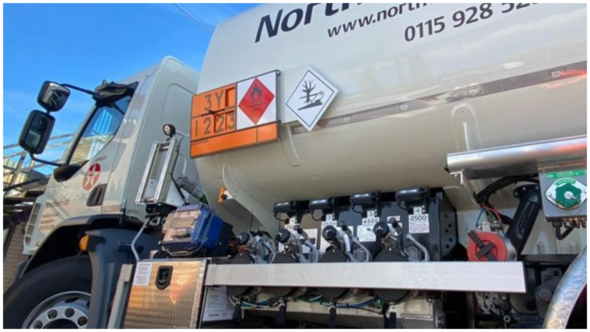
Image: GOV.UK
The changes affect starter and auxiliary batteries only and do not apply to batteries used to power electric or hybrid vehicle propulsion systems.
Why the ADR declaration has changed
The DVSA has updated the ADR III and ADR III(S) application forms after identifying that some operators were declaring starter or auxiliary batteries as inaccessible when, in reality, they could be accessed during an ADR inspection.
This unnecessary use of the declaration created avoidable complications during vehicle testing and slowed the inspection process.
As a result, operators are now required to explain why a starter or auxiliary battery is inaccessible whenever they complete the declaration. The revised forms were updated on 9 July 2026 to make this requirement clearer and ensure the declaration is only used in genuine cases.
When the declaration is required
The new guidance is straightforward. If the vehicle’s starter or auxiliary batteries are accessible during the ADR inspection, operators do not need to complete the declaration section on either the ADR III or ADR III(S) application forms.
However, if the batteries cannot be accessed because of the vehicle’s design, specialist bodywork or equipment installation, the declaration must now be completed, including the reason they are inaccessible.
The declaration confirms that the batteries have already been inspected and comply fully with the requirements of ADR Section 9.2.2, despite not being available for examination during the DVSA inspection.
Supporting more efficient ADR inspections
The change reflects a practical approach by the DVSA rather than the introduction of a new technical standard.
ADR inspections include checks of electrical systems because poorly maintained starter or auxiliary batteries can present ignition risks in vehicles transporting hazardous substances. Where inspectors cannot physically access these batteries, they must rely on an operator’s declaration that the components have already been examined and meet ADR requirements.
By requiring operators to justify claims that batteries are inaccessible, the DVSA hopes to prevent unnecessary declarations while allowing inspectors to concentrate on vehicles where access genuinely is restricted.
The updated process should reduce delays and help ensure ADR testing resources are used more effectively.
What operators need to do
Fleet operators, transport managers and dangerous goods specialists should review their ADR application procedures before submitting vehicles for certification.
Where batteries are accessible, no declaration should be completed. Completing the battery declaration unnecessarily could result in additional questions or delays during the application process.
Where batteries are genuinely inaccessible, operators should ensure they have inspected them before the vehicle attends its ADR test and provide a clear explanation of why they cannot be accessed during the inspection. The declaration should only be signed once the batteries have been confirmed as compliant with ADR Section 9.2.2.
Businesses using external maintenance providers or vehicle converters should also ensure everyone involved understands the revised requirements so applications are completed correctly first time.
A reminder of ADR compliance
While the administrative change is relatively minor, it underlines the importance the DVSA places on accurate documentation for dangerous goods vehicles.
ADR certification remains essential for HGVs transporting hazardous materials, covering vehicle construction, electrical safety, braking systems and other measures designed to minimise risks during transport.
Accurate declarations form part of that wider safety regime. By tightening the rules around the inaccessible battery declaration, the DVSA aims to improve the consistency of applications, reduce unnecessary paperwork and support smoother ADR inspections for operators whose vehicles genuinely require the exemption.