
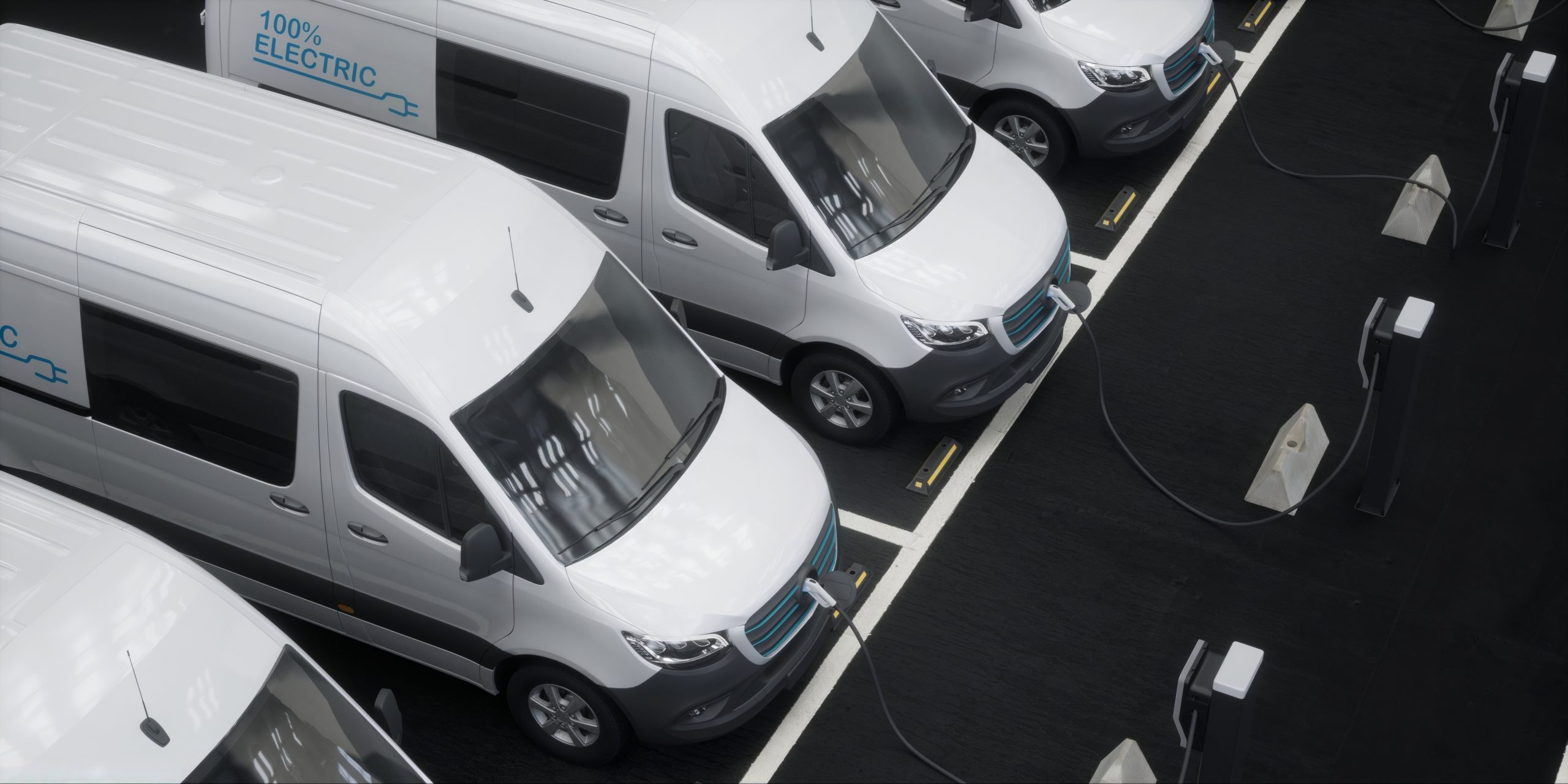
Installing EV charging infrastructure remains one of the biggest challenges businesses face when transitioning to electric vans. While the availability of electric commercial vehicles continues to improve, charging infrastructure planning is still a significant hurdle for many fleet operators.
The UK’s charging network is expanding rapidly. By the end of March 2026, more than 120,000 public EV charging devices were available nationwide. However, for businesses operating multiple vehicles, relying solely on public charging is rarely a practical or cost-effective solution.
According to Simon Ridley, Managing Director of Dawsongroup vans, early planning is essential to a successful fleet electrification strategy.
“Charging infrastructure is often where the biggest delays happen,” says Ridley. “The businesses that get ahead are the ones that treat it as part of their fleet strategy, not something to solve later.”
As organisations increasingly transition to electric vans, fleet managers must consider several key factors to ensure charging infrastructure supports both current operations and future growth.
A detailed site assessment should be the starting point for any charging installation project. Businesses need to understand exactly how their sites operate on a daily basis, including where vehicles are parked, how long they remain stationary and how many vehicles need charging at any given time. These considerations will determine the number of chargers required and how they should be deployed.
For many operators, overnight depot charging offers the most efficient solution. However, businesses with limited parking capacity, multiple operating shifts or varied vehicle schedules may require a more flexible approach.
“A lot of infrastructure challenges can be avoided by understanding how the site actually works,” says Ridley. “Charging should fit around operations, not disrupt them.”
Assessing electrical capacity is another critical step that is often underestimated. Many depots do not have sufficient power available to support multiple high-powered chargers without upgrades to their existing infrastructure. In some cases, grid reinforcement work may be required, adding both cost and significant lead times to projects.
Engaging with energy suppliers, Distribution Network Operators (DNOs) and installation specialists early in the process can help businesses identify potential constraints and avoid costly delays. Load management systems can also play an important role by balancing charging demand across multiple vehicles without exceeding site capacity.
“Power availability is where plans can come unstuck,” Ridley explains. “The earlier you assess it, the more options you have.”
Selecting the right charger type is equally important. Not every fleet requires rapid charging capability, and choosing chargers that align with operational requirements can help control costs.
For fleets where vehicles remain parked overnight, standard AC chargers are often sufficient. Businesses requiring faster vehicle turnaround times may benefit from rapid DC chargers, although these typically involve higher installation costs and increased power requirements.
Installation costs can vary considerably, ranging from approximately £1,500 to £15,000 per charging point depending on charger specifications and site conditions. As a result, many fleet operators adopt a mixed charging strategy, combining a small number of rapid chargers with a larger number of standard units.
“Businesses don’t always need the fastest chargers available,” says Ridley. “It’s about choosing the right solution for how your fleet operates.”
Industry experts also recommend taking a phased approach to charging infrastructure deployment. Attempting to install enough charging capacity for a fully electric fleet from the outset can create unnecessary costs and complexity, particularly for businesses transitioning gradually.
By aligning infrastructure investment with vehicle replacement cycles, organisations can spread expenditure over time while gaining valuable operational experience. Early installations provide opportunities to monitor usage patterns, identify challenges and refine charging strategies before expanding further.
“The most successful projects tend to be phased,” Ridley notes. “You learn a lot from early installations that helps shape future decisions.”
Businesses can also benefit from government support during the transition. The UK’s plug-in van grant currently offers discounts of up to £2,500 for small electric vans and up to £5,000 for larger electric van models, helping to reduce the overall cost of fleet electrification.
While avoiding unnecessary upfront expenditure is important, fleet managers should also ensure infrastructure plans can accommodate future growth. Demand for charging capacity is expected to increase significantly as electric vans become a larger part of commercial fleets across the UK.
Planning for expansion by installing additional ducting, reserving charger locations or considering future power requirements can make scaling infrastructure faster and more affordable in the years ahead.
“Futureproofing doesn’t mean installing everything upfront,” says Ridley. “It means making sure your site can evolve as your fleet does.”
Ultimately, EV charging infrastructure is about far more than installing charging points. It forms the foundation of a successful fleet electrification strategy. Decisions made around site design, power availability, charger selection and long-term planning will directly influence how effectively electric vans can be integrated into day-to-day operations.
As businesses continue their transition towards lower-emission transport, those adopting a structured and data-driven approach to charging infrastructure will be best placed to achieve a smooth, scalable and cost-effective transition.
For many fleet managers, the debate is no longer whether to invest in charging infrastructure, but how to implement it in a way that supports both immediate operational requirements and future fleet growth.