
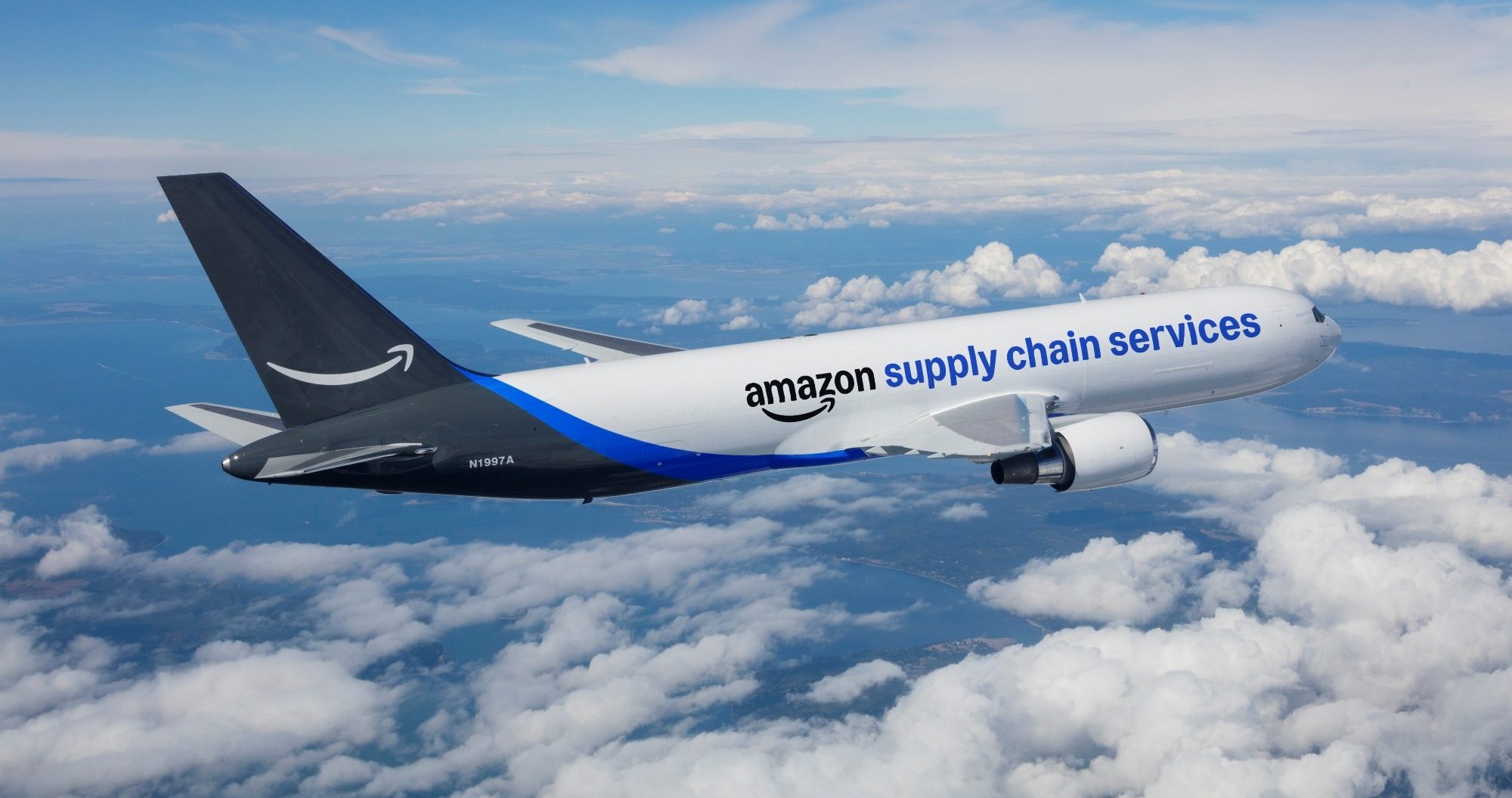
Amazon has officially launched Amazon Supply Chain Services (ASCS), opening its vast logistics and fulfilment infrastructure to businesses of all sizes in a move that could reshape the global third-party logistics (3PL) market.
The launch marks one of Amazon’s most ambitious expansions beyond ecommerce, with the company positioning ASCS as a fully integrated logistics platform offering freight, warehousing, fulfilment and parcel delivery services to brands across multiple industries. Analysts are already comparing the strategy to the creation of Amazon Web Services (AWS), which transformed cloud computing after initially being built to support Amazon’s own operations.
What is Amazon Supply Chain Services?
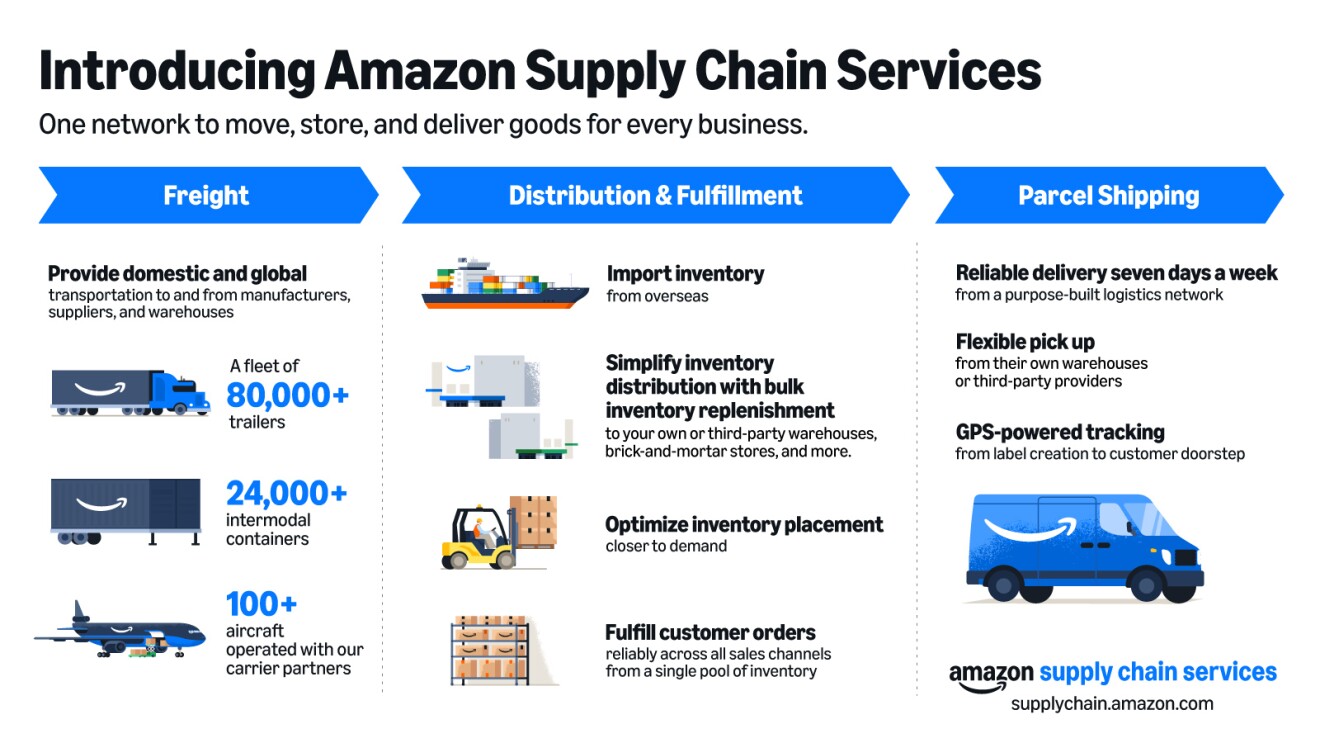
Amazon Supply Chain Services gives businesses access to the same logistics network Amazon has spent decades building to support its ecommerce empire. The service includes ocean, air, rail and road freight transport, warehouse storage, inventory management, fulfilment and last-mile delivery.
Importantly, businesses do not need to sell on Amazon’s marketplace to use the service. Amazon says ASCS is designed for companies in sectors including retail, healthcare, automotive and manufacturing. Early adopters include Procter & Gamble, 3M, Lands’ End and American Eagle Outfitters.
Amazon’s logistics footprint is enormous. The company says its network includes more than 80,000 trailers, 24,000 shipping containers and more than 100 partner-operated aircraft. Businesses using ASCS will also gain access to Amazon’s forecasting and inventory optimisation technology powered by artificial intelligence.
Peter Larsen, vice president of Amazon Supply Chain Services, said, “Amazon is bringing the infrastructure, intelligence, and scale of its supply chain services—proven over decades—to businesses everywhere, much like Amazon Web Services did for cloud computing.
“Supply chain wasn’t just a function at Amazon—it was core to providing an exceptional shopping experience. Our differentiator. The reason we could offer fast, dependable delivery that nobody else could. And with the launch of Amazon Supply Chain Services, we’re confident we can give any other business access to the same cost efficiency, reliability, and speed that we’ve built for Amazon customers.”
The company is effectively monetising infrastructure that was originally built for internal use, mirroring the strategy that helped AWS become a dominant force in enterprise technology.
Why Amazon’s Move Matters
Amazon’s expansion into end-to-end logistics has been years in the making. The company has steadily reduced its reliance on traditional carriers such as UPS and FedEx by building its own delivery vans, aircraft fleet and fulfilment centres.
However, ASCS takes that strategy significantly further by directly competing with established 3PL providers, freight forwarders and parcel delivery companies on a global scale.
Industry reaction was immediate. Following the announcement, shares in FedEx and UPS fell sharply as investors assessed the potential impact of Amazon entering the wider logistics market. Analysts described the launch as a “watershed moment” for the freight industry.
Joe Gilbert, portfolio manager at Integrity Asset Management, described the move as “a shot across the bow to the entire transport market.”
What Impact Will Amazon Supply Chain Services Have on Traditional 3PL Companies?
Traditional 3PL providers are likely to face significant pressure as Amazon leverages its scale, technology and infrastructure advantages.
Many logistics firms compete on speed, reliability and network reach — areas where Amazon has invested heavily for more than two decades. Amazon also benefits from deep operational data, sophisticated automation and AI-driven forecasting tools that many rivals may struggle to match.
Large multinational 3PL firms such as DHL, Kuehne + Nagel, GXO Logistics and XPO are expected to feel the greatest competitive pressure, particularly in fulfilment and parcel delivery. Regional warehouse operators and mid-sized logistics providers could also face margin compression as Amazon competes aggressively on pricing.
The biggest disruption may come from Amazon’s ability to offer integrated logistics under one platform. Businesses can potentially manage freight movement, warehousing, inventory positioning and final delivery through a single provider rather than multiple vendors.
For some brands, that simplicity may prove highly attractive.
Todd Bairstow, founder of Finer Form, said: “Amazon has added value at every stage of our supply chain from cross-border logistics to warehouse storage and parcel shipping. We’ve been able to save money, eliminate operational complexity, and it’s given us more time to focus on what matters: building our brand. Honestly, there wouldn’t be a Finer Form without Amazon.”
Challenges Amazon May Face
Despite its scale, Amazon’s expansion into third-party logistics is unlikely to be straightforward.
Some businesses remain cautious about sharing supply chain and sales data with Amazon due to concerns around competition and marketplace influence. Others may hesitate to become dependent on a company that already dominates ecommerce, cloud computing and digital advertising.
There are also operational and regulatory challenges. Managing logistics for external businesses across diverse industries requires different service levels, compliance requirements and customer relationships than Amazon’s traditional retail operations.
Nonetheless, the company’s track record suggests competitors cannot afford to dismiss the threat.
Just as AWS transformed enterprise IT infrastructure, Amazon Supply Chain Services could fundamentally reshape the logistics sector by turning supply chain infrastructure into an on-demand service.
For traditional 3PL providers, the message is clear: Amazon is no longer simply a retailer with a delivery network. It is now positioning itself as a global logistics powerhouse.