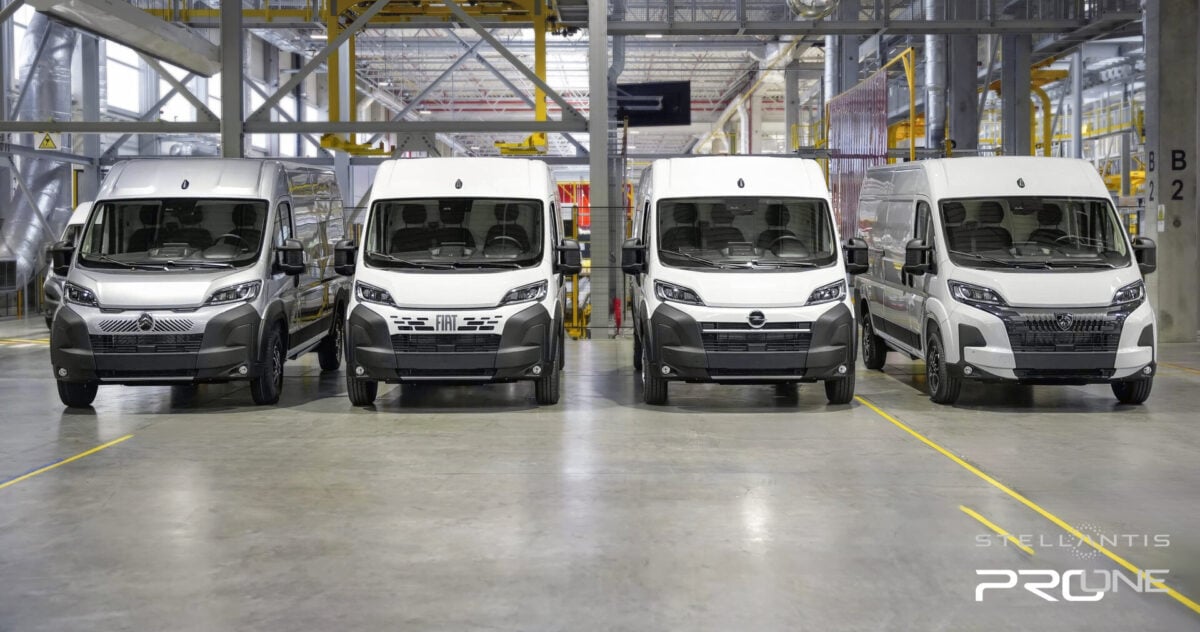


Stellantis announce further plant stoppages
Stellantis plant stoppages will stretch into the new year. The carmaker is pausing production at several European factories over Christmas, as weak sales, high costs and aggressive Chinese rivals squeeze its business. The Mulhouse plant in France, which builds the Peugeot 308, will close between 23 December and 11 January. The Rennes factory, which builds the Citroën C5 Aircross, will shut from 18 December to 5 January. For fleet managers, the closures raise fair questions about supply, lead times and the health of one of Europe’s largest car groups.
Which Stellantis plants will close over Christmas?
Mulhouse faces the longest break. Stellantis will also halt the Peugeot 308 and 408 lines on 4, 7 and 8 December, so the plant loses several days before the main shutdown. The site employs around 4,500 people. The CGT union says the stoppages will also hit hundreds of workers in the mechanical plants.
Rennes will close from the evening of 18 December until the morning of 5 January, but Stellantis says talks will open on site to set the final restart date. That wording leaves room for a longer closure. Sochaux, the historic Peugeot plant that builds the 3008 and 5008, will also stop on 3, 4, 7 and 8 December. Its lines then go quiet from 18 December, with production due to resume on 11 January 2027.
These closures follow a pattern. Stellantis already paused all three plants in October. Battery shortages hit Sochaux and Rennes, while weak sales of models nearing the end of their life cycle hit Mulhouse. The winter stoppages are therefore the latest in a series rather than a one-off.
Sochaux loses 500 temporary jobs
Stellantis this week unveiled plans to eliminate around 500 temporary positions at Sochaux from January. The company blames a “challenging environment marked by the emergence of new, aggressive competition.” It says the stoppages across its French plants aim to match output to a difficult European market, new rivals and a tense geopolitical situation.
The CGT union is not convinced. It called the latest measures an “unacceptable” attack on workers’ wages. The timing also stings. In June, Stellantis announced more than €1 billion of investment at Mulhouse, to build three new Peugeot models from 2029. That plan shows the group still believes in French manufacturing, but the short-term picture looks bleak.
Temporary staff often take the first hit. Stellantis cut 600 temporary jobs at Mulhouse in 2024 when it closed a night shift.
Why Stellantis plant stoppages are spreading
The market figures explain the urgency. Six Chinese groups took 13.2% of EU registrations in October, according to ACEA data. They have also captured around 84% of the market’s growth since January. Those groups include BYD, Geely, SAIC, Chery, Leapmotor and XPeng. Their combined volumes now beat Renault Group’s and edge closer to Stellantis’s.
Meanwhile, Stellantis registrations fell 7% in October. The group remains up 3.9% across the year, thanks mainly to Fiat and Citroën, but momentum has faded. Ironically, Stellantis controls one of the Chinese challengers. Its Leapmotor brand registered more than 84,000 cars in the EU between January and October.
Electric vehicles drive almost all of the market’s growth. EV registrations rose 50% this year, while petrol and diesel sales fell by about 20%. Stellantis must therefore invest heavily in electrification while rivals win share.
Energy costs and electrification add to the strain
Emanuele Cappellano, Stellantis’s Europe boss, points to a “dramatic” rise in energy costs at the group’s Italian plants. He also cites competition from imported vehicles and rising expenses tied to electrification. In his words, ensuring the production continuity that Italy requires “becomes a daily challenge.”
Italy illustrates the problem well. Stellantis chief executive Antonio Filosa has said Italian energy costs run at more than double those in France and Spain. Demand patterns add another layer. Electric cars took 41.5% of French sales, but only 5.9% of Italian registrations in October. Stellantis has to build for very different markets at the same time.
Italy has felt the pain too. The Mirafiori plant in Turin also faces a two-week halt in late October.
What the Stellantis shutdowns mean for fleets
Fleet managers should watch the situation, but there is no need to panic. Stellantis describes the stoppages as a way to match output to demand, not a retreat from Europe.
Even so, shutdowns of two to three weeks can ripple through delivery schedules. Popular models such as the 308 and C5 Aircross could see lead times shift in early 2027. The reports we reviewed announce no UK-specific impact, but customers should not assume that nothing will change. Speak to your leasing provider or Stellantis contact about order slots and delivery dates.
Keep an eye on the wider picture too. Chinese brands keep gaining ground, and that pressure could bring sharper discounts, new model launches and further restructuring across Europe. Fleetpoint will keep tracking developments as Stellantis confirms its final restart dates.