
Why is Jaguar Land Rover cutting up to 4,000 roles
Jaguar Land Rover (JLR) is set to cut up to 4,000 jobs over the next two years as the British carmaker attempts to reduce costs, simplify its organisation and protect the business against increasingly difficult global market conditions.
The Tata Motors-owned manufacturer confirmed over the weekend that it has opened a voluntary redundancy programme for salaried and management employees, although it has not itself confirmed the final number of redundancies. Reports have put the potential total at as many as 4,000 roles.
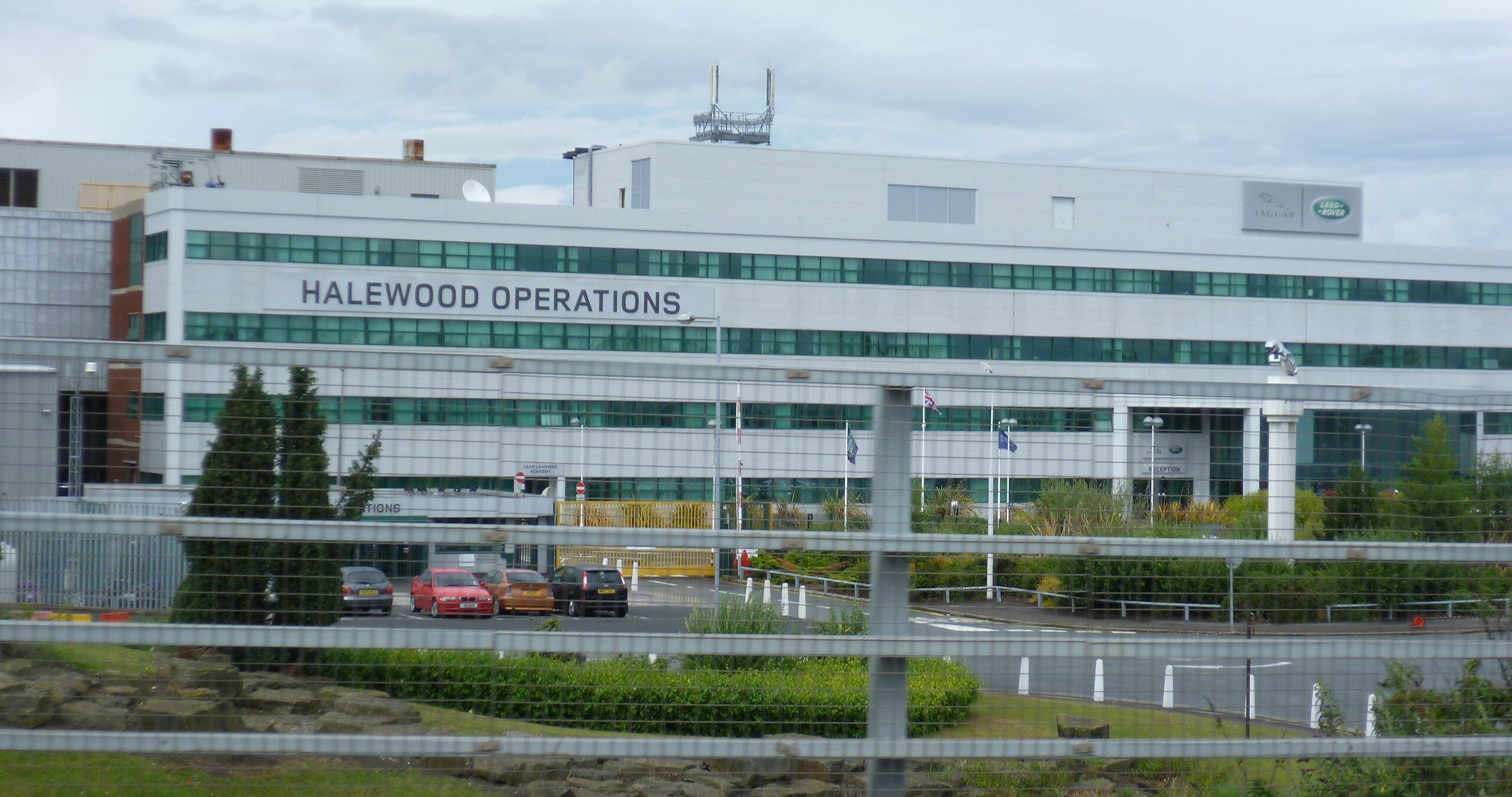
The announcement represents a significant moment for the UK automotive industry. JLR employs around 30,000 to 34,000 people in Britain, with major operations in Solihull, Wolverhampton, Coventry and Halewood, and supports a much larger employment base throughout the UK supply chain.
The proposed reduction also comes less than a year after a major cyber attack severely disrupted JLR’s production and distribution operations, while the company is simultaneously dealing with weaker sales, US tariffs, high operating costs and intense competition from Chinese automotive manufacturers.
Why is JLR cutting jobs?
At the heart of the decision is a £1.7 billion cost-saving programme announced by JLR chief executive PB Balaji in June.
The company is attempting to reduce its break-even volume to around 300,000 vehicles a year, compared with approximately 380,000 currently, making the business less dependent on high production volumes to remain profitable.
JLR says the programme will involve reducing material, warranty and fixed costs while improving operational efficiency. The company also wants to simplify its organisational structure and create what it describes as a more resilient business.
The redundancy programme is therefore not simply a response to one poor set of financial results. It forms part of a much wider restructuring of JLR as it attempts to make its luxury vehicle operation more competitive.
JLR said: “As we deliver the next phase of our strategy, we need to adapt to evolving global market conditions while targeting approximately £1.7 billion of savings over the next two years and reduce break-evens to 300,000 vehicles.”
It added: “To achieve this, we must further simplify our organisation, improve efficiency, and build greater resilience.”
Importantly for the UK’s manufacturing base, the reported redundancies are expected to concentrate on salaried and management positions rather than frontline production roles. Reports indicate that jobs at JLR’s manufacturing facilities are not currently expected to be directly affected by this particular programme.
Falling profits and sales add to the pressure
JLR’s financial performance explains why the company is looking so aggressively at its cost base.
For the year to March 2026, pre-tax profit before exceptional items fell dramatically to just £14 million, compared with £2.5 billion the previous year. The decline reflected the combined impact of weaker trading, the cyber attack and US tariffs.
The more recent figures have provided little immediate relief.
Revenue in the three months to the end of June fell 9.6% year-on-year to around £6 billion, while vehicle volumes declined by 9.2%. Pre-tax profit before exceptional items was £109 million, compared with £351 million a year earlier.
That deterioration matters because JLR operates at the premium end of the market, where vehicle prices can be extremely high, but volumes are relatively limited. A sustained reduction in demand can therefore have a disproportionate effect on profitability.
The company has also been dealing with the consequences of Jaguar’s radical product transition. Production of several established petrol and diesel Jaguar models has ended as the brand prepares for a new generation of electric vehicles.
That creates a difficult financial bridge: JLR has to continue investing heavily in new electric products while absorbing the loss of revenue from outgoing models.
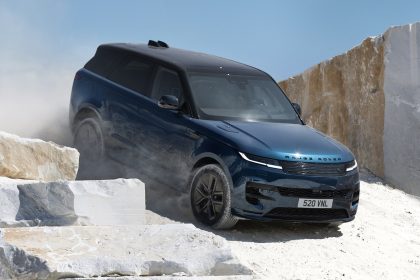
The company is betting that new products, including the Range Rover Electric, Range Rover Sport Electric and Jaguar’s forthcoming Type 01, will eventually restore growth. JLR’s strategy also gives Range Rover, Defender and Discovery greater flexibility between mild-hybrid, hybrid, plug-in hybrid and battery-electric powertrains.
The cyber attack continues to cast a shadow
Another major factor is the cyber attack that hit JLR in September 2025.
The attack forced the company to halt production at its UK factories for around five weeks, with the resulting disruption continuing to affect sales, distribution and financial performance after manufacturing resumed. JLR previously said production did not return to normal levels until the middle of November.
The effect was particularly damaging because the shutdown came at a critical point in the company’s financial year.
JLR subsequently reported a £485 million loss before tax and exceptional items for the three months to the end of September 2025, compared with a £398 million profit during the same period a year earlier.
Although JLR has stressed that production has now returned to normal, the financial consequences of the disruption have contributed to the need for the company to rebuild its balance sheet and reduce its underlying cost base.
The UK Government subsequently provided a £1.5 billion loan guarantee to support JLR following the cyber attack, demonstrating the strategic importance of the manufacturer to the British economy.
The latest announcement shows that government support did not remove the underlying commercial pressures facing the business.
US tariffs and Chinese competition
Two of the most significant external challenges are the US market and the rapid expansion of Chinese vehicle manufacturers.
The US is an important market for JLR’s luxury Range Rover and Defender products, making the company’s exposure to American tariffs particularly significant. The additional costs have put further pressure on margins at a time when JLR is already trying to manage an expensive product transition.
At the same time, Chinese manufacturers are becoming increasingly competitive in the UK and European markets.
Brands such as Chery’s Jaecoo are offering increasingly sophisticated SUVs at prices that put pressure on established manufacturers. Jaecoo’s rapid growth in the UK demonstrates how quickly Chinese brands can establish themselves in segments that were traditionally dominated by European manufacturers.
This is a particularly important issue for JLR because its core products are predominantly SUVs.
The company is responding by concentrating on the premium end of the market, increasing its focus on North America and developing a broader range of propulsion technologies. Balaji has previously described an ambition to grow JLR’s US business to the size of the entire company as it currently exists.
JLR’s June strategy update also confirmed that the company is targeting double-digit revenue growth while simultaneously reducing its break-even point.
What does JLR CEO PB Balaji say?
Balaji’s strategy is essentially about making JLR a smaller, more flexible and more financially resilient organisation while investing in its future products.
In June, he outlined an increased focus on North America, greater propulsion flexibility and a continued move towards JLR’s “House of Brands” structure.
“Our aspiration, in the coming years, is to grow our US business to the size of the entire JLR business as it exists today,” Balaji said.
The £1.7 billion savings target is therefore part of a broader transformation rather than simply a reaction to the latest sales figures.
The challenge is timing. JLR needs to cut costs now while simultaneously funding the new vehicles that management believes will deliver its next phase of growth.
That makes reducing administrative and management costs a relatively logical area for the business to target, particularly when compared with cutting production capacity that will be required for future electric and hybrid models.
Government rules out a JLR bailout
The job losses have inevitably placed pressure on the Government, particularly given the importance of JLR to the West Midlands and wider UK automotive supply chain.
Business Secretary Jonathan Reynolds has spoken to Balaji and is due to meet JLR’s leadership team, while discussions are also expected to involve Unite general secretary Sharon Graham.
However, Reynolds has made clear that the Government does not intend to provide a direct bailout.
He told the BBC that he did not “intervene and run businesses”, while acknowledging that the operating environment for carmakers in Britain and Europe is “challenging”.
Reynolds added: “If this is about making sure over time that workforce is right to make the business as competitive as possible, that’s the conversation we need to have.”
The Government’s position appears to be that public money can support strategic investment and the wider automotive industry, but should not be used simply to prevent a private company from restructuring its workforce.
That distinction is particularly important given the £1.5 billion loan guarantee already provided following the cyber attack.
Unite warns of a “perfect storm”
The trade union response has been considerably more critical.
Sharon Graham, general secretary of Unite, has argued that JLR’s problems are part of a wider failure to provide sufficient support for UK automotive manufacturing.
She said: “Death by a thousand cuts has been going on under the nose of successive governments.”
Graham also criticised what she described as “years of under-investment, unsustainable ZEV mandates and high industrial energy costs”, arguing that these pressures are “crippling the industry”.
The union is seeking further discussions with JLR and the Government in an attempt to minimise compulsory redundancies and protect employment.
That puts the Government in a difficult position. Ministers want to encourage investment in British manufacturing and support the transition to zero-emission vehicles, but they also have to contend with the reality that established manufacturers are struggling to make that transition commercially viable.
What does this mean for UK fleets?
Although the immediate job losses are primarily an internal JLR restructuring issue, the implications extend beyond the company’s employees.
JLR is one of the UK’s most important automotive manufacturers and its brands occupy a significant position in the company car and premium fleet markets.
The health of the business will therefore matter to fleet operators, leasing companies, dealerships, component suppliers and the wider automotive ecosystem.
For fleets, the more important issue is what JLR’s restructuring means for its future product strategy.
The company is continuing to invest heavily in electrification, including the Range Rover Electric and new Jaguar EVs, while giving its Range Rover, Defender and Discovery brands greater flexibility over hybrid and electric powertrains.
That suggests the job cuts should not be interpreted as JLR retreating from the UK or abandoning electrification.
Instead, they represent an attempt to create a lower-cost organisation capable of funding the next generation of products while dealing with lower volumes and a more competitive global market.
A warning for the wider automotive industry
JLR’s decision is also significant because it highlights the scale of the structural change facing the European automotive industry.
The combination of Chinese competition, tariffs, weak demand in some markets, high energy costs, electrification investment and increasingly complex regulation is putting pressure on manufacturers across Europe.
Volkswagen, for example, has also announced plans for tens of thousands of job cuts as it attempts to reduce costs and respond to Chinese competition and changing market conditions.
For JLR, however, the stakes are particularly high.
The company has successfully transformed itself from the loss-making manufacturer it was when Tata Motors acquired it into one of Britain’s most valuable automotive businesses. Its current restructuring is an acknowledgement that the operating model which delivered that success cannot simply be carried forward into the next decade.
The reported 4,000 job cuts will be painful for employees and communities, but JLR’s leadership believes that reducing costs now is necessary to protect the company’s long-term future.
The immediate priority will be delivering the £1.7 billion savings programme without undermining the engineering, technology and product development capabilities required to launch the next generation of Jaguar, Range Rover, Defender and Discovery vehicles.
For the UK automotive sector, the outcome will be closely watched. The Government may have ruled out a bailout, but its willingness to support investment, charging infrastructure, skills and the transition to zero-emission vehicles will be tested by JLR’s restructuring and the wider pressures facing British car manufacturing.
Mark Salisbury, Editor