
Hyundai plans to release 100 plus new and refreshed models
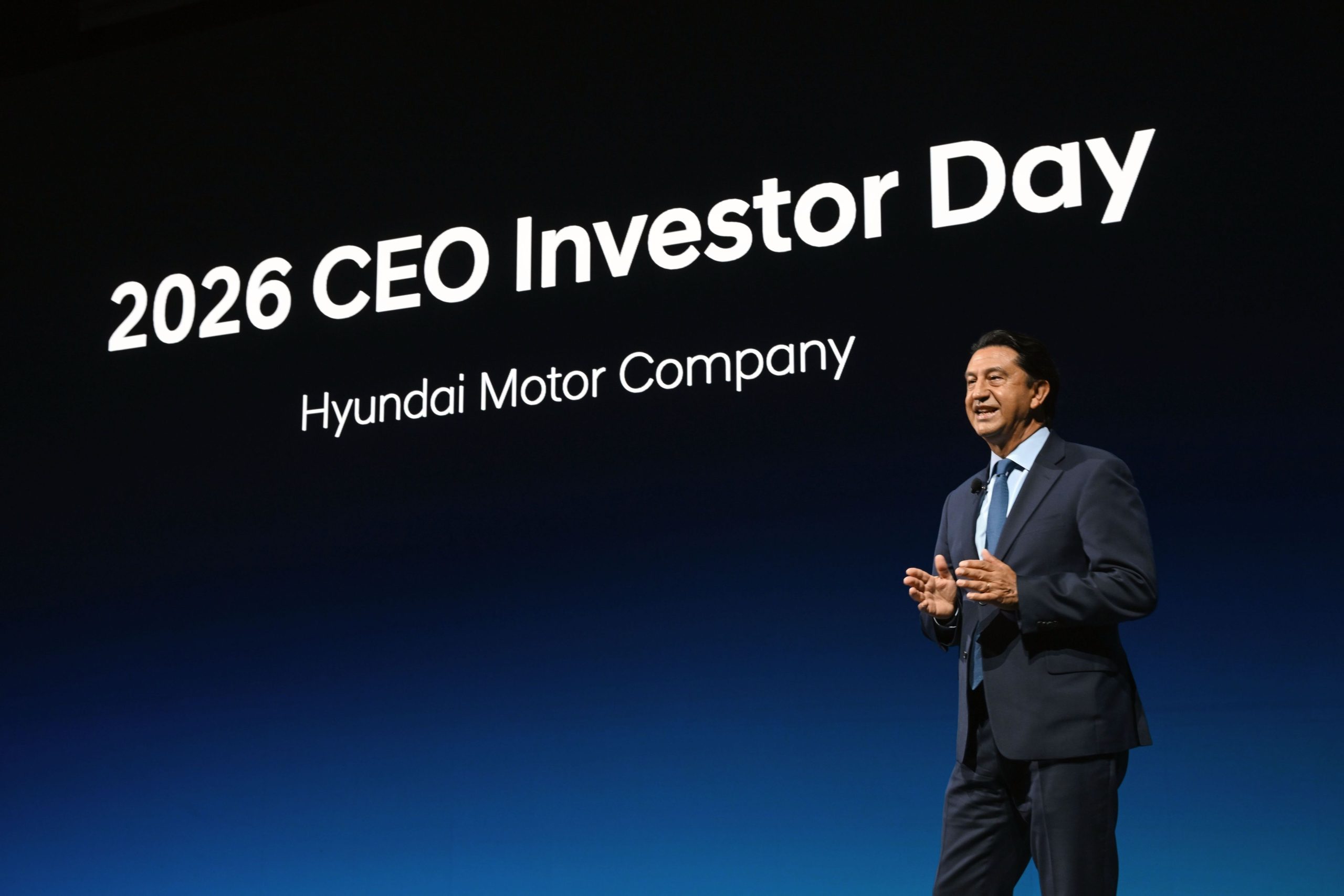
Hyundai has never been shy about ambition, but even by its own standards, the announcement made in Seoul this week is startling in scale. At a CEO Investor Day held at the Conrad Seoul hotel on Wednesday 26th August, Hyundai Motor Co. President and CEO Jose Munoz confirmed that the South Korean giant will roll out more than 100 new or refreshed vehicles across the globe by 2030, a plan that also sees the brand step into segments it has never previously touched, including body-on-frame trucks and light commercial vehicles.
For a company that already sells millions of cars a year, adding over a hundred fresh or updated nameplates to the roster within four years is an extraordinary logistical and financial undertaking. It signals not just confidence but a deliberate strategy to outmanoeuvre both established rivals such as Toyota and the wave of low-cost Chinese manufacturers reshaping the global car market.
Breaking down the numbers
According to Munoz, the rollout will be heavily weighted towards Hyundai’s largest markets. North America will receive 58 of the new and updated models, of which the luxury Genesis arm accounts for 22. Korea, unsurprisingly given its status as Hyundai’s home market and manufacturing heartland, will see around 49 launches, while Europe is pencilled in for approximately 41. India and China are also earmarked for significant activity, with reports putting the Indian figure at around 26 models and China at 22, though these numbers overlap with the wider global total because some vehicles will be sold across multiple regions.
Crucially, this is not simply a case of Hyundai giving existing cars a facelift and calling it a new launch. More than 18 of the vehicles will be genuinely new to Hyundai’s line-up, entering categories the brand has no current presence in whatsoever. Chief among these are a midsize pickup truck, light commercial vehicles, and body-on-frame vehicles, a construction method traditionally associated with rugged, heavy-duty trucks and SUVs rather than Hyundai’s typical unibody passenger cars. This marks a genuine strategic pivot for a manufacturer that has spent decades building its reputation on family hatchbacks, saloons and crossovers.
The pace of delivery is equally striking. Hyundai says seven new or substantially upgraded vehicles will arrive globally within the next eight months alone. That list includes an all-new Elantra saloon, an all-new Ioniq 3 electric SUV, a Tucson Hybrid, and a Santa Fe Extended Range Electric Vehicle destined for build at the company’s Alabama plant, alongside a new A-segment electric SUV for the Indian market and a fresh crop of European B-segment SUVs.
Why Hyundai believes it can pull this off
The obvious question is how any single manufacturer can justify such a sprawling, capital-intensive expansion at a time when many rivals are trimming model ranges and delaying electric vehicle investment. Munoz’s answer, delivered directly to the assembled investors, analysts and credit rating agencies in Seoul, was rooted in the company’s underlying financial strength.
“Our fundamentals have never been stronger,” Munoz told the room, framing the announcement as the natural next step for a business he says has built genuine scale and profitability advantages over its competitors. He went on to describe Hyundai Motor Group as the world’s third-largest automotive group and its second-most profitable, a position he argues gives the company room to keep investing even as other manufacturers retrench. He also linked the product blitz to Hyundai’s wider ambitions beyond conventional car-making, pointing to partnerships that will help the group develop robotics and robotaxi technology as part of its transformation into what executives are now calling a “physical AI” company.
That transformation is not just rhetoric. Hyundai confirmed it will begin supplying Ioniq 5-based robotaxis, built at its Metaplant America facility in Georgia, to Waymo in the fourth quarter of this year, while its Motional joint venture is targeting commercial robotaxi deployment before the year is out. The firm is also working with Boston Dynamics, its robotics subsidiary, to bring the Atlas humanoid robot onto production lines at the Georgia plant by 2028, having already opened a dedicated Robot Metaplant Application Centre in the United States.
Behind the headline model count sits a substantial reworking of financial targets. Hyundai has raised its 2030 operating profit margin goal from the previous 8 to 9 per cent range to more than 9 per cent, a target the company’s Chief Financial Officer, Lee Seung-jo, says will be supported by cutting the cost of goods sold by three percentage points through vehicle lifecycle savings, cheaper materials and greater localisation of production. The firm has also maintained its ambitious sales target of 5.55 million vehicles globally by 2030, a figure it originally raised from an earlier goal of 4.1 million units, with electrified vehicles expected to make up 60 per cent of that total and global market share projected to hit 6 per cent.
To physically build all these new vehicles, Hyundai plans to expand global production capacity by 1.27 million units by 2030. The bulk of that growth will come from North America, India, Korea, Saudi Arabia, Vietnam and Algeria. In the United States specifically, the company intends to lift local parts sourcing from 60 to 80 per cent and bring in more than 275 new local supplier partners, a move explicitly designed to soften the impact of American import tariffs and support what Hyundai calls its “build where you sell” approach.
A shifting powertrain strategy
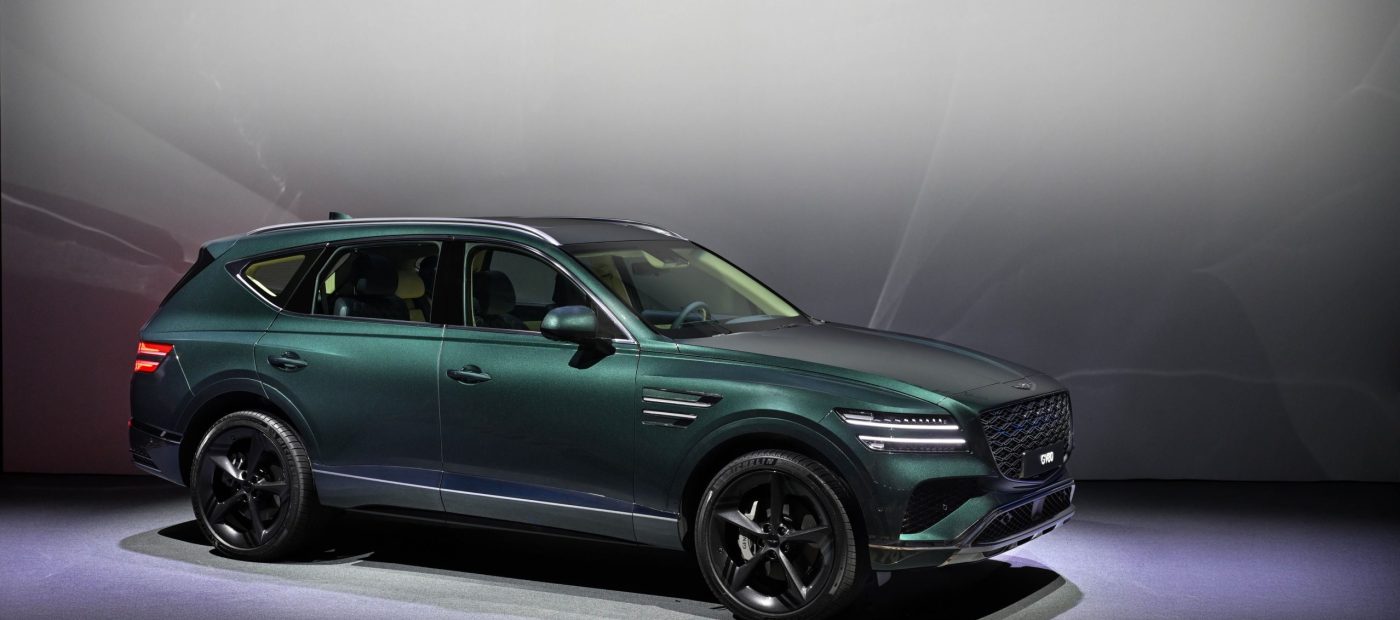
One of the more telling aspects of the announcement is what it reveals about Hyundai’s changing view of electrification. Rather than doubling down purely on battery-electric vehicles, the firm is broadening its bets considerably. In North America, hybrid sales are expected to climb to roughly half of total regional volume, up from around a quarter today, with more than ten hybrid models due by 2030. Genesis, too, is joining the hybrid push, with its first hybrid variant arriving on the GV80 later this year, followed by the brand’s first extended-range electric vehicle, targeting more than 640 miles of range, in the first half of next year.
Europe, by contrast, remains squarely focused on battery power, with Hyundai targeting the high-volume B- and C-segments that together account for over 60 per cent of regional sales. Munoz expects annual European EV sales to surge from around 116,000 units currently to more than 420,000, supported by manufacturing capacity scaling towards 580,000 units, with fully electric models such as the Ioniq 3 making up more than half of that output.
India, meanwhile, is being positioned as an export powerhouse rather than simply a domestic growth market. Leveraging what Hyundai describes as a cost advantage of more than 15 per cent globally, the country already ships around 30 per cent of its local production to more than 70 countries. The opening of a new plant in Pune is expected to lift annual capacity to 1.1 million units, with over 90 per cent local sourcing across some 1,400 supplier partners.
China remains the toughest nut to crack. Hyundai’s sales there have fallen sharply over the past decade in the face of homegrown competition, and the company is now targeting a recovery to more than 500,000 units annually by 2030 through a three-pronged strategy of relaunching its Ioniq electric range, expanding its dealer network to 484 outlets, and partnering with domestic technology firms.
Timing and context
The scale of this announcement is also notable given the backdrop against which it arrives. Hyundai’s production had recently been disrupted by months of labour disputes at home, a dispute the company only settled with a tentative agreement reached with its union just the day before the Investor Day took place. That the firm chose this moment to unveil its most aggressive product roadmap yet suggests a leadership team keen to draw a line under recent disruption and refocus attention on growth.
Back in Korea, Munoz described the country as the “heart of manufacturing” for the group, highlighting a new electric vehicle plant in Ulsan that will begin production later this year with the recently launched Genesis GV90. The facility has been designed as a software-defined factory, incorporating 108 advanced control systems and AI-driven quality inspection, and forms part of a record 125 trillion won, or roughly 90.3 billion US dollar, domestic investment programme that will also see Hyundai modernise its older Ulsan plants from 2027 onwards.
The verdict
Whether Hyundai can execute a plan of this magnitude without diluting quality, straining its supply chain or overwhelming its dealer networks remains to be seen. Launching over 100 vehicles inside four years, while simultaneously entering entirely new segments and building out a parallel robotics and autonomous vehicle business, is an enormous bet. Yet the rationale Munoz presented to investors is coherent: strong current profitability, a diversified powertrain strategy that hedges against slowing EV demand, and a willingness to localise production to blunt tariff risk. For consumers, the practical upshot should be a far wider choice of Hyundai and Genesis vehicles within the next few years, spanning everything from affordable hybrids to full-sized pickups, a genuinely significant broadening of what has, until now, been a comparatively conservative model range.