

BMW iX5 Hydrogen moves closer to series production
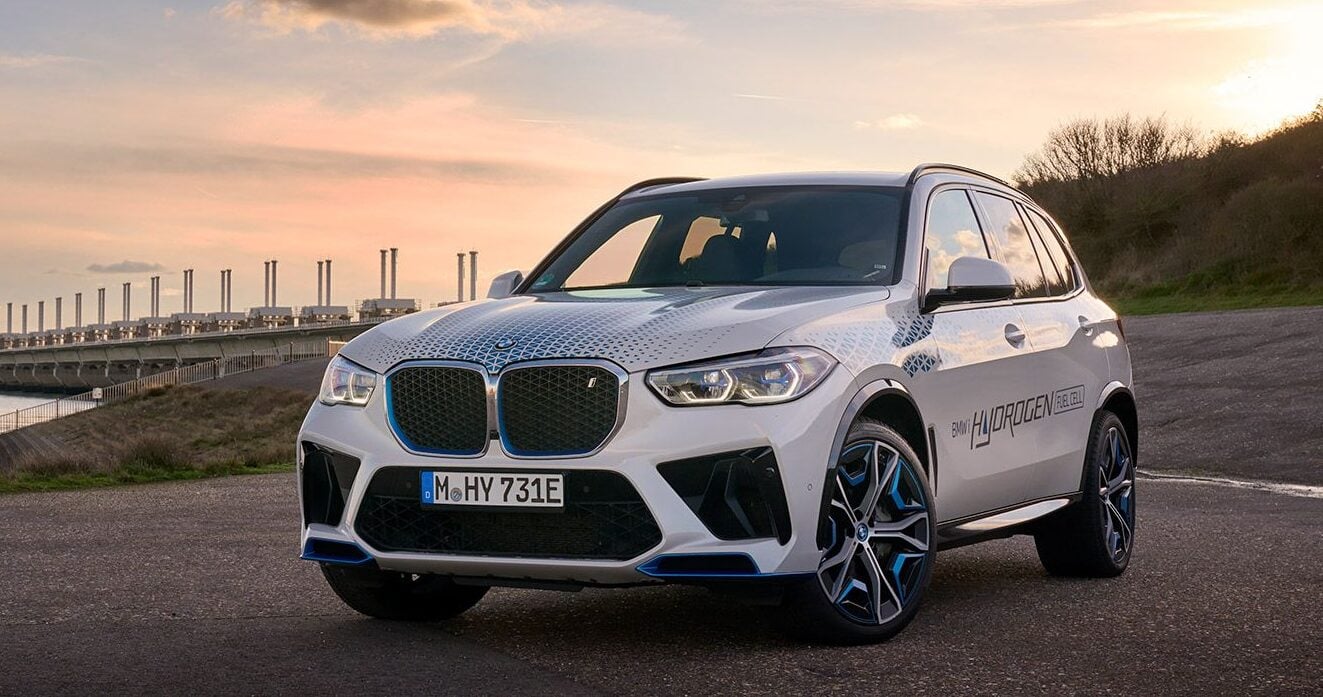
The new BMW iX5 Hydrogen has entered another important development phase as BMW Group steps up testing of its first hydrogen-powered production vehicle.
Current BMW iX5 Hydrogen prototypes are undergoing comprehensive road testing, while the company’s third-generation hydrogen fuel cell system is entering a new prototype assembly phase at the Hydrogen Competence Centre in Munich.

At the same time, BMW is preparing for the industrialisation and future series production of its fuel cell system at BMW Group Plant Steyr in Austria, bringing hydrogen technology closer to potential customer deployment.
The latest development programme is focused on validating the complete vehicle system, preparing manufacturing processes and integrating fuel cell technology while retaining the driving characteristics expected of a BMW.
“Our ambition for the BMW iX5 Hydrogen is clear: a true BMW – with Sheer Driving Pleasure. A perfectly coordinated overall system is crucial for this. Current testing demonstrates how the fuel cell system, high-voltage battery and electric drive train are already successfully integrated and how systematically we are developing the technology towards series production,” says Josef Hochreiter, head of Hydrogen Vehicles at the BMW Group.
BMW iX5 Hydrogen focuses on efficiency and performance
Testing of the BMW hydrogen SUV is concentrating on how the various elements of the powertrain operate together under demanding environmental and operating conditions.

Development teams are assessing the functionality of individual components within the integrated vehicle system, while optimising the complex control strategies required when the vehicle is operating under high loads.
The objective is to ensure that the fuel cell electric vehicle can deliver its full performance while maintaining the driving dynamics associated with the BMW brand.
The testing programme covers the interaction between the fuel cell system, electric motor, high-voltage battery, BMW Hydrogen Flat Storage and Energy Master. The latter acts as the central control unit for the vehicle’s high-voltage system.
BMW says the high-voltage battery and Energy Master enable greater recuperation performance, helping to improve overall system efficiency.
Performance is also a key consideration, with BMW targeting acceleration from 0 to 100 km/h in less than five seconds, putting the hydrogen-powered iX5 closer to the performance of the battery-electric BMW iX5.
Third-generation fuel cell system enters prototype assembly
Alongside vehicle testing, BMW is beginning the next prototype assembly phase for its third-generation fuel cell system at its Hydrogen Competence Centre in Munich.

The focus will be on finalising and validating testing methods, while also preparing the technology and manufacturing processes for industrialisation.
The previous prototype phase concentrated on component buildability and the basic qualification of suppliers. The next stage will build on that experience by developing robust and efficient production processes.
BMW says the knowledge gained during prototype assembly will be shared with teams at Plant Steyr, which is being prepared for future series production of the fuel cell systems.
“Prototype assembly is about much more than manufacturing individual components. Each phase helps us optimise processes, gain experience and systematically share this knowledge with the teams in Steyr. In this way, we are laying the foundation for the next steps on the road to industrialisation,” says Claudia Stephan, head of Technology Development and Fuel Cell Prototype Assembly at the BMW Group.
BMW prepares hydrogen production at Steyr
The move towards series production is being supported by close cooperation between BMW’s development operations in Munich and its manufacturing facility in Steyr.

The first test benches and manufacturing equipment have already been installed at the Austrian plant, while employees are being trained progressively in preparation for future fuel cell production.
The experience generated through this process will help BMW refine its manufacturing methods before the eventual production ramp-up.
Additional hydrogen powertrain components are being manufactured at BMW Group’s facility in Landshut, Germany.
Hydrogen offers alternative to battery-electric vehicles
The BMW iX5 Hydrogen forms part of BMW Group’s wider technology-open approach to vehicle powertrains. Rather than relying exclusively on battery-electric technology, BMW believes hydrogen fuel cells could provide another option where long range, rapid refuelling and operational flexibility are important.
The iX5 Hydrogen has a targeted WLTP range of up to 750 kilometres, while its hydrogen tanks can be refuelled in less than five minutes.
Like a battery-electric vehicle, the hydrogen fuel cell vehicle uses an electric motor for propulsion and produces no tailpipe CO₂ emissions during operation.
For fleet operators, rapid refuelling could be particularly relevant in applications where vehicles need to maximise utilisation and cannot easily accommodate long charging periods.

However, the availability of hydrogen refuelling infrastructure remains an important consideration for the wider adoption of fuel cell vehicles, particularly in the UK and other markets where hydrogen stations are still relatively limited compared with conventional fuel stations and public EV charging networks.
Hydrogen to join BMW X5 powertrain options
Following successful global testing of the pilot fleet, BMW says the BMW iX5 Hydrogen will become the first hydrogen-powered BMW Group production model.
The next-generation BMW X5 is also expected to offer customers a choice of powertrain technologies, including battery-electric, plug-in hybrid, petrol, diesel and hydrogen fuel cell systems.
This approach underlines BMW’s belief that different propulsion technologies could continue to have a role as the automotive industry moves towards lower-emission transport.
For fleets, hydrogen could potentially complement battery-electric vehicles in applications where long operating ranges, high vehicle utilisation and short refuelling times are particularly important.
How does the BMW iX5 Hydrogen fuel cell work?
The fuel cell generates electricity through an electrochemical reaction between hydrogen stored in the vehicle’s tanks and oxygen drawn from the surrounding air.
The resulting electrical energy powers the electric motor, while the only direct by-product at the vehicle is water.
The BMW iX5 Hydrogen uses a third-generation fuel cell system developed jointly by BMW Group and Toyota Motor Corporation.
BMW is supporting the development of the powertrain and tank system through the HyPowerDrive project, which forms part of the IPCEI Hy2Move programme.
The German Federal Ministry of Transport is providing €191 million in funding, while the state of Bavaria is co-financing the project with €82 million. Funding is administered by Projektträger Jülich (PtJ) and coordinated by NOW GmbH.
As BMW moves the iX5 Hydrogen towards industrialisation, the next stages will determine whether hydrogen can establish a meaningful role alongside battery-electric, hybrid and conventional powertrains in the company’s future vehicle line-up.
For fleet managers assessing future zero-emission options, the development is significant because it demonstrates that manufacturers continue to explore alternatives to battery-electric power where range, refuelling speed and vehicle utilisation are key considerations.