
HGV market returns to growth as zero-emission truck registrations fall
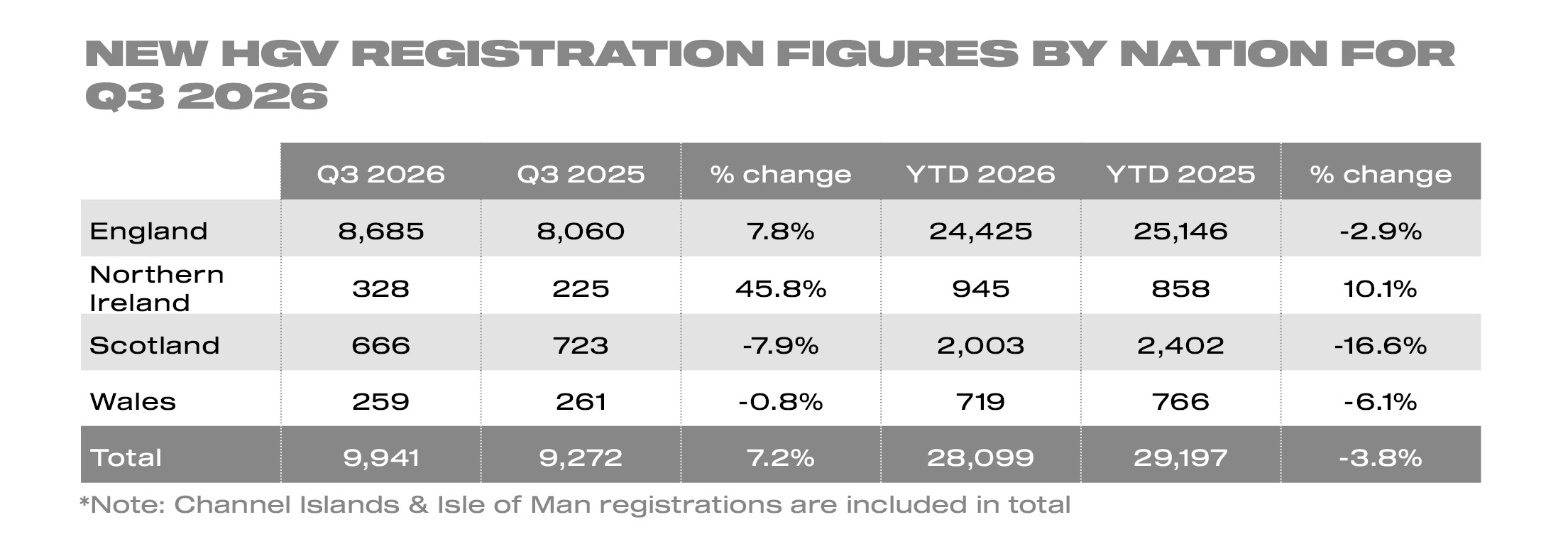
The UK new heavy goods vehicle (HGV) market returned to growth in the third quarter of 2026, with registrations rising by 7.2% to 9,941 units. However, demand for zero-emission trucks fell sharply, highlighting the challenges facing operators investing in lower-emission fleets.
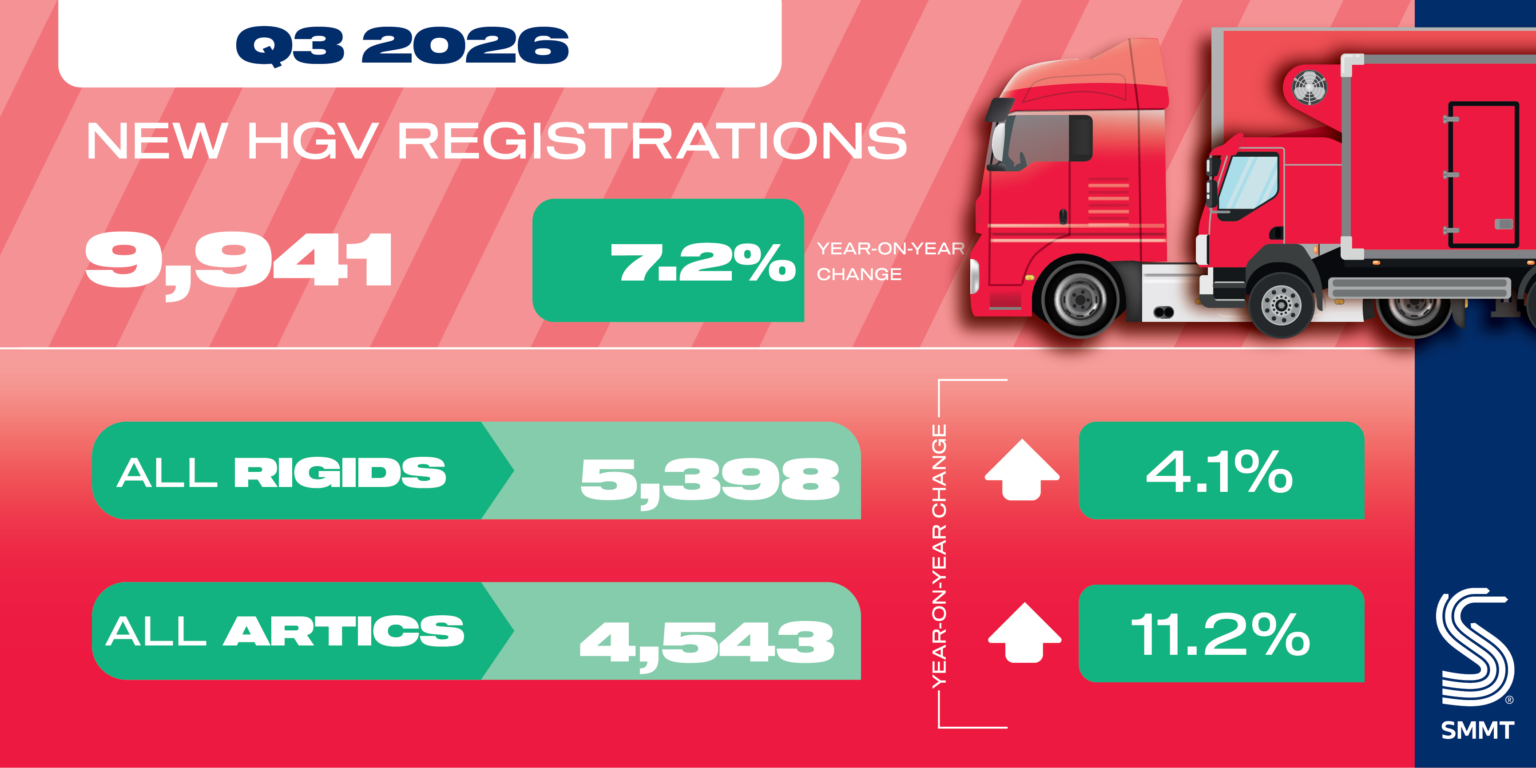
The latest figures from the Society of Motor Manufacturers and Traders (SMMT) show the first quarterly market increase since Q2 2024. They also mark the strongest quarterly performance since Q3 2023.
Despite the improvement, the recovery needs context. HGV registrations fell by 14.5% in Q3 2025, making the latest increase partly a result of a weaker comparison. The market remains 3.8% down year to date, reflecting continued pressure on fleet investment.
Zero-emission HGV registrations fall by half
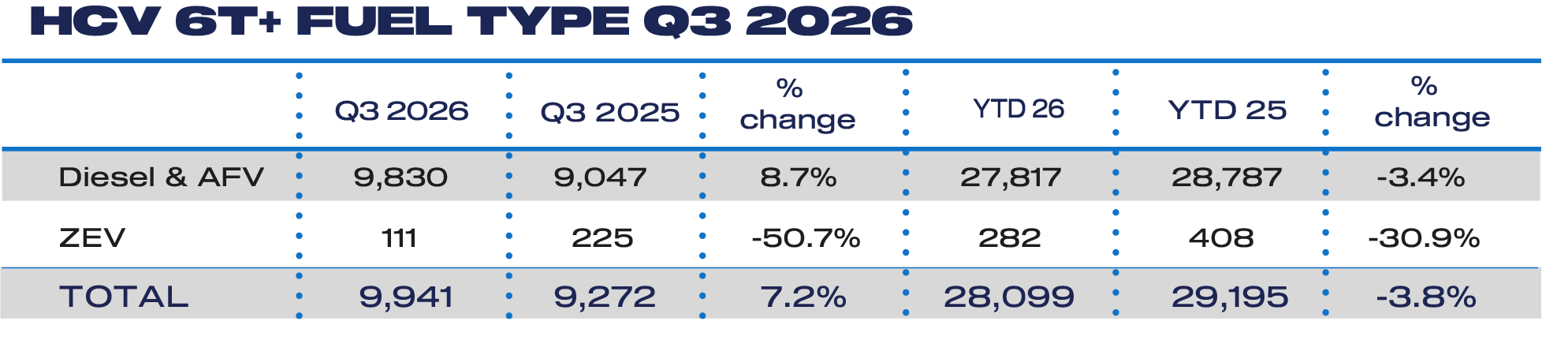
While the wider HGV market improved, zero-emission truck registrations fell by 50.7% in Q3 2026. They accounted for just 1.1% of all new HGV registrations during the period.
This contrasts with Q3 2025, when registrations of zero-emission HGVs quadrupled and their market share reached 2.4%. The latest figures underline the volatility of demand as operators assess the costs and practicalities of switching to cleaner vehicles.
Year-to-date registrations of zero-emission HGVs have fallen by 30.9%, leaving them with a market share of just 1.0%. This remains a significant challenge for the UK’s road transport decarbonisation ambitions, despite the growing choice of zero-emission models.
The upfront cost of vehicles remains a major barrier for fleet operators. Businesses must also invest in suitable depot charging infrastructure, which can require substantial expenditure and careful planning around electricity capacity and operational requirements.
Government support through the Plug-in Truck Grant and Depot Charging Scheme helps reduce some of these costs. However, operators still need greater certainty before committing to large-scale fleet changes.
A national infrastructure strategy could help build confidence by providing clearer direction on the charging network and the facilities needed to support electric HGVs. The SMMT also highlights the importance of a multi-technology approach to reducing CO₂ emissions, given the diverse operating requirements of heavy goods vehicles.
Articulated trucks lead the HGV market recovery
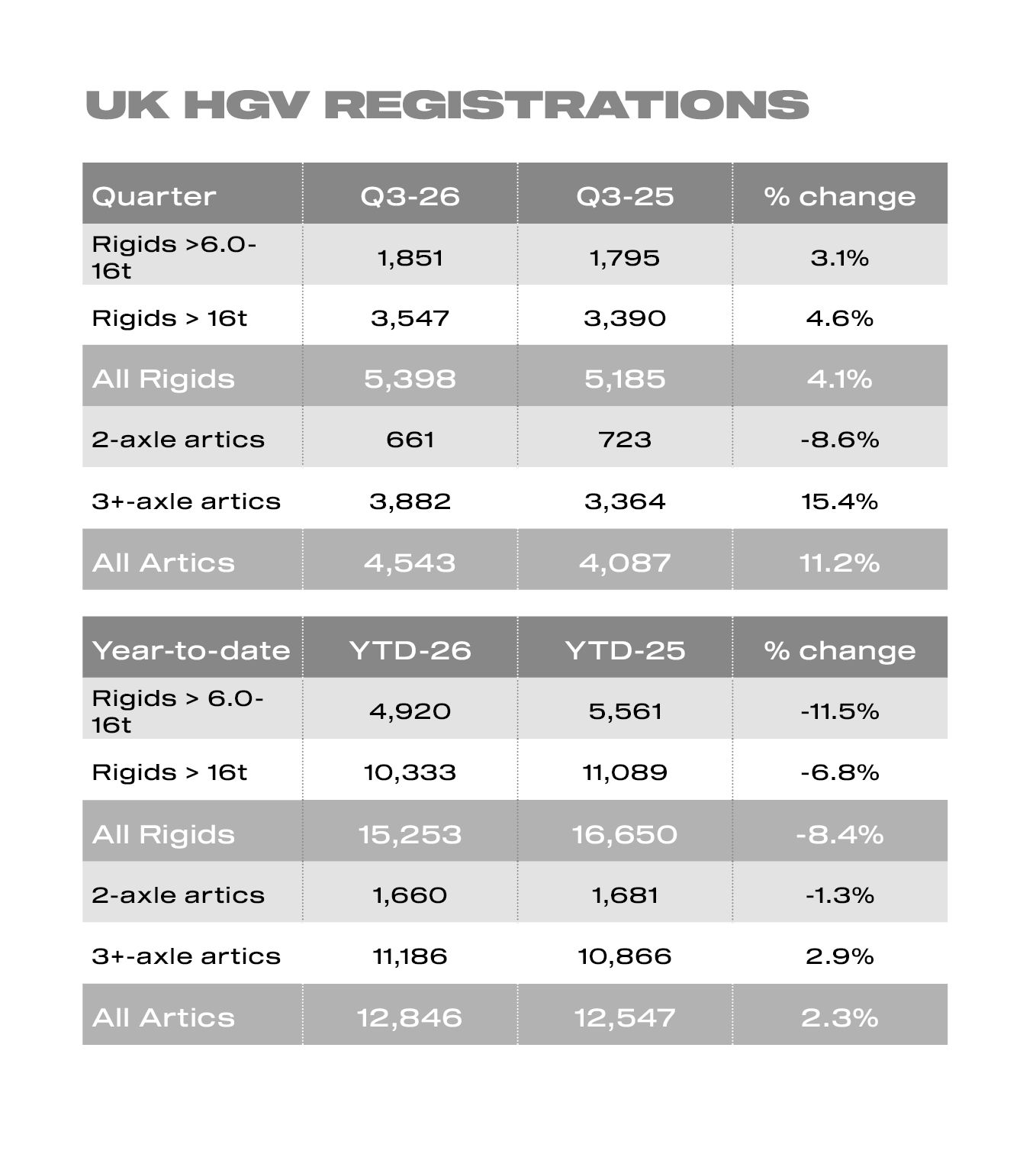
The third-quarter recovery extended across both major HGV segments, although articulated trucks recorded the stronger increase.
Registrations of articulated trucks rose by 11.2% to 4,543 units. This returned the segment to growth for the year, with registrations up 2.3% compared with the same period in 2025.
Rigid HGV registrations also increased, climbing by 4.1% to 5,398 units. Although the rise was more modest, it contributed to the improvement in overall market performance.
Tractor registrations increased by 12.3% to 4,453 units, reflecting stronger demand in this important part of the heavy truck market.
Several specialist vehicle categories also recorded growth. Refuse disposal vehicles saw registrations rise by 31.5% to 760 units, while tipper registrations increased by 19.1% to 847 units. Both categories continued the positive trend seen earlier in the year.
Curtain-sided truck registrations grew by 8.4% to 657 units. Box vans remained an area of weakness, however, with registrations falling by 11.8% to 793 vehicles.
These contrasting results show how demand varies across vehicle types and operating sectors. While some businesses have returned to investing in new vehicles, others remain cautious about replacement plans.
Regional HGV registrations show mixed performance
The recovery also varied across the UK, with Northern Ireland recording the largest proportional increase.
New HGV registrations in Northern Ireland rose by 45.8% to 328 units. Although this represented a substantial percentage increase, the region remains one of the smallest markets for new trucks.
The South East recorded the largest increase in registrations by volume. Deliveries rose by 17.1%, adding 319 units to reach 2,187 new HGVs during the quarter.
The region’s position reflects its importance to the UK economy and the road haulage sector. Its strong links to domestic distribution and cross-Channel freight make it a significant market for heavy goods vehicles.
Regional differences highlight the varied conditions facing transport operators across the country. Business activity, freight demand and fleet replacement cycles all influence purchasing decisions.
SMMT calls for action to accelerate decarbonisation
Mike Hawes, SMMT Chief Executive, welcomed the improvement in new HGV registrations but warned that the zero-emission transition remains fragile.
He said: “A recovery in new HGV registrations after two years of falling demand is a welcome boost for the sector, albeit from a low base. The decline in zero-emission registrations, however, underlines the volatility and fragility of the transition in a sector with complex operating requirements, with market share still stuck at just one in 100 new trucks. Accelerating decarbonisation will require action on all fronts: boosting operator confidence, removing barriers to investment and embracing every technology that can cut emissions on the road to a fully zero-emission market.”
The Q3 results provide some encouragement for the wider HGV industry after an extended period of weak demand. However, the figures also show that growth in conventional truck registrations has not translated into stronger demand for zero-emission alternatives.
For fleet managers, the decision to invest in cleaner HGVs depends on more than vehicle availability. Purchase prices, charging infrastructure, vehicle range and operational suitability all influence the business case.
Government incentives can help, but the latest figures suggest that further progress will require a coordinated approach. Clear infrastructure plans, improved investment confidence and support for different decarbonisation technologies will remain central to the transition.