


HGV Finance Summit targets residual value barrier to zero-emission truck investment
The inaugural HGV Finance Innovation Summit has brought vehicle operators, finance providers, manufacturers and policymakers together to examine how financial barriers to HGV decarbonisation can be overcome, with residual value risk identified as a key issue for investment in zero-emission trucks.
Co-hosted by the British Vehicle Rental and Leasing Association (BVRLA) and Green Finance Institute (GFI), the summit was held at KPMG in London on 1 October and brought together stakeholders from across the road transport, automotive and finance sectors.
The event focused on one of the most significant challenges facing the transition to zero-emission HGVs: how operators and finance providers can assess the future value of vehicles using technologies that have yet to establish a mature second-hand market.
While the operational and infrastructure challenges associated with HGV decarbonisation are increasingly well understood, the economics of financing new technology remain more complex. Zero-emission trucks can involve significantly higher upfront costs than conventional diesel vehicles, while uncertainty around future demand, battery technology, charging infrastructure and second-hand values can affect the availability and cost of finance.
For fleet operators considering major vehicle replacement programmes, those factors can make the financial case for switching to zero-emission trucks more difficult to establish.
Residual values and HGV finance
Residual value is particularly important because it forms a significant part of the economics of many commercial vehicle finance arrangements. If the future value of a vehicle is uncertain, finance providers may face greater risk, potentially increasing financing costs or making some vehicles more difficult to finance.
The summit therefore examined how residual value risk could be better understood, shared and managed between operators, manufacturers, financiers and government.
Keynote speeches and panel discussions considered emerging approaches in the UK and overseas, while structured engagement between stakeholders was intended to identify practical solutions that could eventually be brought to market.
The discussions included representatives from fleet operators, UK government, finance lenders, vehicle manufacturers and infrastructure providers, reflecting the number of different parties involved in making zero-emission freight commercially viable.
Toby Poston, BVRLA Chief Executive, said: “Decarbonising road freight is a very different proposition to making the transition with cars or vans. The vehicles are expensive, operating requirements are demanding and the investment decisions being made today need to stack up over decades.
“Residual values are an integral part of that equation. Bringing operators, finance providers, manufacturers and government into the same room is how we can explore different approaches against commercial reality. This summit is a key step in creating more constructive conversations about where industry can act and where policy intervention will be needed.”
International experience was a central element of the summit, with delegates considering how approaches developed in other markets could inform the UK’s transition to zero-emission freight.
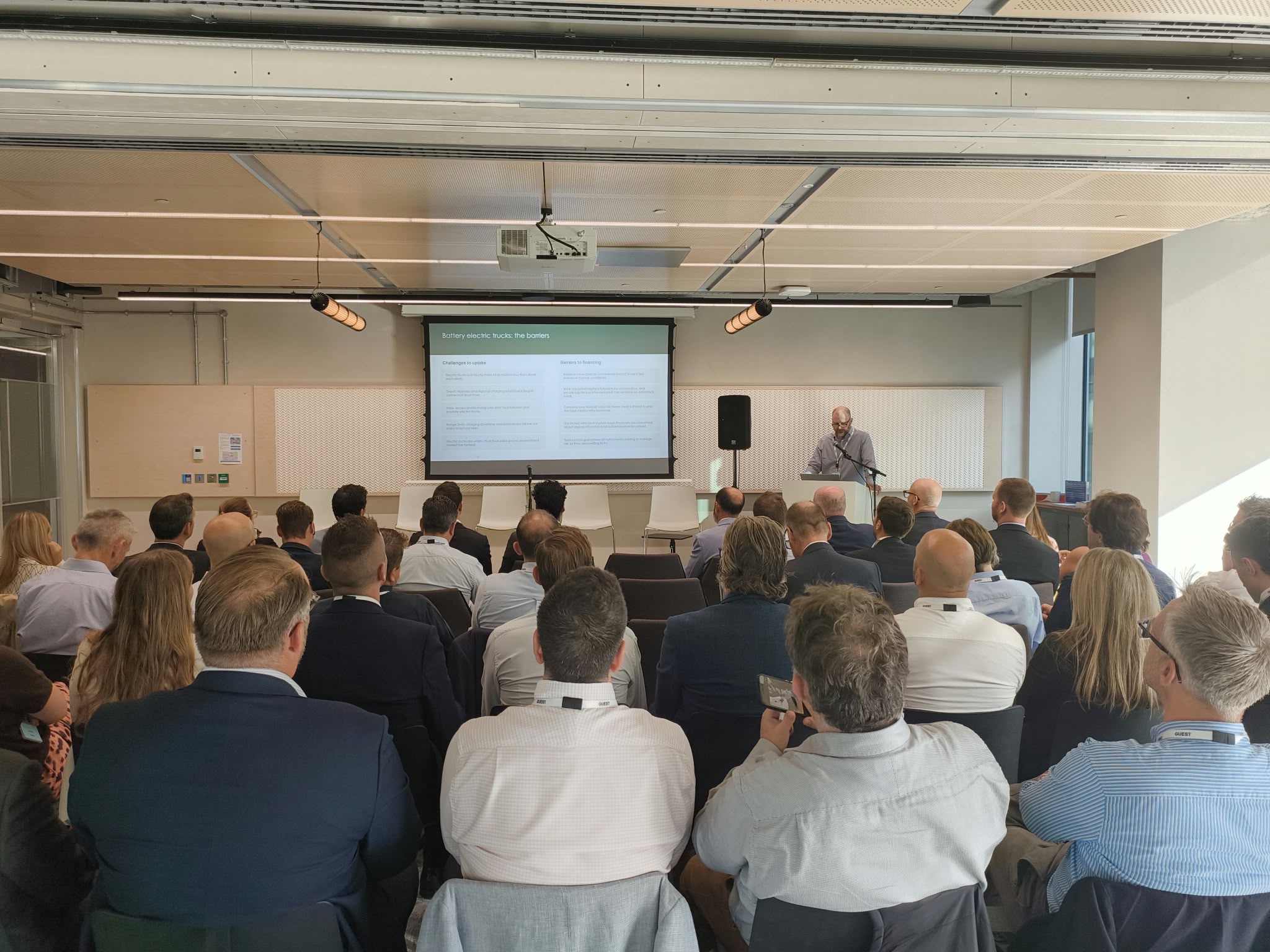
Richard Lovell, Executive Director, Debt Markets at Australia’s Clean Energy Finance Corporation, outlined lessons from Australia and examined the potential role of public-sector backing in addressing uncertainty around the residual values of zero-emission commercial vehicles.
Public intervention could potentially help to reduce some of the risks faced by private finance providers while markets develop. The discussions highlighted the importance of understanding where such support may be required and how it could help unlock additional private investment.
The summit also considered the experience of Hylane, a German company developing alternative rental and financing approaches for zero-emission commercial vehicles.
Sara Schiffer of Hylane presented the company’s experience of emerging rental and finance models and discussed considerations for UK operators looking at whether similar approaches could be applied to the domestic market.
Alternative approaches to ownership and financing could become increasingly relevant as operators seek to introduce zero-emission HGVs without taking on the full burden of technology and residual value risk themselves.
Unlocking private capital
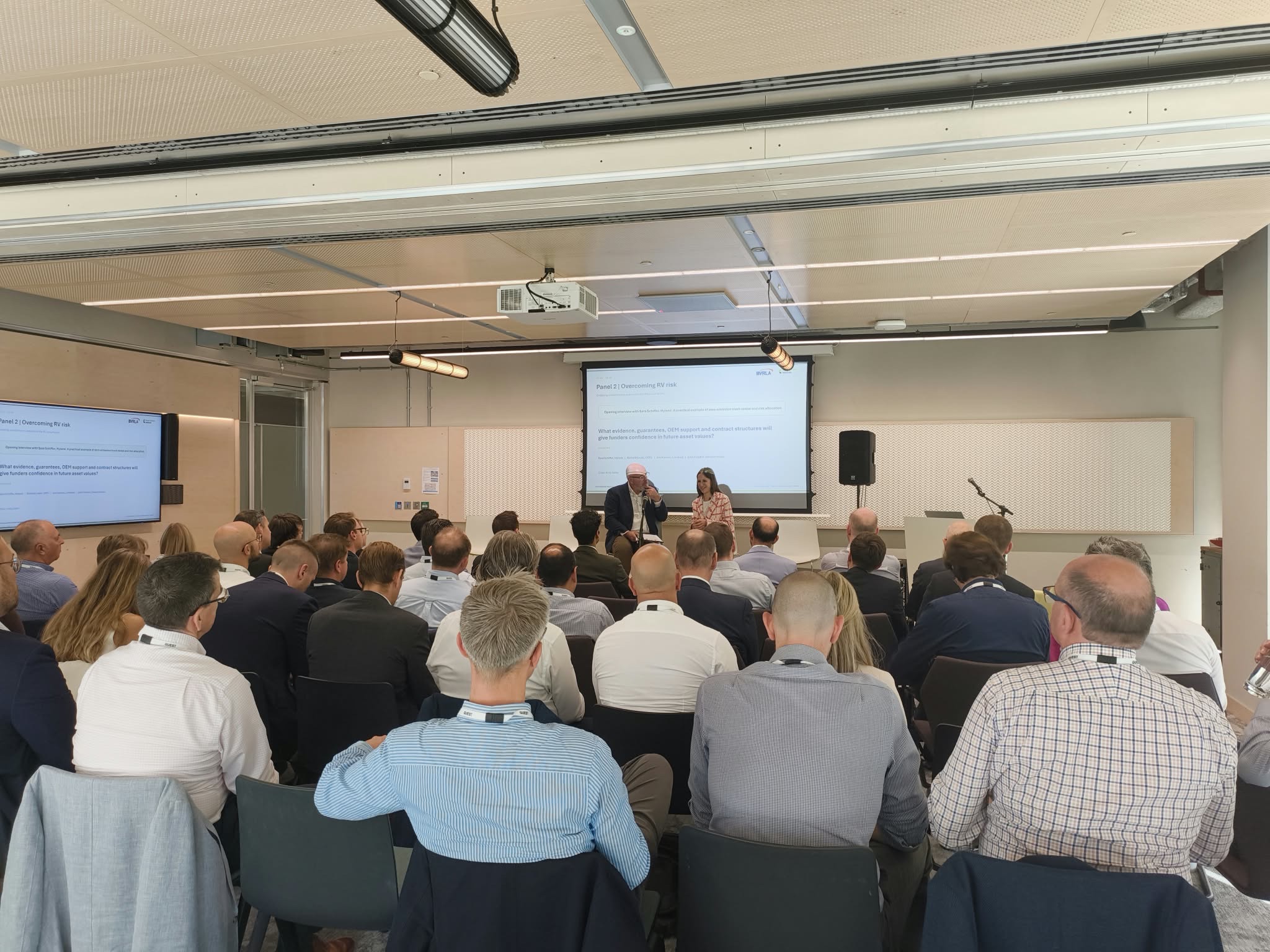
The scale of the challenge was underlined by Ryan Jude, Executive Director of Built Environment, Transport & Communities for the Green Finance Institute.
Jude said: “HGVs represent 16% of UK domestic transport emissions, the transition to zero emission freight will ultimately depend on whether capital can flow into projects at the scale and pace required. That means turning deployment opportunities into investable propositions that work for operators, financiers and asset owners alike.
“The next phase of the transition requires coordinated action across the market to address financing barriers, build investor confidence and develop a pipeline of bankable projects. This is why we brought together investors, operators, manufacturers and government – to unlock private capital to accelerate the transition to zero emission freight.”
For fleet managers, the availability and cost of finance will be an increasingly important consideration as zero-emission HGV deployment moves beyond individual trials and into larger-scale fleet replacement programmes.
Unlike passenger cars and vans, HGVs are commercial assets whose purchase decisions are closely linked to utilisation, payload, range, charging availability, operating costs and whole-life value. The financial implications therefore extend beyond the initial purchase price and need to reflect the demanding operating cycles of freight vehicles.
Greater certainty around residual values could help finance providers assess risk more consistently and give operators greater confidence when comparing zero-emission vehicles with established diesel alternatives.
The summit also reflects a growing recognition that no single part of the industry can resolve the financing challenge alone. Manufacturers have a role in providing evidence on vehicle durability and future values, while operators can contribute real-world performance and utilisation data. Finance providers need to understand emerging technologies and operating models, while policymakers can consider whether targeted intervention is required to address risks that the market cannot yet absorb.
As the UK moves towards wider deployment of zero-emission HGVs, developing a functioning market for finance, leasing and second-hand vehicles will be an important part of the transition.
The HGV Finance Innovation Summit 2026 provided a forum for those different interests to be brought together, with its focus on residual values highlighting one of the less visible but potentially significant barriers to commercial vehicle decarbonisation.
For operators, manufacturers and financiers, the challenge now is turning those discussions into practical financial products and risk-sharing mechanisms capable of supporting investment at the scale required to decarbonise UK road freight.