
World’s largest electric articulated dump trucks make debut
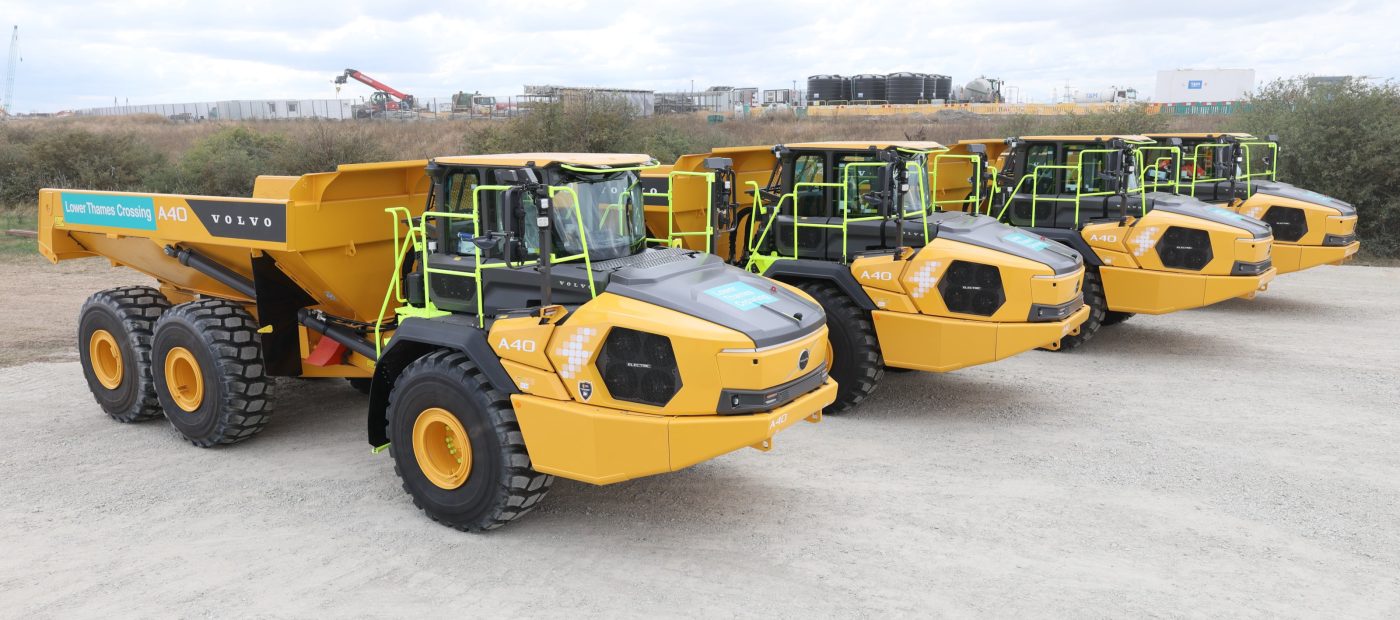
The world’s largest electric articulated dump trucks in production have started their first job on the Lower Thames Crossing project. Four Volvo A40 Electric articulated haulers are now at work near East Tilbury in Essex. They are the first battery-powered machines in their size class to start work on a site anywhere in the world.
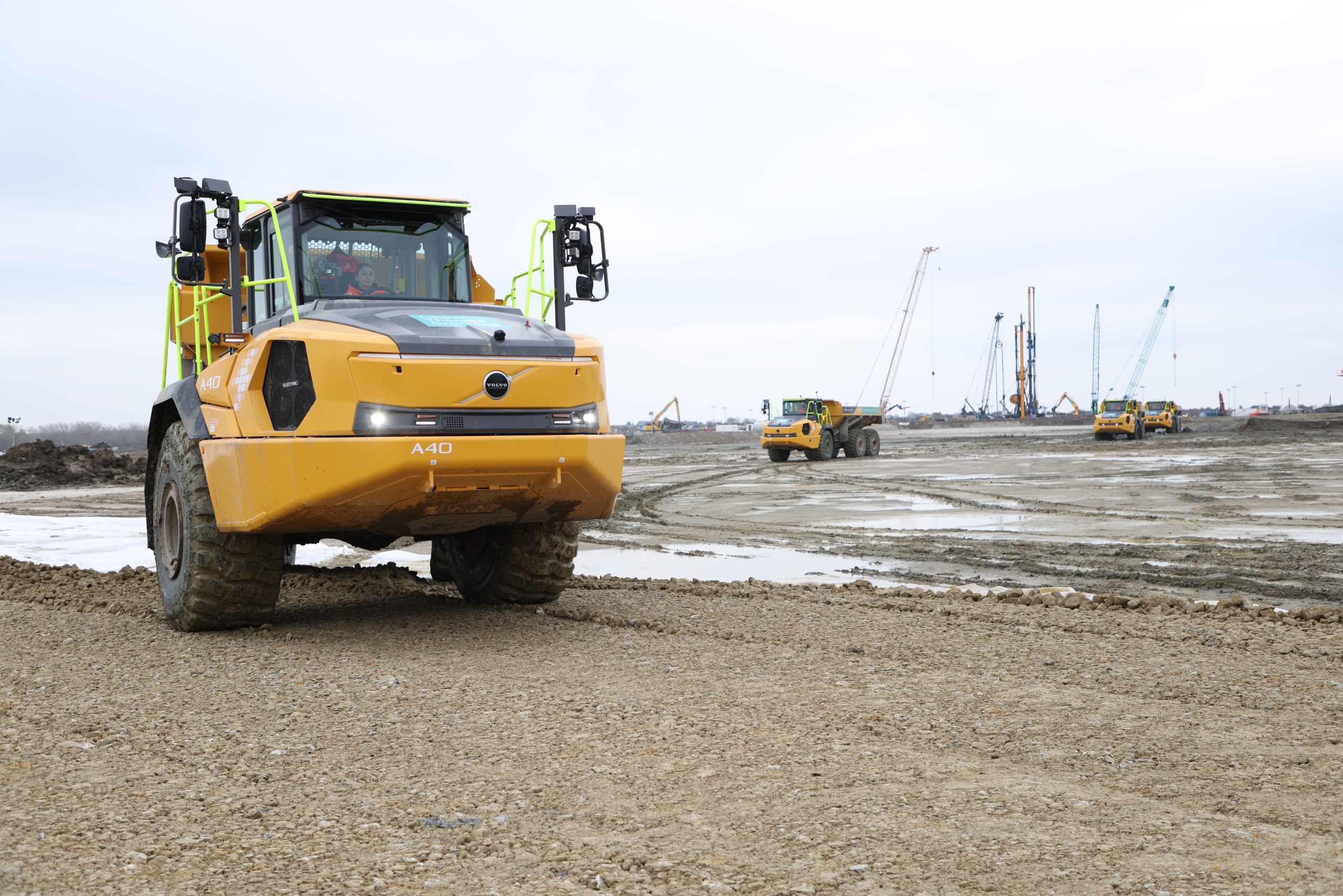
Each truck carries up to 39 tonnes of gravel, sand or stone in a single load. It does the same heavy-duty work as its diesel counterpart. However, it produces zero exhaust emissions, makes less noise and costs less to run.
Electric Haulers Built for Heavy-Duty Groundwork
The giant machines are building the foundations and structures for the new road and tunnel entrance. Green hydrogen produced in Britain generates the electricity that charges them, and the power is made on site.
Shaun Pidcock, Lower Thames Crossing Programme Director, said: “Going electric no longer means compromising on size, power or productivity. These remarkable machines show that even the heaviest jobs can be done cleanly, and in a way that is better for those working on or living near our sites.
“By using the next generation of construction machinery to make the Lower Thames Crossing Britain’s greenest road today, we are helping the industry set a new standard for tomorrow and make diesel-powered sites a thing of the past.”
Lower Running Costs Over the Vehicle Lifetime
Forecasts show the electric machines will cost less over their lifetime than diesel and HVO alternatives. The higher up-front price is outweighed by electricity that is cheaper than imported fossil fuels. Electric machines also need less maintenance. That reduces the cost of ownership and gives crews more time working on site.
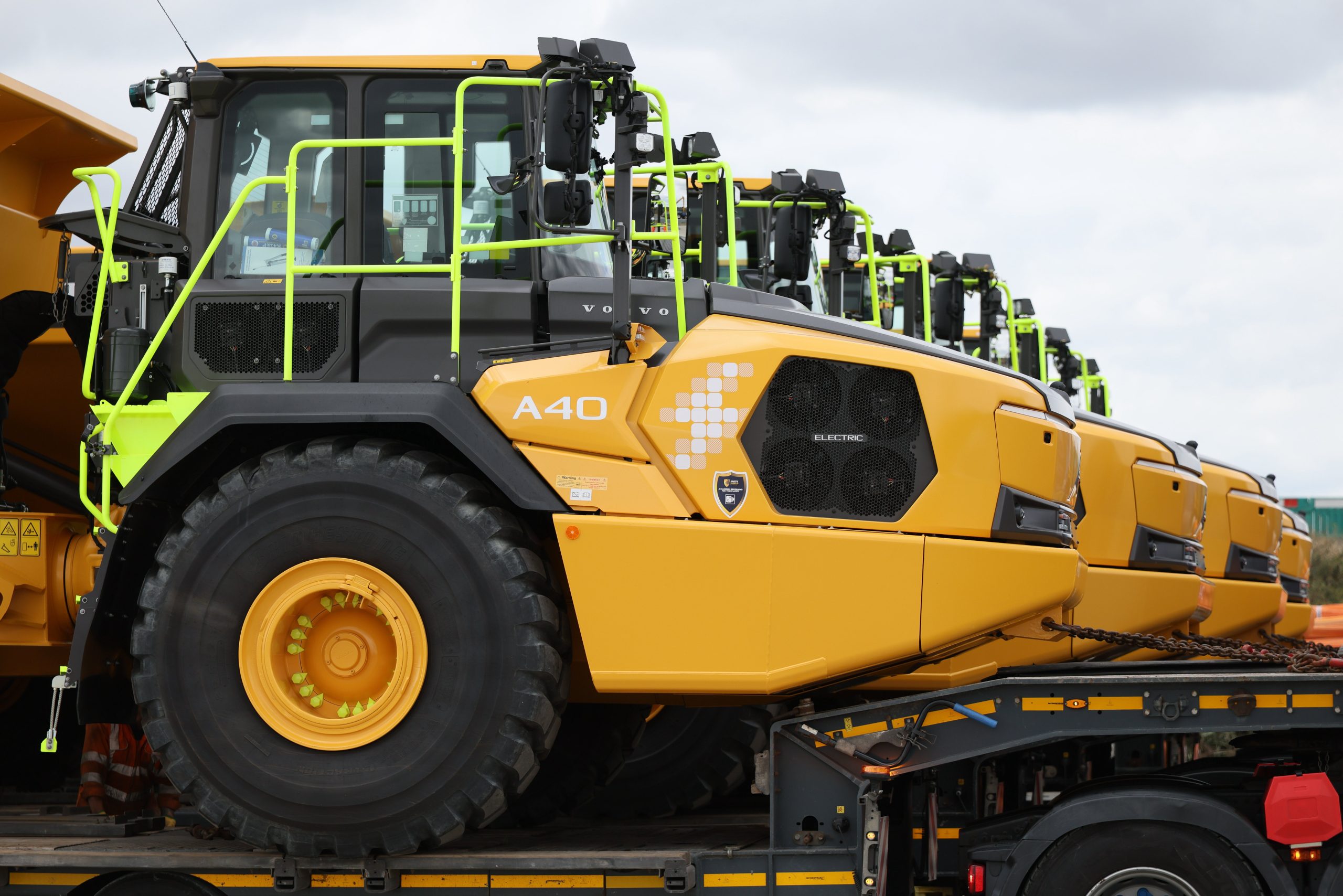
BMJV is using the A40 Electric haulers. It is a joint venture between Bouygues Travaux Publics and Murphy, and it is the Delivery Partner for the Tunnels and Approaches section of the Lower Thames Crossing. SMT GB, Volvo Construction Equipment’s dealer in the UK, supplied the trucks and will support them.
A Familiar Experience for Operators
Each truck has a 540kWh battery that charges quickly in line with shift patterns. Regenerative braking also feeds energy back into the battery. Operators get an experience similar to a diesel dump truck, but with lower noise, less vibration and no tailpipe emissions.
Darren Fitch, Head of Strategic Accounts and Electromobility Sales Europe at Volvo CE, said: “When a project of this profile chooses electric, the whole industry takes notice. The Lower Thames Crossing has set some of the most ambitious carbon goals in British construction, and our A40 Electric haulers are helping deliver them. Every load they move shows that electric works at scale, with lower running costs, zero exhaust emissions and a far better environment for operators and neighbours.”
Charging Routines That Suit Site Operations
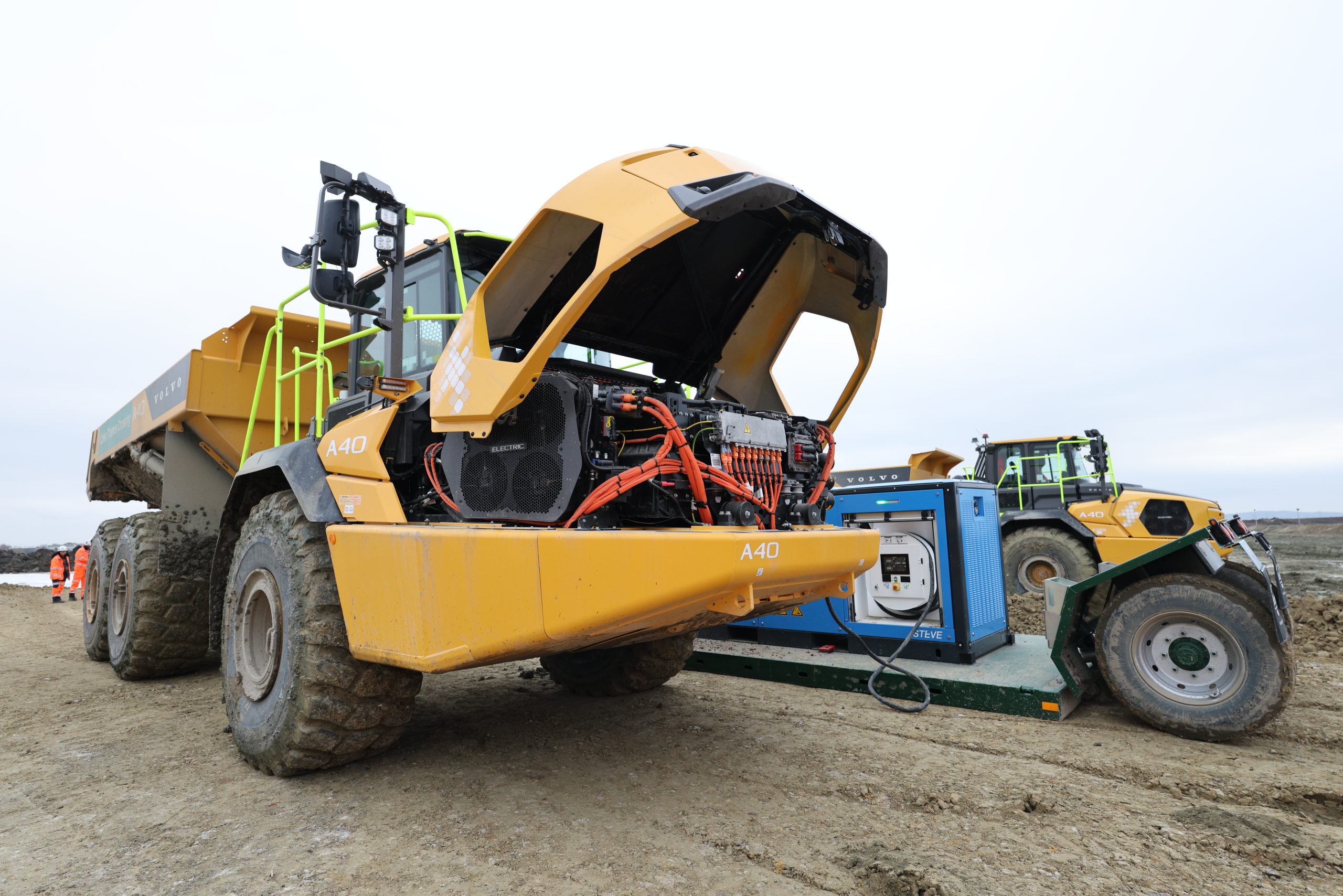
Gautier Tortajada, Plant Manager and Electrical Lead at Bouygues Travaux Publics Murphy Joint Venture (BMJV), said: “Our teams have quickly adapted the A40s to site operations, establishing charging routines during breaks and in the evening to suit our shift patterns. Introducing new technology productively on a project of this scale takes careful planning and close coordination. We’re drawing on our experience delivering major infrastructure projects to put these record-breaking electric trucks to work successfully at Lower Thames Crossing and support the project’s carbon-reduction ambitions.”
Britain’s Greenest Road Takes Shape
The Lower Thames Crossing will be the first major project in the UK to be carbon neutral in construction. Diesel has not been used on its worksites since 2025. Teams are building the tunnels and road using only HVO, electric and hydrogen powered machinery.
Work began on the project this year. More than 3,000 people are now at work, and 49% were recruited from the local area. The new road is expected to open in the early to mid-2030s.