
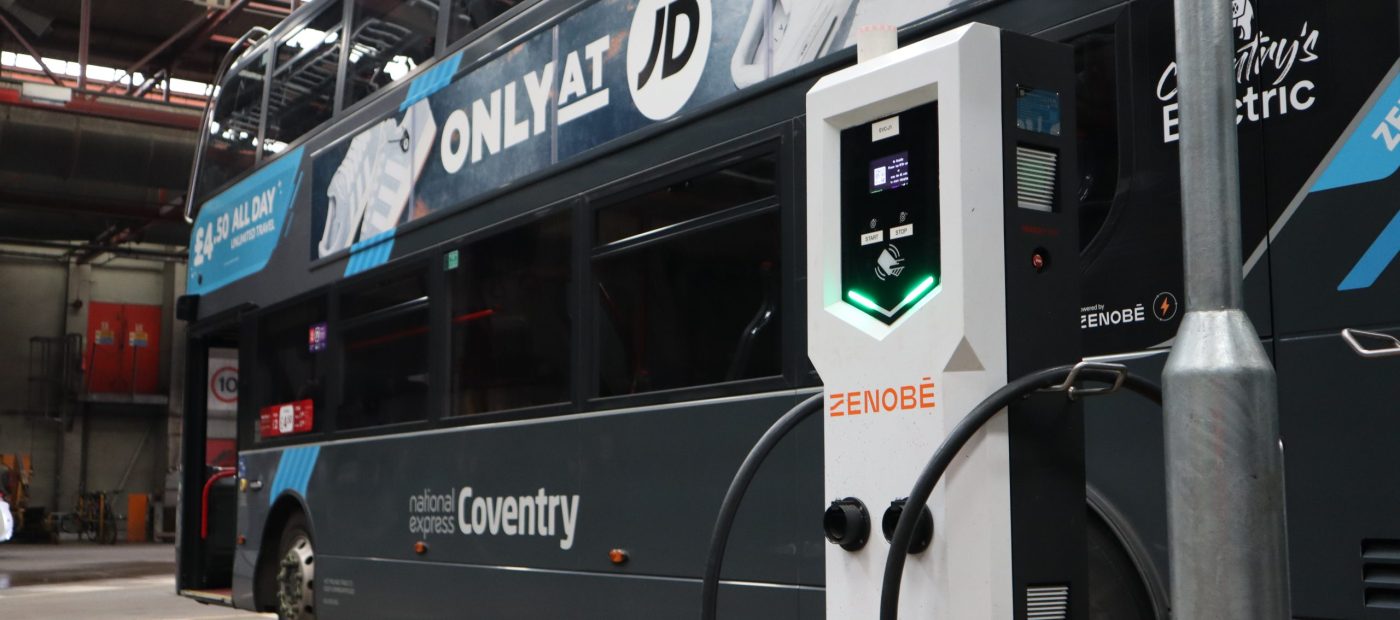
Zenobē partners with West Midlands Combined Authority
Zenobē is strengthening its partnership with the West Midlands Combined Authority (WMCA) as the region prepares to bring bus services under public ownership and control.
As part of the transition, Zenobē’s existing electric bus charging and vehicle availability contracts will transfer to West Midlands Bus Company, which WMCA intends to acquire in full during the second half of 2026.
The contracts cover 459 electric buses and associated charging infrastructure across West Midlands depots. Zenobē will continue to supply and maintain the infrastructure supporting the region’s electric bus operations throughout the transition, working directly with WMCA and its future franchise operators.
The agreement highlights the growing importance of specialist infrastructure providers as local and combined authorities take greater responsibility for public transport networks and pursue net zero targets.
Zenobē supports West Midlands electric bus transition
As more regions across the UK introduce bus franchising, authorities are increasingly seeking long-term solutions that provide certainty over vehicle availability, charging infrastructure and asset performance.
For operators and public bodies, managing the transition to zero-emission bus fleets involves more than purchasing electric vehicles. Reliable depot charging infrastructure, energy management and ongoing asset maintenance are all critical to ensuring buses remain available for service.
Zenobē’s expanded relationship with WMCA is designed to provide that continuity as ownership and operating arrangements evolve.
Steven Meersman, Co-Founder of Zenobē, said: “This next phase with WMCA shows what’s possible when a combined authority and an expert partner work together with a shared long-term goal.
“As WMCA takes greater control of bus services in the region, we’ve structured our relationship to support that ambition directly, giving the Authority certainty over its electric fleet as it delivers on its transport and net zero priorities. It’s a model we believe is right for combined authorities across the country as more of them take bus services back under public control.”
Electric bus infrastructure becomes increasingly important
The partnership also reflects a broader shift in the way public authorities are approaching fleet electrification. Rather than taking full responsibility for the ownership, operation and financing of charging infrastructure, authorities can work with specialist partners to reduce operational complexity while retaining access to critical infrastructure.
Zenobē’s work with WMCA forms part of its wider portfolio of partnerships with local and combined authorities across the UK. These arrangements are intended to support the transition to zero-emission public transport while helping public bodies meet environmental, economic and social objectives.
For the West Midlands, maintaining access to reliable charging infrastructure will be particularly important as the region moves towards a franchised bus network. Electric buses depend on carefully planned depot charging systems, with infrastructure availability directly affecting vehicle utilisation and service reliability.
The transfer of the existing contracts is expected to take place in stages during the remainder of 2026, ahead of the full franchising of bus services in subsequent years.
The development could also provide a template for other UK authorities considering similar arrangements. As bus franchising expands, the ability to separate public control of services from the specialist management of electric fleet infrastructure could become increasingly significant.
For fleet managers and transport authorities, the West Midlands model demonstrates how long-term infrastructure partnerships can help support the electrification of public transport while allowing ownership and operating structures to evolve.