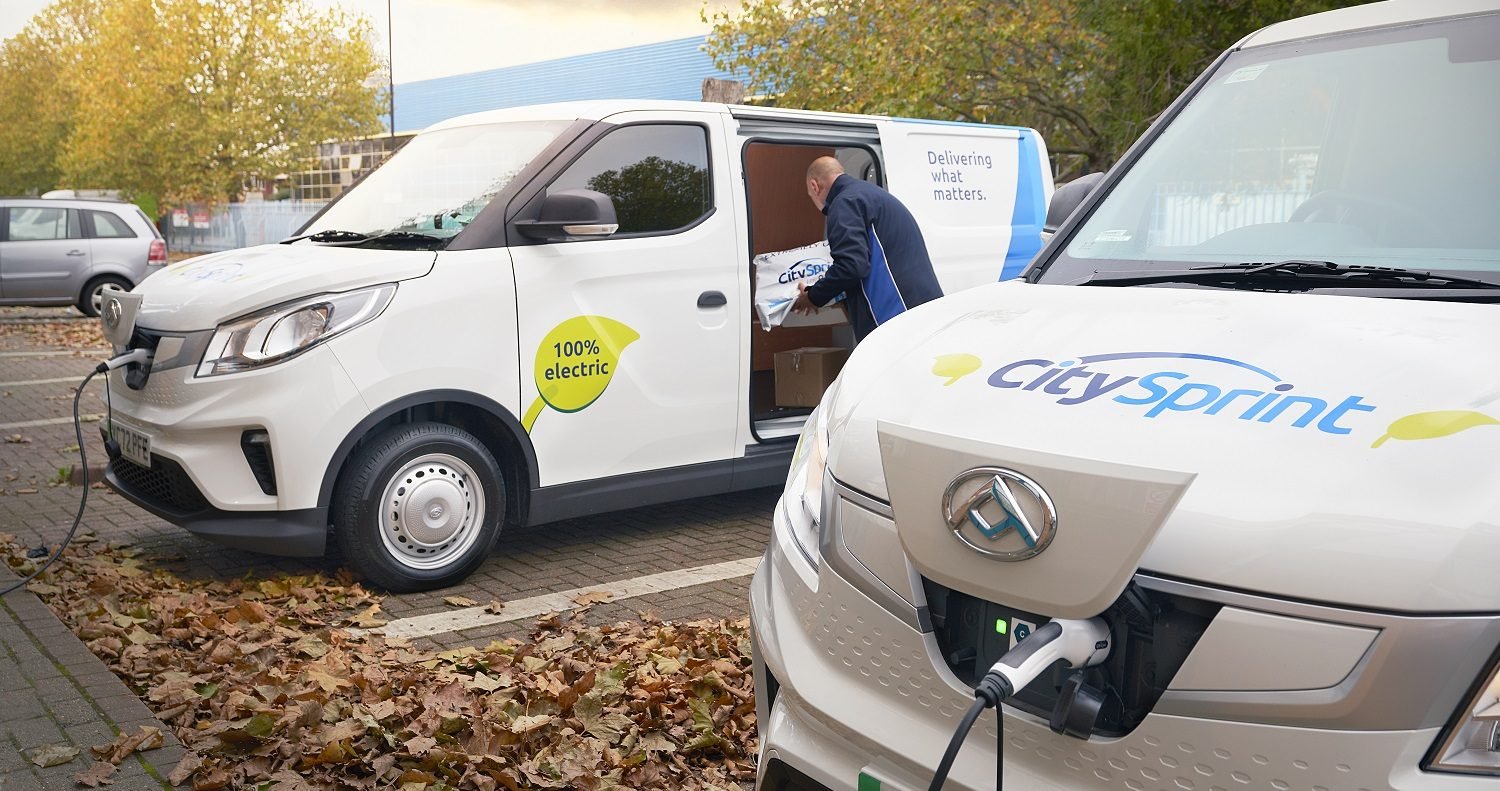

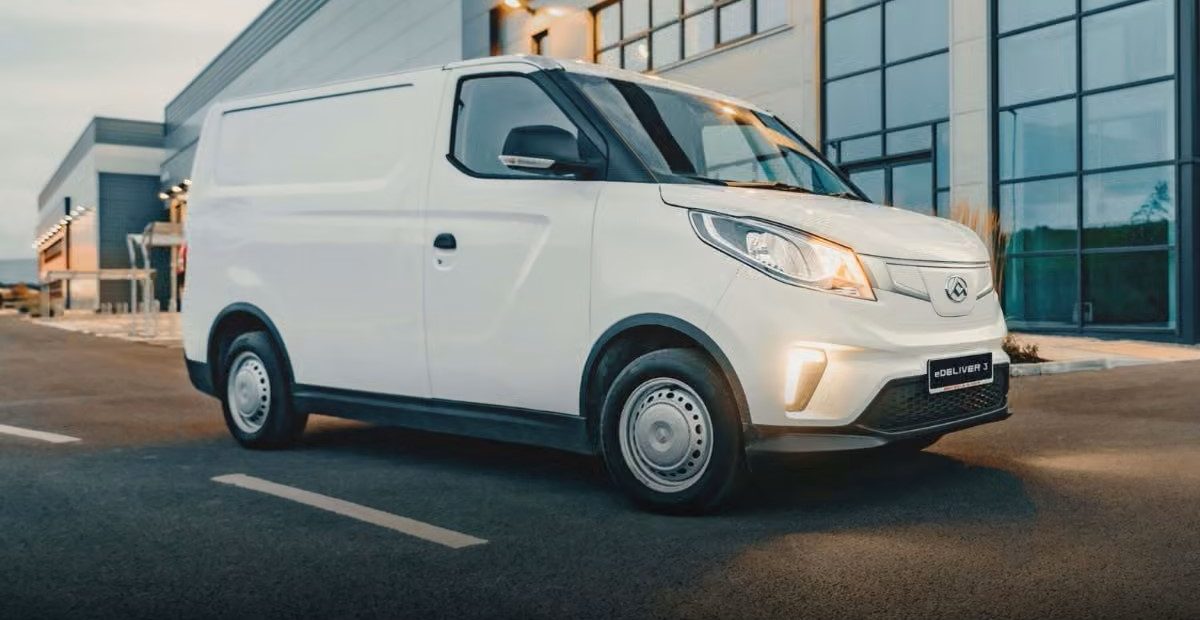
MAXUS eDELIVER 3 price cut makes it one of UK’s cheapest
Harris MAXUS UK has cut the price of its compact MAXUS eDELIVER 3 electric van to £18,495 plus VAT, making it one of the most competitively priced new electric vans available to UK operators.
The latest pricing move follows the manufacturer’s decision to reposition the larger MAXUS DELIVER 7 at £19,995, as the brand looks to challenge conventional thinking around the upfront cost of commercial vehicles.
The eDELIVER 3 offer is particularly significant because it puts a fully electric van with a 1,045kg payload and up to 4.8m³ of load volume below the £20,000 threshold before VAT. MAXUS is also advertising the eDELIVER 3 from £90 a week on finance, subject to status and terms and conditions.
The company says the pricing is designed to make electric vans more accessible to businesses operating in urban deliveries, last-mile logistics and other applications where a compact van can provide sufficient capacity.
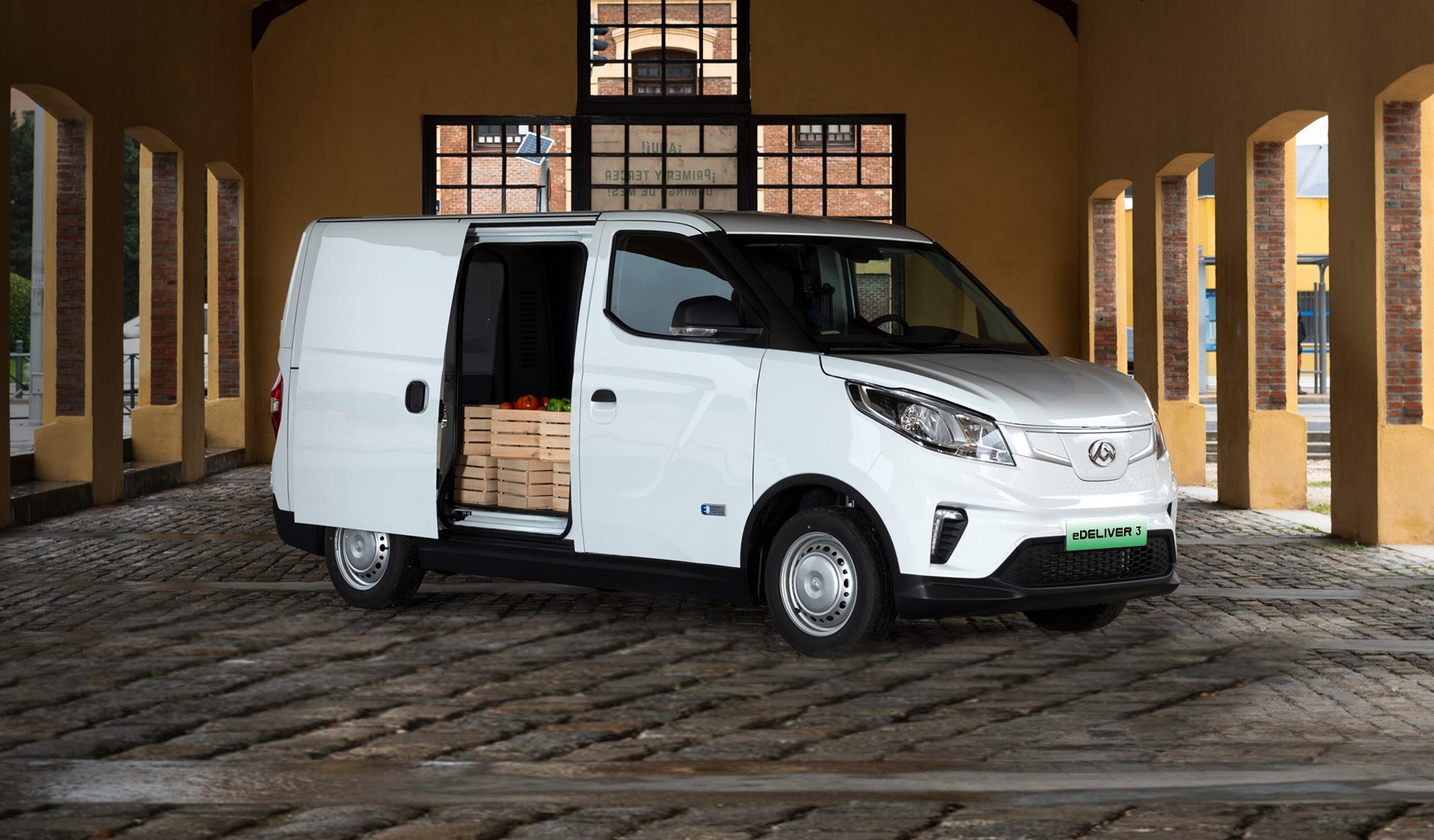
MAXUS eDELIVER 3 price undercuts electric van rivals
The price reduction comes at a crucial point for the UK van market. Fleet operators are under increasing pressure to reduce emissions, particularly in urban areas affected by clean air and zero-emission policies, while the upfront cost of an electric van can still be a significant barrier to adoption.
The latest government Zero Emission Van Grant provides financial support for eligible electric vans, with the Government confirming that the wider van and truck grant programme will continue until at least 2027. The current Government eligibility list includes the MAXUS eDELIVER 3 alongside models including the Citroën e-Berlingo, Fiat e-Doblo, Ford E-Transit Courier, Nissan Townstar, Peugeot e-Partner, Renault Kangoo E-Tech, Toyota Proace City Electric and Vauxhall Combo-e.
MAXUS is promoting the £18,495 price with a £5,000 Government OZEV grant included, subject to eligibility. Operators should therefore confirm the precise grant treatment, vehicle specification and availability with a MAXUS dealer before placing an order.
Nevertheless, the headline price represents an important change in the electric van market. Rather than positioning electric vehicles as a premium alternative to diesel, MAXUS is attempting to compete directly on acquisition cost.
Gary Brown, UK sales director at Harris MAXUS UK, said: “With DELIVER 7, we wanted to challenge accepted thinking around van pricing, and the response from the market has been tremendous.
“Now, we’re taking that same philosophy into the compact electric van sector.
“eDELIVER 3 is exactly what many businesses need – zero emissions, compact, highly capable, exceptionally well specified and now available at a price point that makes switching to electric even more compelling.
“Operators shouldn’t have to compromise on quality, technology or practicality simply because they’re choosing zero-emissions. eDELIVER 3 establishes a new value benchmark for compact electric vans.”
MAXUS eDELIVER 3 specifications
The UK-specification eDELIVER 3 is a front-wheel-drive compact panel van powered by a 50kWh battery and electric motor delivering up to 118kW. It has a maximum speed of 75mph and can accelerate from 0-62mph in 8.85 seconds.
Its official WLTP range is up to 141 miles, increasing to as much as 200 miles on the WLTP city cycle. Energy consumption is rated at 23.7kWh/62 miles under the combined WLTP test.
For fleet managers, the 141-mile combined figure is arguably more important than the headline city range. While real-world range will vary according to payload, temperature, driving style, use of heating and air conditioning and route profile, the specification makes the eDELIVER 3 particularly suited to predictable urban and regional operations. MAXUS itself warns that actual range and consumption can vary with conditions, vehicle maintenance and battery age.
Charging is supported through an 11kW three-phase AC system, with a claimed 5-100% charging time of approximately 5.6 hours. DC rapid charging at up to 57kW can take the battery from 5-80% in around 45 minutes.
The van also features battery thermal management with liquid cooling and liquid heating, which is designed to help maintain battery performance across different operating temperatures.
1,045kg payload and 4.8m³ load volume
One of the eDELIVER 3’s strongest selling points is that its compact dimensions do not come at the expense of carrying capacity.
The standard L1H1 panel van measures 4,555mm long, 1,780mm wide and 1,900mm high. It has a 2,180mm loadspace length, 1,665mm loadspace width and 1,330mm loadspace height, giving a cargo volume of 4.8m³.
Maximum payload is 1,045kg, while the van has a gross vehicle weight of 2,660kg. Braked towing capacity is rated at 1,030kg.
That combination should make the eDELIVER 3 suitable for a wide range of trades and delivery operations where manoeuvrability and payload are more important than the outright capacity of a medium or large panel van.
There is also a long-wheelbase chassis cab version, although its specifications and operating characteristics differ from the standard panel van.
Generous standard equipment
MAXUS is also using equipment levels to strengthen the eDELIVER 3’s value proposition.
Standard specification includes automatic air conditioning, heated front seats and a 10.25-inch touchscreen infotainment system incorporating Apple CarPlay, Android Auto, Bluetooth, USB and DAB. A rear-view camera, rear radar and cruise control are also included.
Safety and driver assistance technology includes automatic emergency braking, lane departure warning, lane keeping assistance, speed-limit information, driver monitoring and electronic stability systems.
The van also has a multifunction steering wheel, power windows, heated exterior mirrors and LED cargo lighting.
MAXUS backs its vehicles with a five-year factory warranty, while the high-voltage battery is covered for eight years.
Electric van affordability becomes the battleground
The significance of the new MAXUS eDELIVER 3 price extends beyond the model itself.
For years, fleet managers considering electrification have had to weigh the potentially lower running and maintenance costs of an EV against a higher initial purchase price. Reducing that initial barrier changes the calculation, particularly for businesses with high annual mileage and predictable daily routes.
The Government is also putting significant funding behind commercial vehicle electrification. In March 2026, it announced a £1 billion package for zero-emission trucks and vans and depot charging, including grants of up to £5,000 for eligible zero-emission vans.
For operators able to charge at a depot or workplace and whose daily routes fall comfortably within the eDELIVER 3’s usable range, the combination of a lower acquisition price, zero tailpipe emissions and potentially lower energy and maintenance costs could make the business case considerably more attractive.
The challenge for MAXUS will now be to convert the attractive headline price into fleet sales. But with the eDELIVER 3 offering a 1,045kg payload, 4.8m³ load volume, 141-mile WLTP range and generous standard equipment, the company has given fleet operators another reason to consider whether electric vans have become affordable enough to make the switch.