
UK vehicle production recorded a sharp decline in February, underlining growing pressure on the automotive sector amid weakening global demand and ongoing structural challenges. According to the latest figures from the Society of Motor Manufacturers and Traders (SMMT), total output fell by 17.2 per cent to 68,061 units.
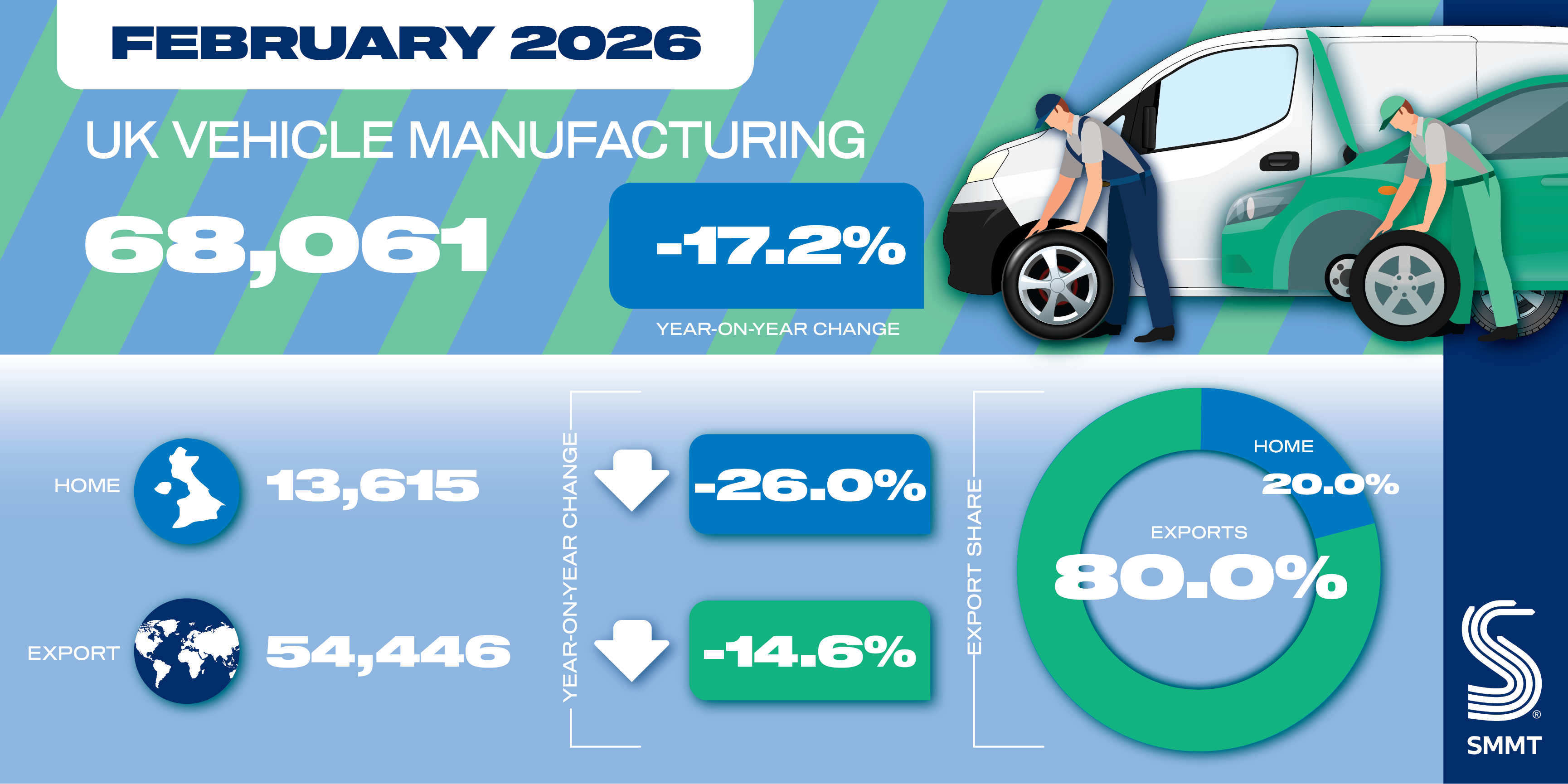
Image: SMMT
This total included 65,885 cars, down 10.7 per cent, and 2,176 commercial vehicles (CVs), which saw a dramatic drop of 74.0 per cent. The steep drop in CV production reflects continued disruption from major plant restructuring, while car output was impacted by model changeovers and softer demand in key export markets outside Europe.
Exports remain central to the UK automotive industry, accounting for 80.0 per cent of total production. However, overseas shipments also declined, with car exports falling by 11.5 per cent to 53,140 units and CV exports dropping by 65.1 per cent to 1,306 units. Despite these declines, the European Union continues to dominate as the UK’s primary export destination, receiving 63.6 per cent of car exports and 88.9 per cent of CV shipments.
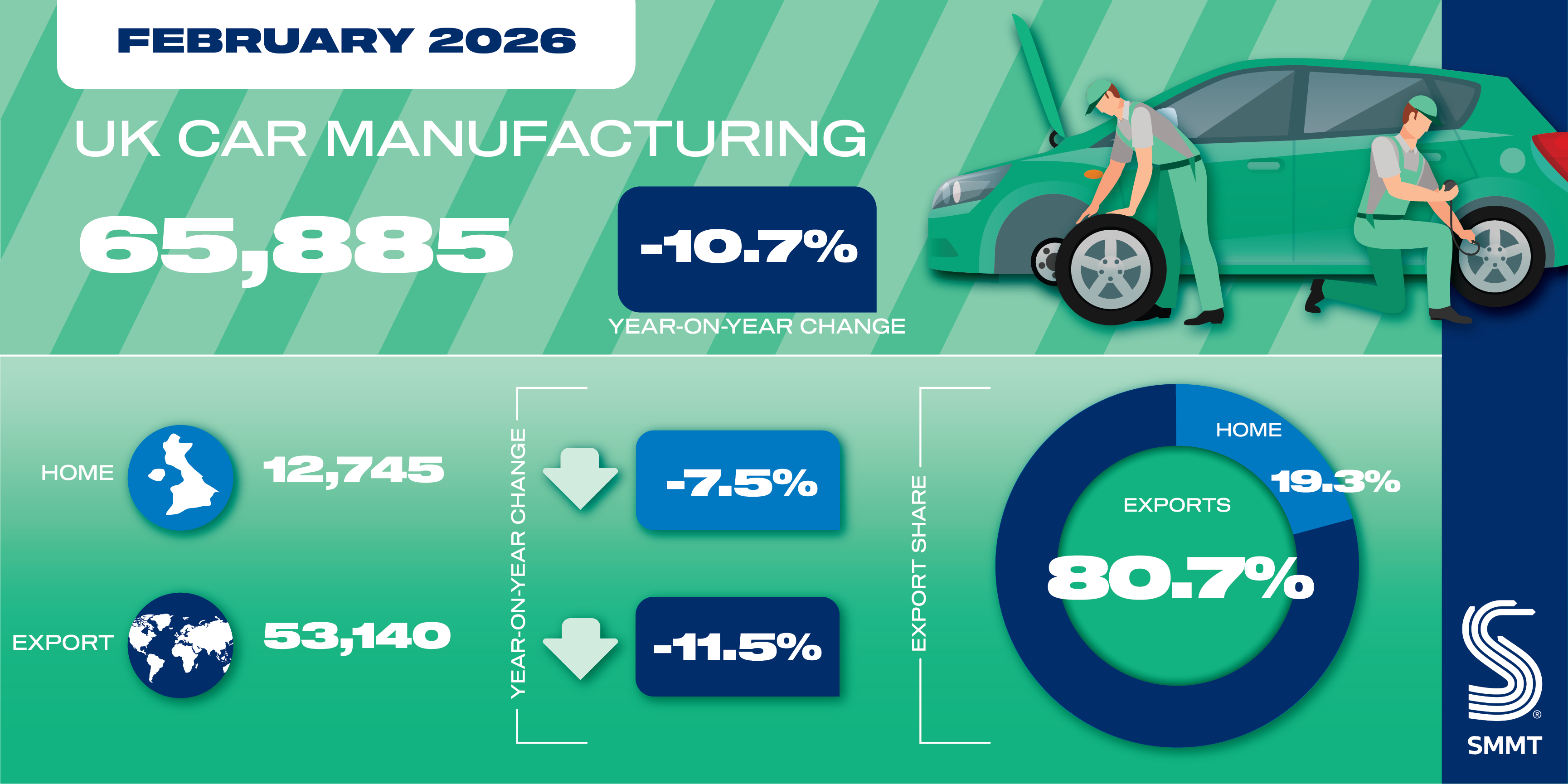
Image: SMMT
There were some positive signs within European trade, as car exports to the EU rose by 5.3 per cent. However, this growth was offset by significant declines in other major markets. Exports to the United States fell by 34.3 per cent, while shipments to China dropped by 66.4 per cent and Japan by 6.8 per cent, highlighting the fragility of global demand.
Domestic production also weakened during the month. Output of cars for the UK market declined by 7.5 per cent to 12,745 units, while CV production for British buyers fell sharply by 81.2 per cent to just 870 units. These figures point to subdued demand at home alongside international challenges.
Electrified vehicle production showed relative resilience, although it too recorded a slight decline. Combined output of battery electric (BEV), plug-in hybrid (PHEV) and hybrid (HEV) cars fell by 2.8 per cent to 26,629 units. Encouragingly, however, these vehicles accounted for a growing share of overall car production, rising to 40.4 per cent, signalling the industry’s continued transition towards zero-emission mobility.
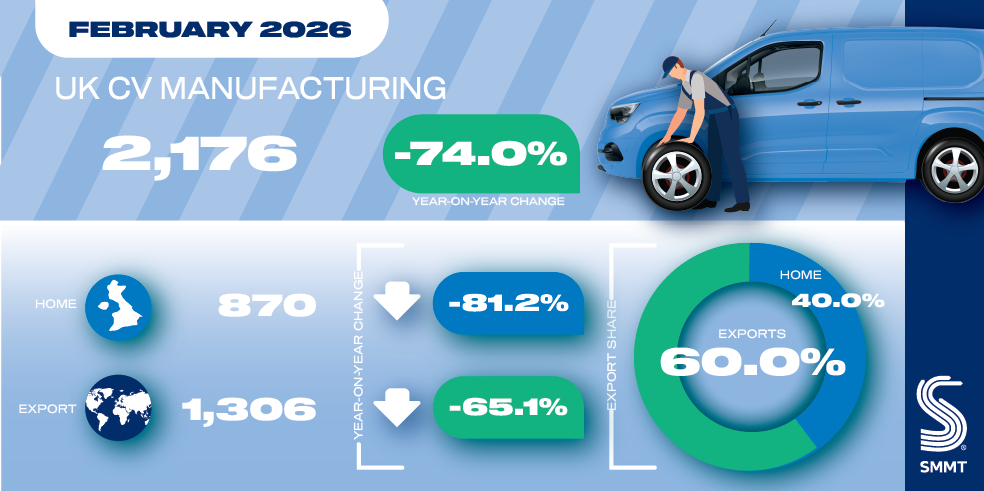
Image: SMMT
The latest data comes against a backdrop of increasing geopolitical and economic uncertainty, including renewed instability in the Middle East. At the same time, the UK automotive sector faces potential new trade barriers stemming from the European Commission’s proposed ‘Made in the EU’ measures within its Industrial Accelerator Act. As currently drafted, these proposals could disadvantage UK-built vehicles and components, putting at risk a trading relationship with the EU valued at nearly £70 billion annually and raising concerns over compliance with the EU-UK Trade and Cooperation Agreement.
Industry leaders are calling for closer cooperation between governments to safeguard trade flows and ensure the continued availability of competitively priced vehicles, particularly electric models, for consumers on both sides of the Channel. Strengthening industrial collaboration would also support jobs, economic growth and supply chain resilience across the UK and Europe.
Mike Hawes, Chief Executive of the SMMT, warned of the wider implications of the latest figures: “Another decline for UK vehicle production and exports is extremely worrying, given these figures pre-date the crisis in the Middle East. While the sector has made efforts to build resilience into its logistics and supply chains post Covid, the conflict adds further strain. Now more than ever we must focus on our industrial competitiveness by driving down energy costs, backing our suppliers, supporting our domestic market and securing free and fair trade with Europe.”
With multiple headwinds converging, from global instability to evolving trade policies, the outlook for UK vehicle manufacturing remains uncertain. The sector’s ability to adapt, invest in electrification and maintain strong trading relationships will be critical to reversing the current downturn and securing long-term growth.