

New car market grows 11.4% in June as EVs drive recovery
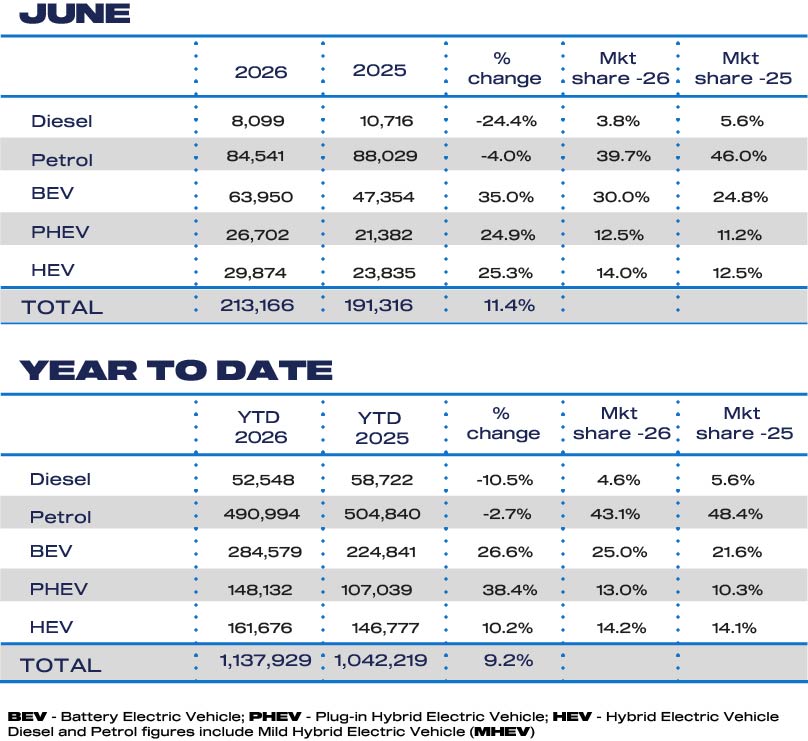
The UK new car market continued its recovery in June, with registrations rising by 11.4% year on year to 213,166 units, marking the strongest performance for the month since 2019, according to the latest data from the Society of Motor Manufacturers and Traders (SMMT).
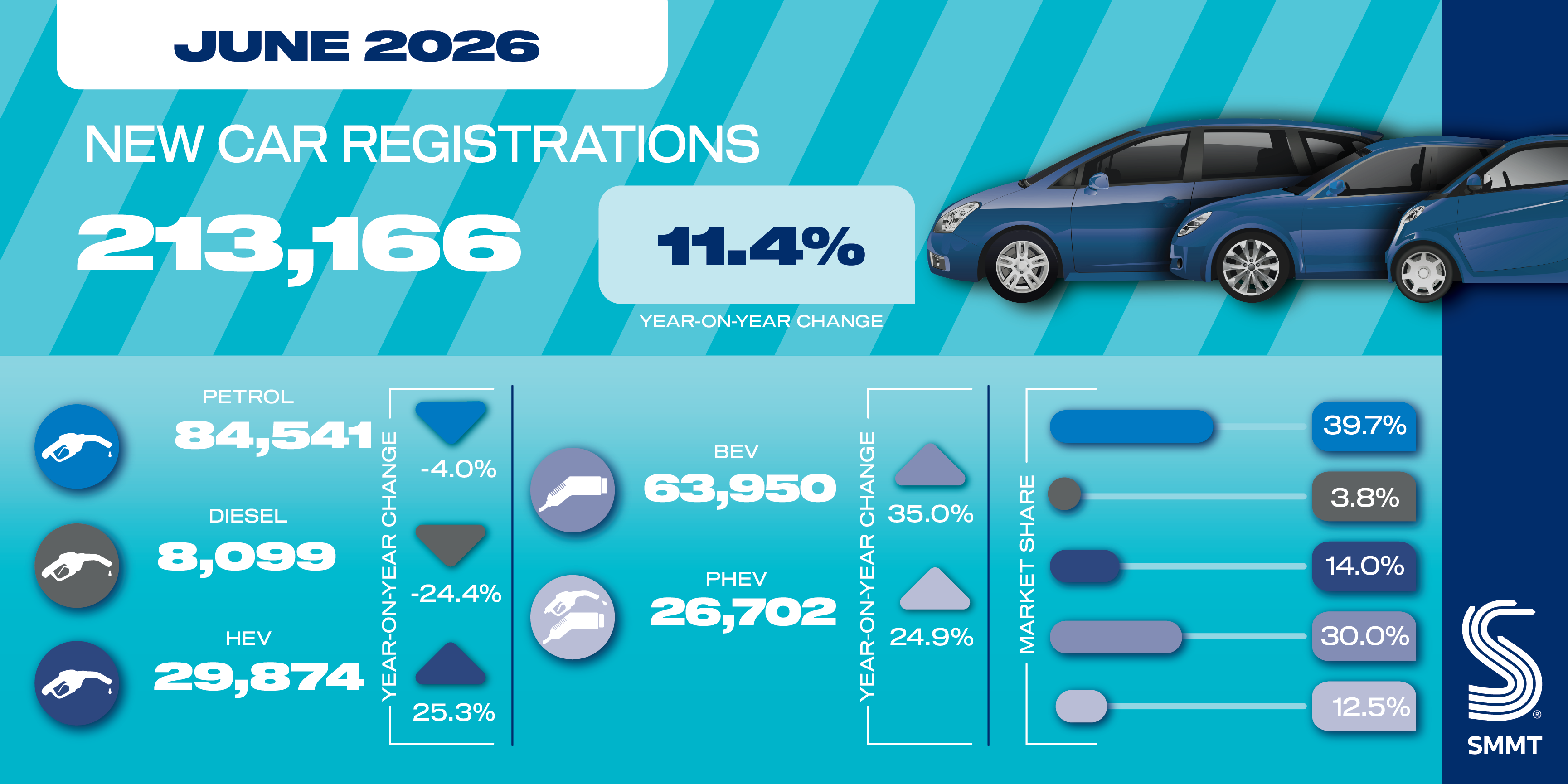
The growth was recorded across all major buyer groups. Private registrations increased by 12.5%, fleet demand rose by 10.5%, and the smaller business sector delivered the strongest rise at 17.1%. Fleet buyers continued to dominate the market, accounting for 59.5% of all new car registrations.
The expansion was driven entirely by electrified vehicles as the UK market continues its shift towards lower and zero-emission mobility. Manufacturers have expanded their model ranges and powertrain options significantly, while a growing number of brands have entered the UK market, increasing consumer choice.
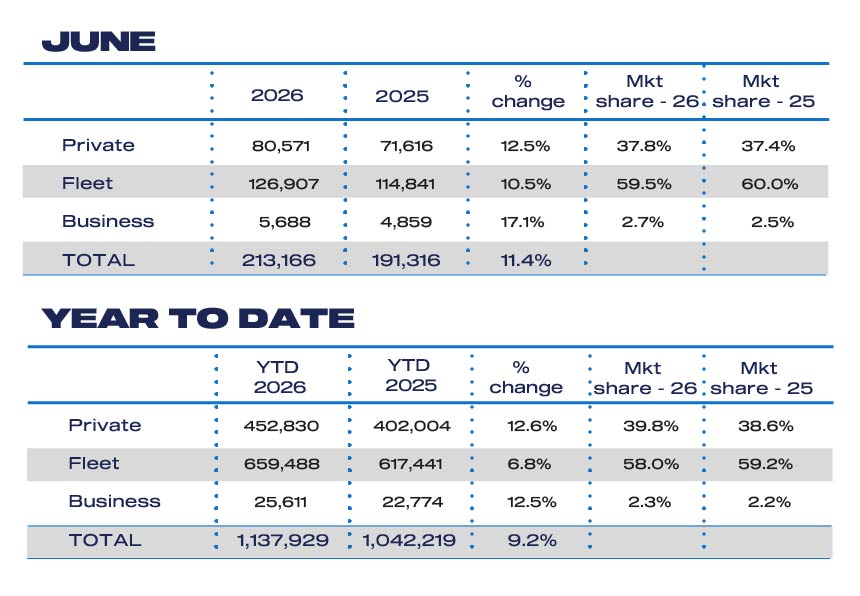 Plug-in hybrid electric vehicles (PHEVs) accounted for 12.5% of the market, while hybrid electric vehicles (HEVs) made up 14.0%. Battery electric vehicles (BEVs) recorded the strongest performance, reaching a 30.0% market share—the highest so far this year. SMMT noted that this pattern reflects typical end-of-quarter demand spikes, alongside consumer sensitivity to fuel prices, including recent volatility linked to geopolitical tensions in the Middle East.
Year to date, BEVs account for 25.0% of the market, a record level but still below the government’s 33% target. To meet that threshold, BEV registrations would need to exceed 40% for the remainder of the year, while currently around three-quarters of buyers are still choosing non-electric powertrains. Despite expanded model availability, government incentives and more than £12 billion in manufacturer-funded discounts, uptake has not increased at the pace required, placing pressure on profitability, investment decisions and residual values.
According to SMMT’s latest UK Automotive Business Leaders Barometer, industry confidence in meeting regulatory targets remains low. All respondents said the UK is currently behind the trajectory needed to achieve the mandated 80% zero-emission vehicle share by 2030, with 73.8% stating it is significantly behind.
Manufacturers remain committed to the transition to electric mobility, but industry leaders warn that urgent reform of the regulatory framework is now required. They argue that the current cost of compliance is making the UK a less competitive market for both selling and producing vehicles, particularly as other global markets adopt less restrictive approaches.
Mike Hawes, SMMT Chief Executive, said: “June’s performance is very strong, showing EV uptake is growing, with battery electric cars reaching their highest market share this year and more than half of buyers choosing electrified models. But even these record levels are still not enough to meet mandated targets. Manufacturers are investing billions developing and bringing the vehicles to market – and spending billions more to sell them, yet the market is still not moving fast enough. Reforming the mandate now is essential not just to keep the transition on track but to protect the UK’s competitiveness, attract investment and safeguard jobs.”