
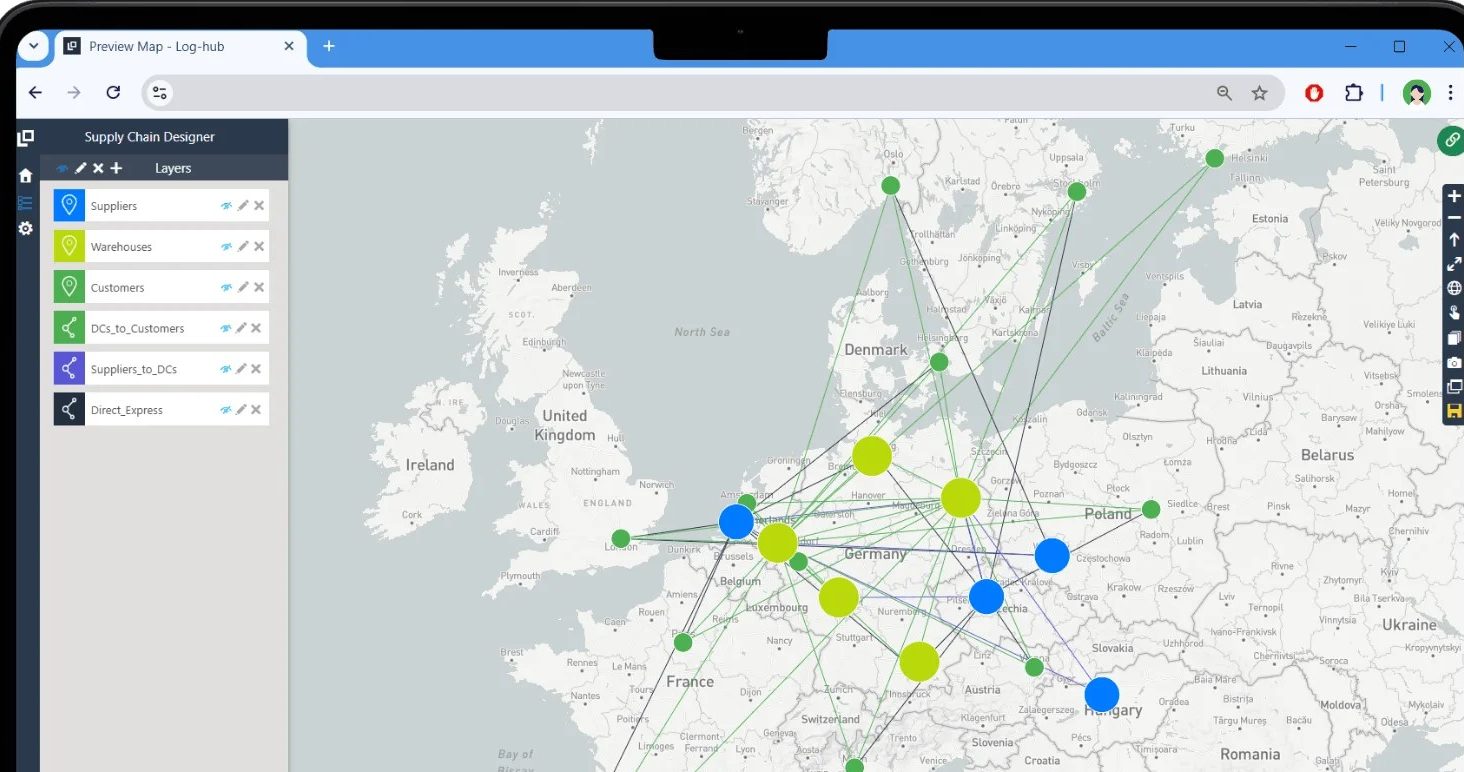
Log-hub announced the introduction of its Supply Chain Agent, a new capability designed to change how logistics and supply chain professionals interact with advanced planning and analytics tools. Rather than adding another layer of AI features, the Supply Chain Agent tackles a persistent challenge in the industry: making powerful analytical capabilities practical and efficient to use in day-to-day planning work.
The Supply Chain Agent is designed as an agent-based interaction layer within Log[1]hub’s platform. Instead of navigating multiple applications or configuring analyses manually, users can describe a supply chain problem in natural language, defining the intent and desired outcome. The Agent then identifies the relevant analytical modules, executes the required calculations, and uploads results directly into the user’s workspace.
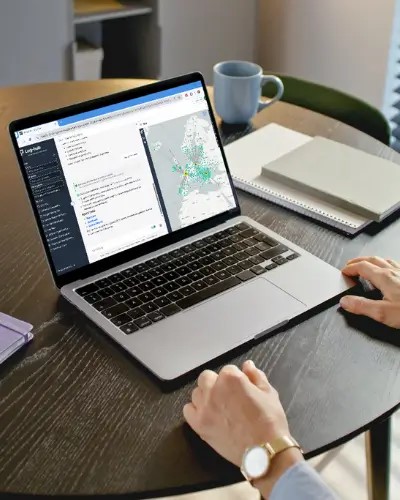
Image: Log-hub
This interaction model is built around human AI collaboration. The AI handles the heavy lifting of configuration and execution, while the human user retains control over strategy, judgment, and decision making. Users define the “what”, the objective or question to be answered, while the Agent automates the “how”, including tool selection, configuration, and execution.
For example, a network design or logistics professional can request a centre of gravity analysis by describing the distribution challenge in plain terms. The Agent interprets the request, selects the appropriate analytical module, runs the centre of gravity calculation based on the available data, and returns the recommended location along with supporting outputs.
“Workflows have traditionally relied on a combination of specialized applications, spreadsheets, and manual data handling,” says Alexander Sigmund, CTO of Log-hub. “Our goal is to make interaction with advanced analytics more intuitive, so users can focus on decision making rather than tool configuration.”
Unlike rule-based chat interfaces or passive help assistants, the Supply Chain Agent is designed to actively orchestrate analytical workflows. It can analyse supply chain scenarios, trigger relevant processes, and automate recurring analytical tasks with limited user intervention. The intent is not to replace human expertise, but to support it by reducing friction, execution time, and the risk of manual error.
Why now?
The introduction of the Supply Chain Agent reflects broader changes across the supply chain landscape. Ongoing volatility, increasing network complexity, and persistent talent shortages have placed additional pressure on planning teams. At the same time, platforms have grown more sophisticated, often at the cost of usability. Agent-based interfaces are emerging to bridge this divide, enabling professionals to access advanced analytics without deep technical specialisation.
“Our vision is to enable users to collaborate with the software,” Sigmund adds. “Instead of clicking through menus, they interact with the system in a way that mirrors how they already think about supply chain problems.”
While many enterprise platforms are currently integrating generative AI features, Log[1]hub applies agent-based automation specifically to recurring operational challenges in logistics and supply chain planning, such as scenario evaluation, application selection, and execution of analytical workflows.
By automating the manual operation of complex tools, the Supply Chain Agent allows teams to spend more time interpreting results and acting, and less time setting up analyses. This enables faster iteration and the evaluation of more scenarios than would be practical with manual workflows, supporting better decision-making in an increasingly complex supply chain environment.