
Amazon’s drone delivery pilot has captured attention by challenging long-held assumptions about how goods move and how customers buy online, but it also highlights how difficult it is turning promising trials into viable operating models.
Chris Clowes, executive director at global supply chain and logistics consultancy, SCALA, discusses how Amazon’s drone pilot project says about the opportunities and limits of logistics innovation.
While the long-term results of any individual pilot are rarely clear from the outside, it offers a useful prompt for the wider logistics sector: the leap from an impressive trial to a commercially viable operating model is often far greater than it first appears.
Customer expectations for speed and certainty continue to rise, while fleets face tighter margins, labour constraints, regulatory pressure, and decarbonisation targets. Innovation only earns its keep if it can perform reliably, safely, and profitably at scale. Technologies that look compelling in trials can struggle in live operations, not because the underlying concept is flawed, but because scale removes many of the protections on which pilots rely.
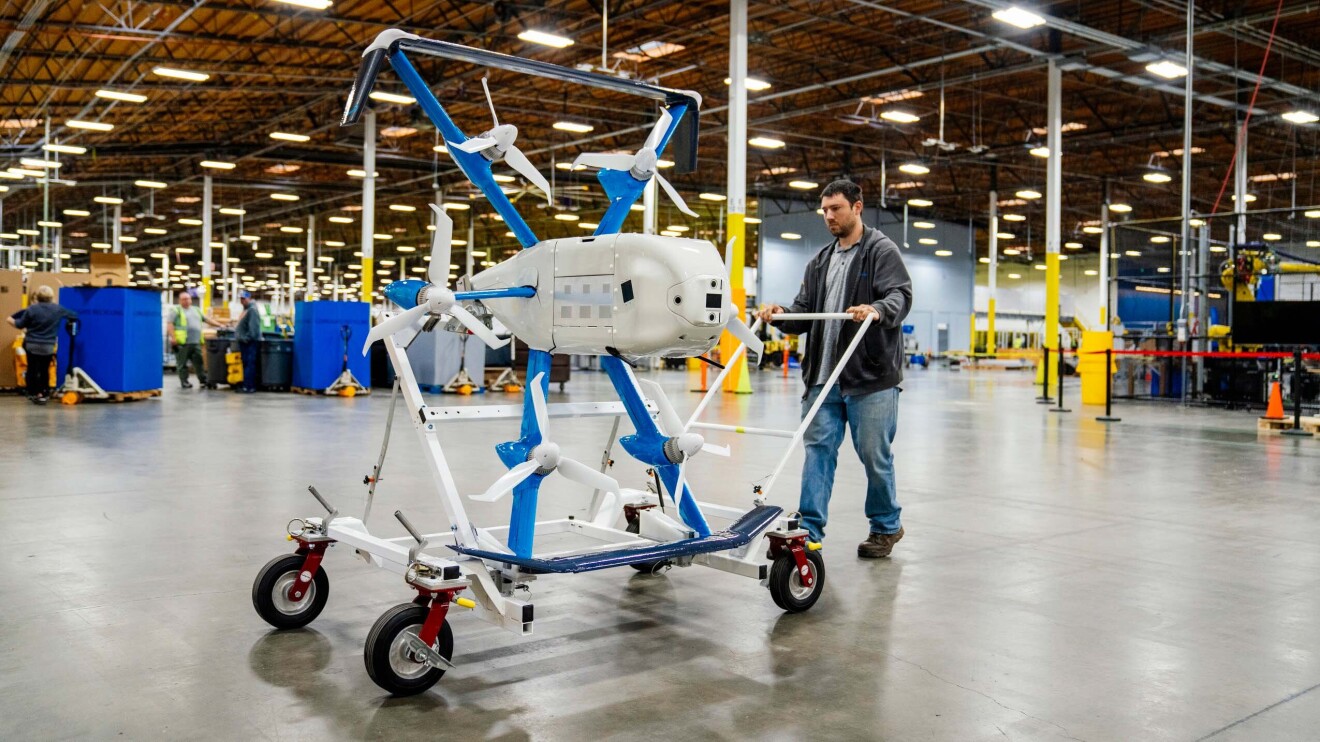
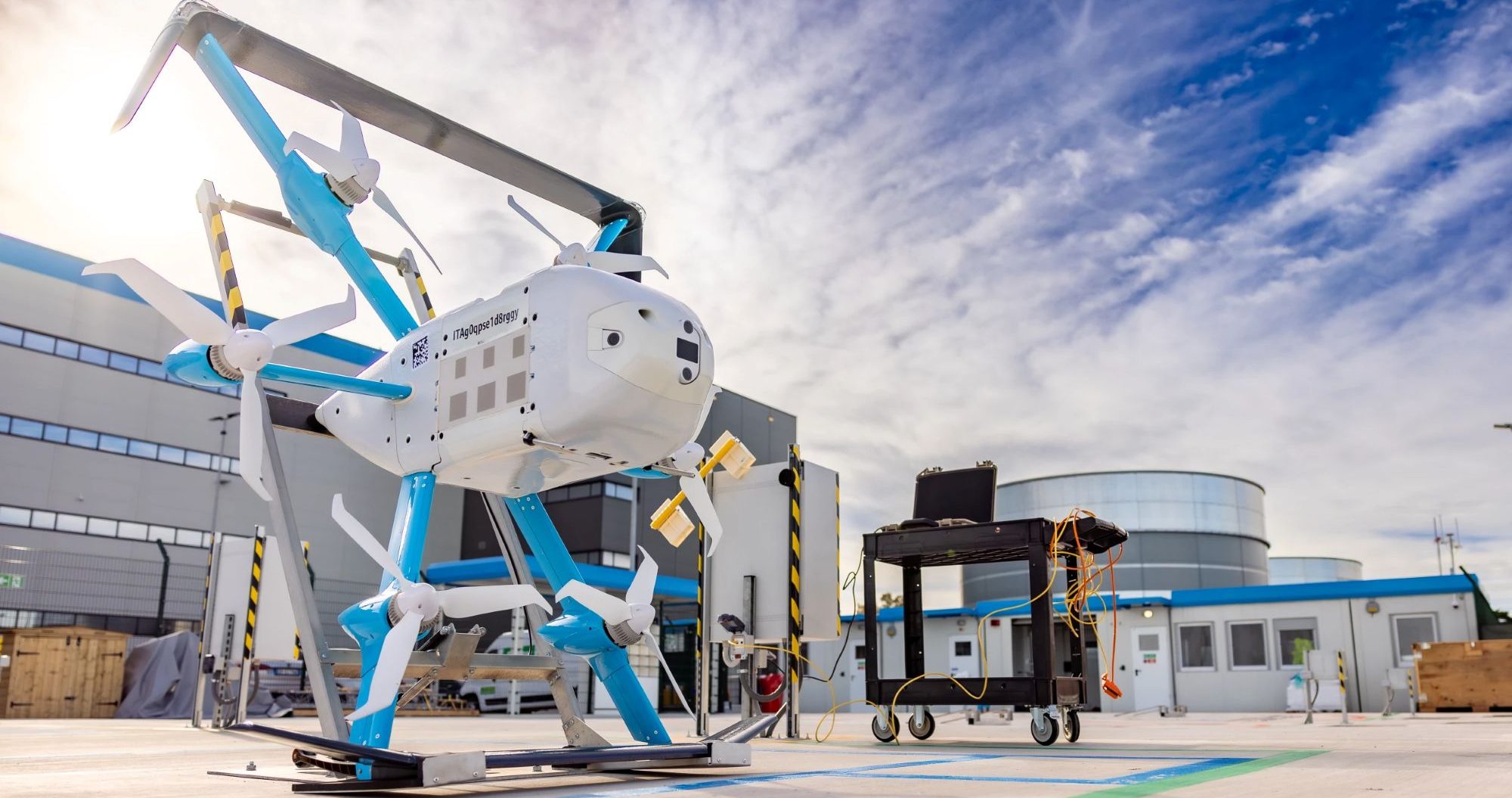
Image: Amazon
Drone delivery illustrates how quickly practical realities emerge when moving from controlled testing to day-to-day execution. In the right conditions, drones can offer fast delivery for small parcels and potentially reduce emissions for certain routes. Trials also allow businesses to learn quickly: variables can be limited, location can be carefully selected, and service levels can be managed with a degree of flexibility while the model is refined.
Scaling, however, introduces a fundamentally different set of dependencies. As volumes grow, tolerance for disruption often shrinks. Delays that are manageable in a pilot can become more visible when they occur repeatedly. Even a small failure rate could translate into daily operational “noise” that teams must recover from.
Weather may move from being an occasional constraint to a planning assumption. Battery performance, charging availability, maintenance cycles, and asset utilisation can introduce new operational pinch points. Safety obligations, airspace rules, insurance requirements, cybersecurity, and public acceptance may also shape where drones can operate, when they can fly, and how frequently.
It’s also possible that drones won’t remove the need for a broader transport network; instead, they are more likely to operate as a complement within a wider ecosystem. In practice, the economics are likely to depend on inventory being positioned close enough to customers to justify the speed promise. That can imply more localised stockholding, tighter replenishment cycles, and less tolerance for forecasting error.
None of this is to suggest that drone delivery cannot work, or that any specific programme will not succeed. It’s simply a reminder that “technically feasible” and “operationally repeatable” are not always the same thing, and that the hardest work often starts when a pilot ends.
For fleet operators, the priority is rarely to chase the most futuristic idea in isolation. It is to build operating models that still work in bad weather, during peak demand, with labour constraints, and under real customer scrutiny. In many cases, the most resilient gains come from a portfolio of improvements: stronger visibility, better exception management, disciplined planning, safer processes, and smarter network design, supported by technology that helps people make better decisions, rather than introducing unmanaged complexity.
This “pilot-to-scale” reality is not unique to drones. It’s a useful lens for any innovation that relies on new infrastructure, new rules, new skills, or new customer behaviours. The organisations that succeed will be those that test boldly, but scale deliberately, with clear service guardrails, robust contingency planning and a commercial model that can withstand real-world volatility.
Amazon’s own track record also shows why a high-profile pilot should not be taken as proof of a scalable model. The company has long been willing to test bold ideas, learn quickly, and stop when the customer fit or commercial case is not there. Its Fire Phone, launched in 2014, was withdrawn within a year after disappointing sales. More recently, its checkout-free retail approach has also been scaled back as customer preferences and operational realities became clearer.
That does not mean drone delivery cannot work, but it does reinforce the broader point. Even for a company with Amazon’s scale and appetite for experimentation, it is commercial reality that ultimately decides which innovations last.