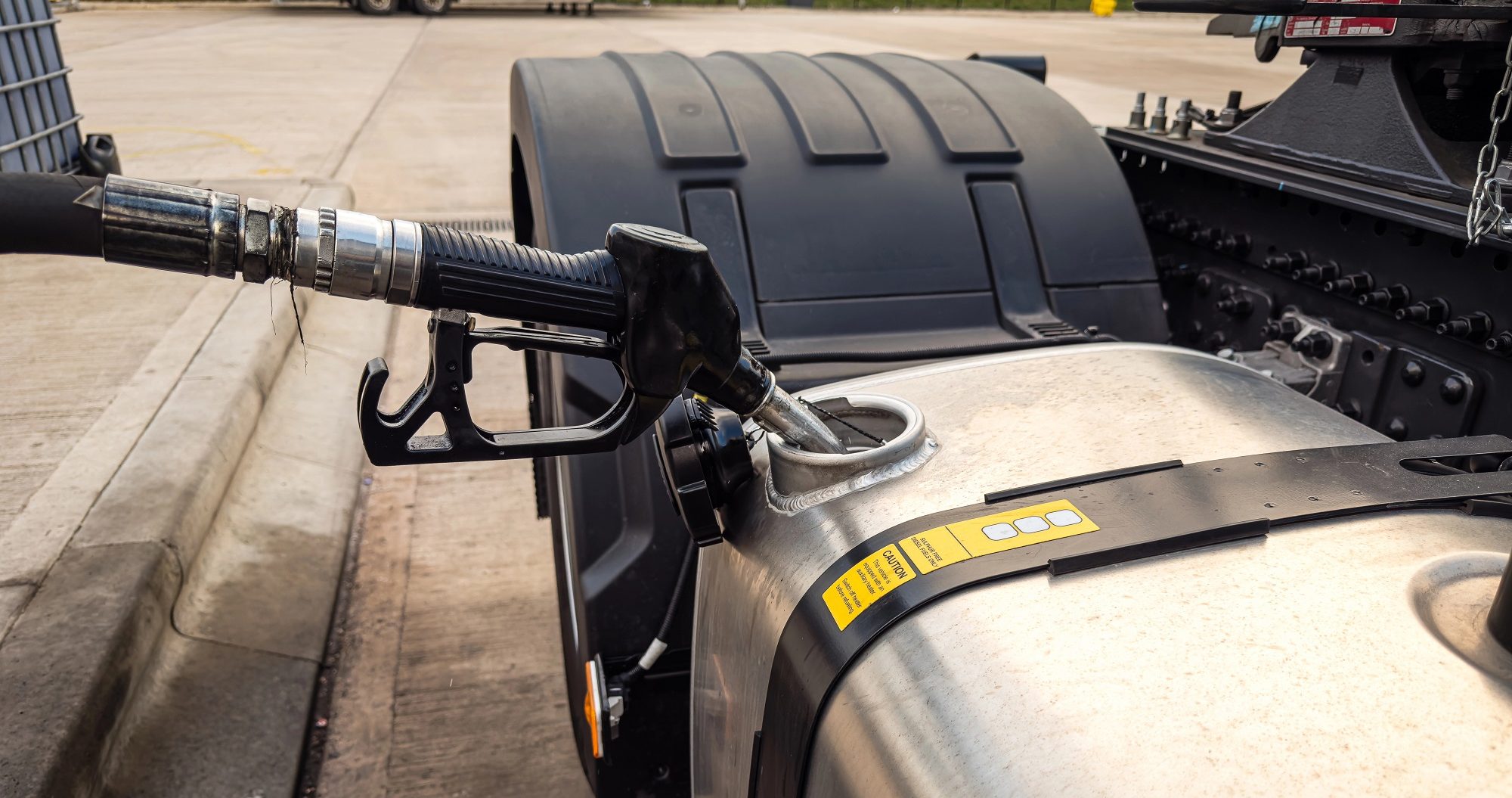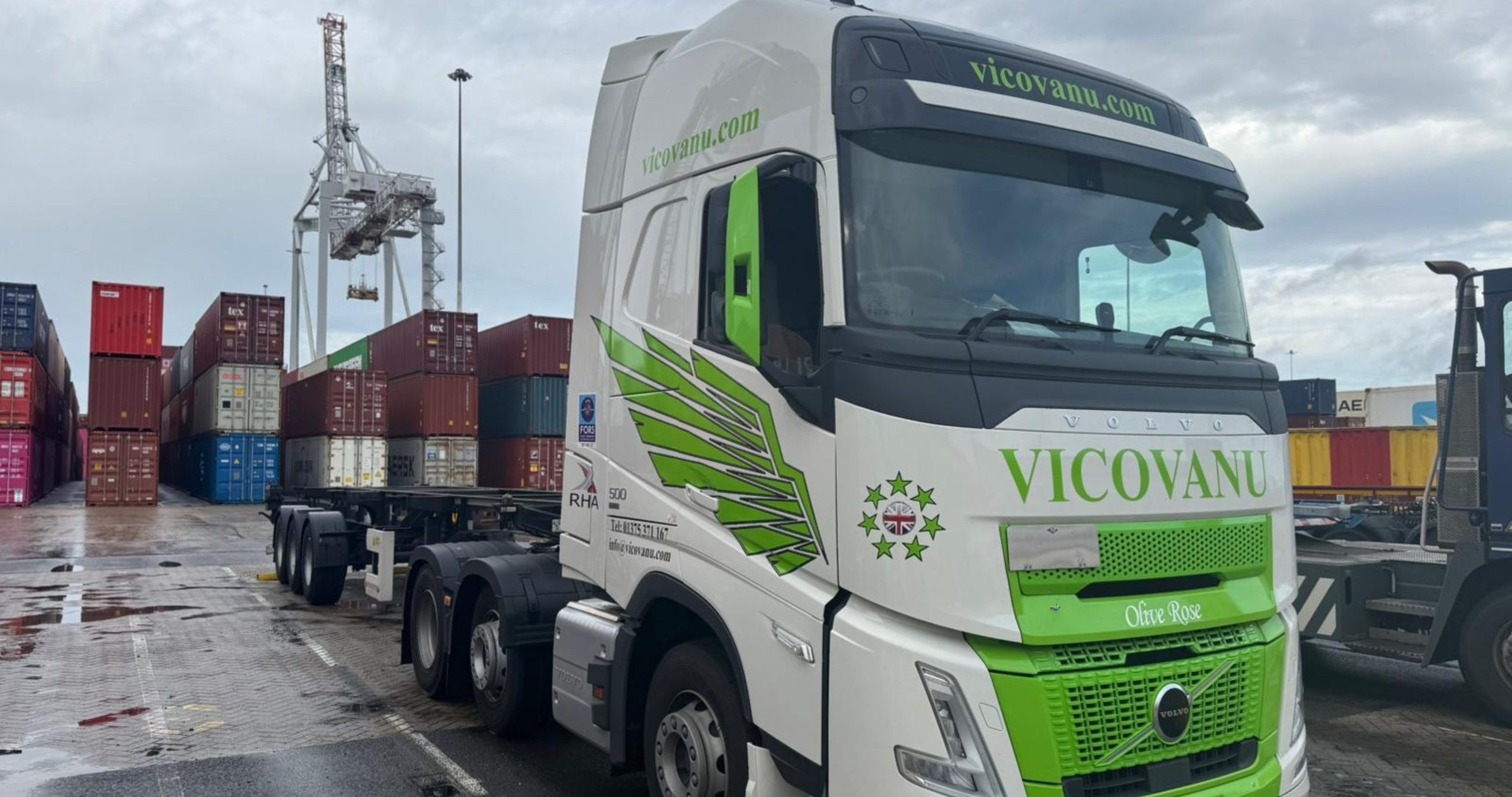


Knowing which driver is behind the wheel at any given moment is one of the most fundamental requirements in modern fleet management. Whether the goal is compliance, insurance accuracy, duty-of-care, or driver behaviour monitoring, none of it works without reliable driver identification. Yet the technology used to achieve this varies enormously across UK fleets — and the choice of method has real consequences for security, efficiency, and operational cost.
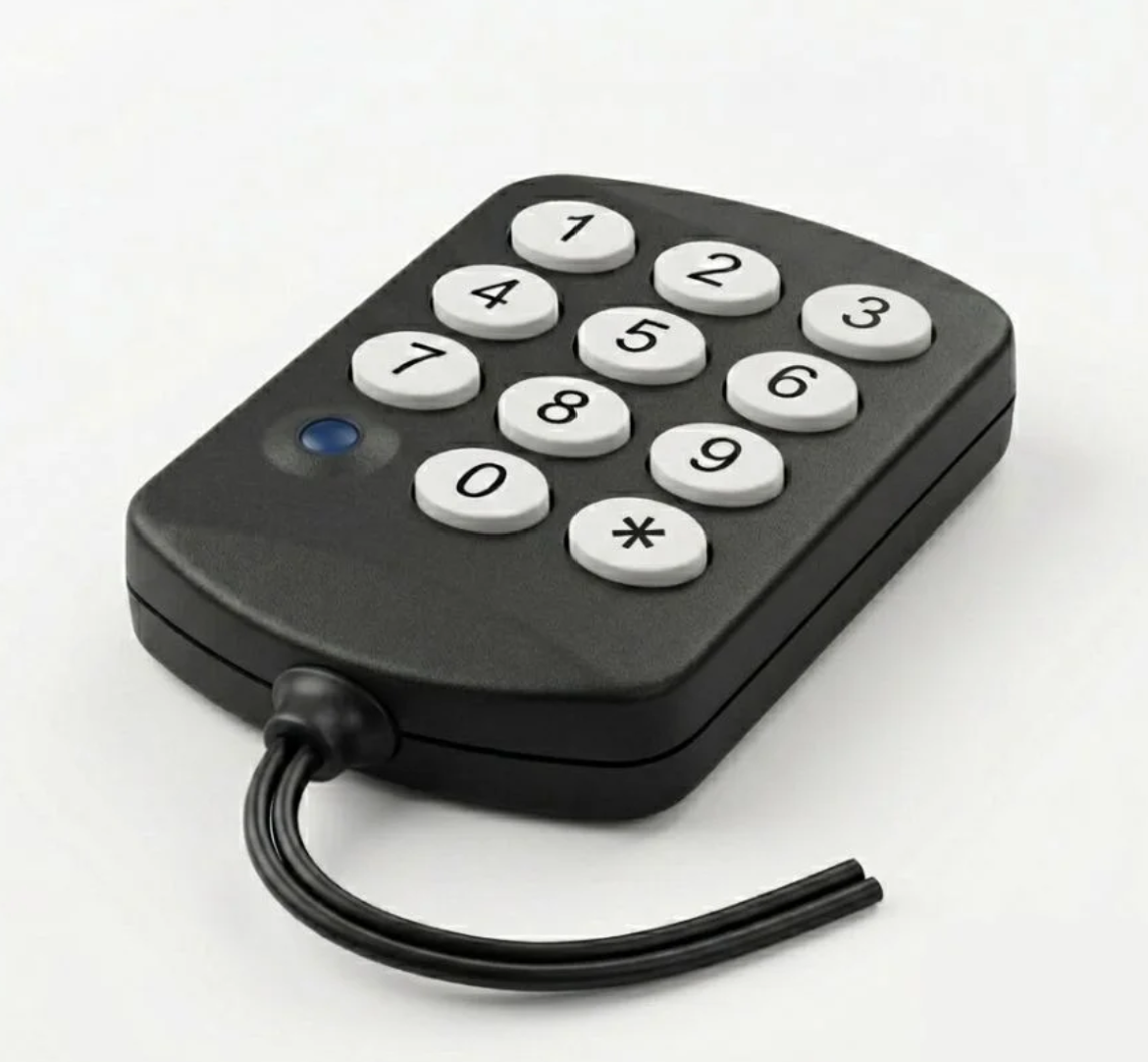
Image: Tracking Hardware UK
In this article, Joseph Cimand, CEO, Tracking Hardware UK compares the three most widely used approaches — iButton, RFID, and PIN keypads — and explains why an increasing number of fleet operators are moving away from the older token-based methods.
THE PROBLEM WITH iButton
The Dallas iButton has been part of fleet telematics since the early 2000s. It is a small stainless-steel disc with a unique serial number — the driver touches it to a cab-mounted reader, and the journey is attributed to them. Simple, inexpensive, and still widely installed.
But it belongs to a different era of fleet management.
iButtons are physical tokens, which means they get lost, left at home, and, critically, shared. A driver who has forgotten their fob will borrow a colleague’s rather than go without. The telematics system logs the wrong driver. The compliance record is corrupted. And there is no way to detect it after the fact.
More fundamentally, an iButton proves only that a token is present in the vehicle. It says nothing about who is holding it. For any fleet with genuine duty-of-care obligations, that distinction matters enormously. If a vehicle is involved in an incident and the iButton data shows the wrong driver, the consequences for the operator can be severe.
RFID: A NEWER FORMAT, THE SAME CORE FLAW
RFID fobs and smart cards modernised the form factor but not the underlying security model. They are more durable than iButton and easier to carry, but they share the same fatal weakness: they identify a token, not a person.
RFID credentials can be lent or forgotten just as easily as an iButton. Worse, passive RFID cards can be cloned using inexpensive, commercially available equipment — meaning a driver’s identity can be duplicated without their knowledge. For operators in regulated industries or those managing high-value loads, this is not a theoretical risk.
RFID also introduces practical reliability issues. Read range inconsistencies and incorrect card placement mean drivers occasionally fail to register at all, creating gaps in the identification record that require time-consuming manual correction. In a busy operation, those exceptions add up.
The honest assessment: RFID is an incremental improvement over iButton, not a solution to the underlying problem.
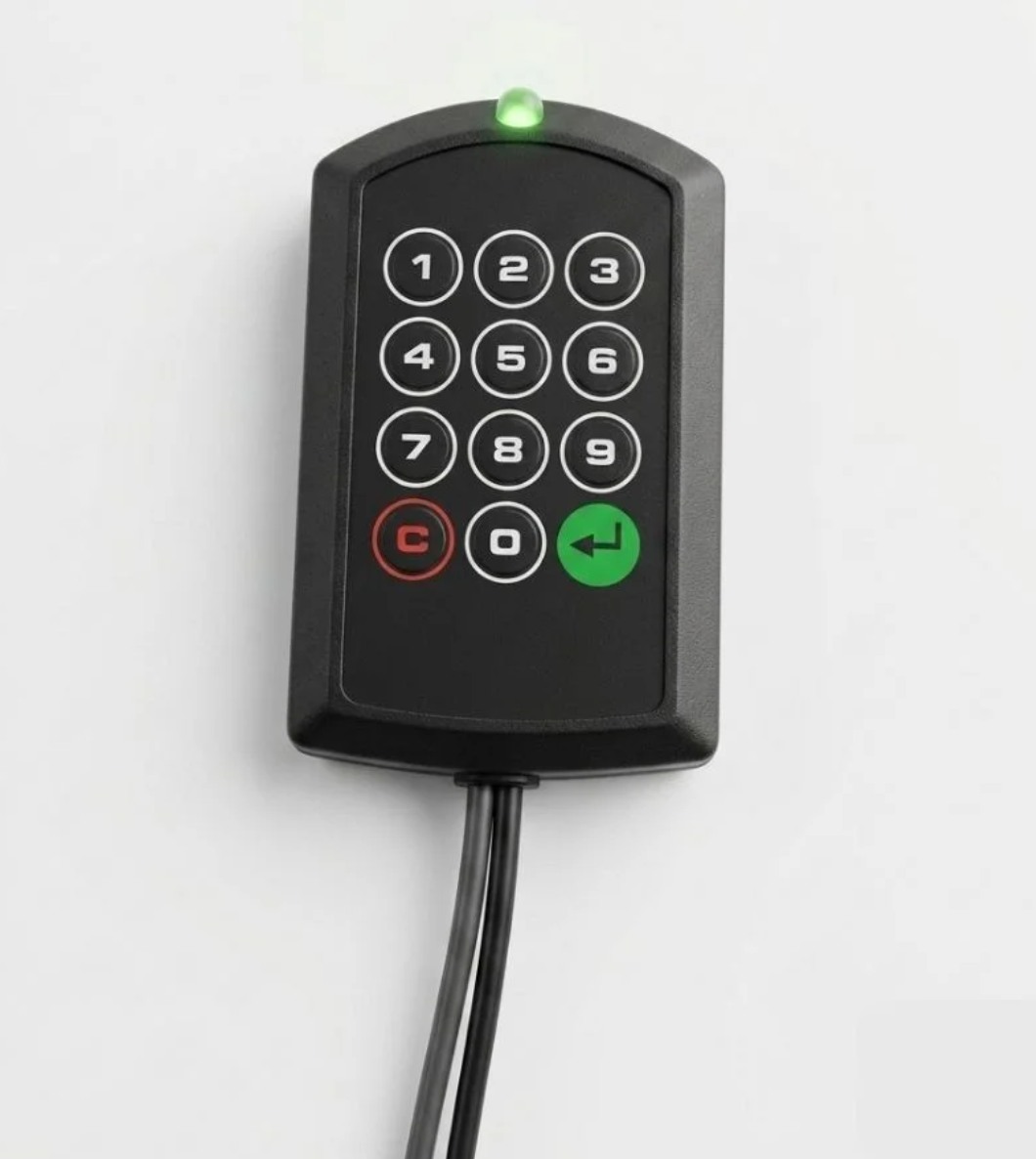
Image: Tracking Hardware UK
PIN KEYPADS: THE MODERN STANDARD
Driver identification keypads resolve the core issue that iButton and RFID never could — they verify the driver, not an object the driver happens to be carrying.
The driver enters a unique PIN directly into a keypad mounted in the cab. There is no token to lose, lend, forget, or clone. The PIN exists only in the driver’s memory, which means the only person who can identify as Driver A is Driver A. It is a fundamentally more secure model, and it produces a fundamentally more reliable data record.
For fleet managers, the practical benefits are immediate. Fewer data exceptions. Cleaner compliance records. A stronger audit trail that will stand up to scrutiny from insurers, the DVSA, or an employment tribunal. And for drivers, the experience is simpler — no fob to carry, no reader to find in the dark, just a four-digit code they already know.
Modern keypads are purpose-built for the commercial vehicle environment. IP67 and IP68-rated housings are standard, handling the dust, moisture, and vibration of daily HGV and LCV operation. Backlit displays and large tactile buttons ensure usability in low-light conditions. Some models also support NFC as a secondary method for operations that require flexibility across different driver groups.
The security gap between PIN keypads and token-based systems is not marginal. It is the difference between knowing a token is in a vehicle and knowing a specific person is driving it. For any fleet where accountability and compliance are taken seriously, that gap is decisive.
WORKS WITH YOUR EXISTING TELEMATICS HARDWARE
A common concern when upgrading driver identification is compatibility with existing GPS telematics infrastructure. In practice, this is rarely an obstacle.
Modern driver ID keypads connect via standard 1-Wire or RS-232 interfaces — the same connections used by iButton readers — which means they can typically be retrofitted to existing tracker installations without replacing the tracker itself. They are fully compatible with devices from all leading telematics manufacturers, including Teltonika, Queclink, Ruptela, and Digital Matter, among others.
At Tracking Hardware UK, we supply keypads that work across this full range of platforms. For mixed fleets running different tracker models across vehicle types, a single keypad solution can be deployed consistently throughout the operation, providing uniform identification data and a consistent experience for drivers regardless of the underlying hardware.
The upgrade path is straightforward. The business case is clear. And the security improvement is immediate from day one.
THE TAKEAWAY FOR FLEET MANAGERS
iButton and RFID served a purpose when better options did not exist. That is no longer the situation. PIN keypads deliver stronger security, cleaner data, and a more defensible compliance record, at a modest additional cost per vehicle that is easily justified by the reduction in exceptions, disputes, and liability exposure.
If your fleet is still running token-based driver identification, it is worth asking a direct question: in the event of a serious incident, how confident are you that your driver ID data accurately reflects who was behind the wheel?
For most operators running iButton or RFID, the honest answer is: not confident enough.