
Ford and Geely have announced a landmark manufacturing partnership that will see the Chinese automotive giant build vehicles at Ford’s underutilised Almussafes plant in Valencia, Spain. The agreement marks Geely’s first manufacturing base in Europe and provides Ford with a solution to maximise capacity at one of its most important European factories while reinforcing Spain’s position as a gateway for Chinese automotive investment into the European market.
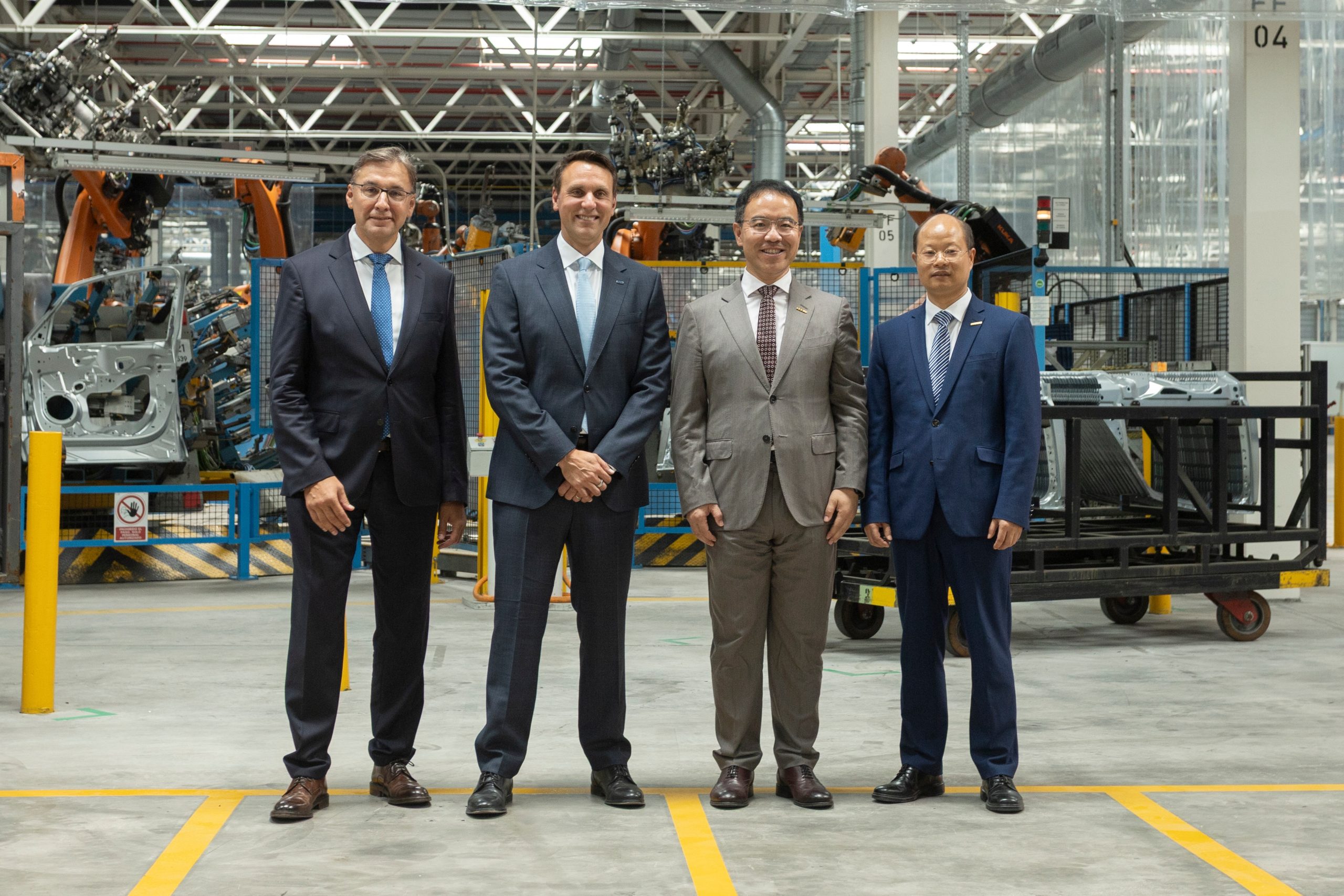
left to right: Daniel Ruiz, Director Manufacturing Valencia Plant; Jim Baumbick, President Ford in Europe; Victor Yang, Senior Vice President Geely Holding Group; Alex Nan, Vice President Geely Auto Group
The agreement goes beyond contract manufacturing. Ford and Geely will establish a joint venture, subject to regulatory approval, with Ford holding a 66% stake and Geely 34%. Operations are expected to begin in the first half of 2027, with vehicle production commencing in 2028.
The partnership is significant not only because it secures the future of thousands of jobs in Valencia, but because it illustrates how established Western manufacturers and ambitious Chinese carmakers are increasingly working together to compete in Europe’s rapidly evolving automotive market.
Five new vehicles for Valencia
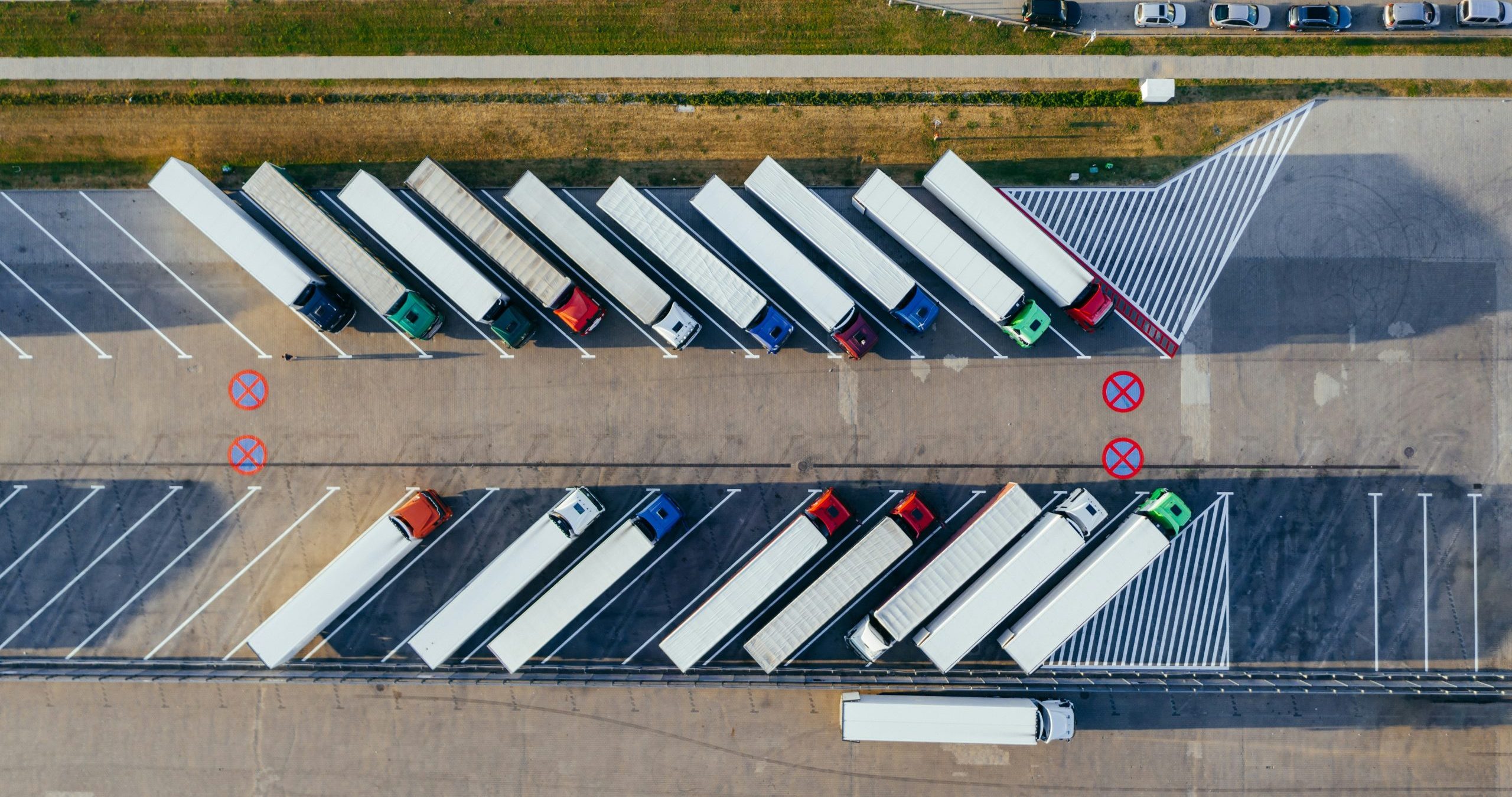
The Almussafes factory has seen production decline dramatically over recent years following the end of several long-running Ford models. Today it builds only the Ford Kuga, leaving much of the site’s manufacturing capacity unused.
The new joint venture will transform the plant into a multi-brand production hub. In total, five vehicles are expected to be produced from 2028:
- The Ford Kuga, with production continuing uninterrupted.
- A new compact Ford Bronco SUV.
- A new Ford crossover jointly developed with Geely and offered with multiple powertrains.
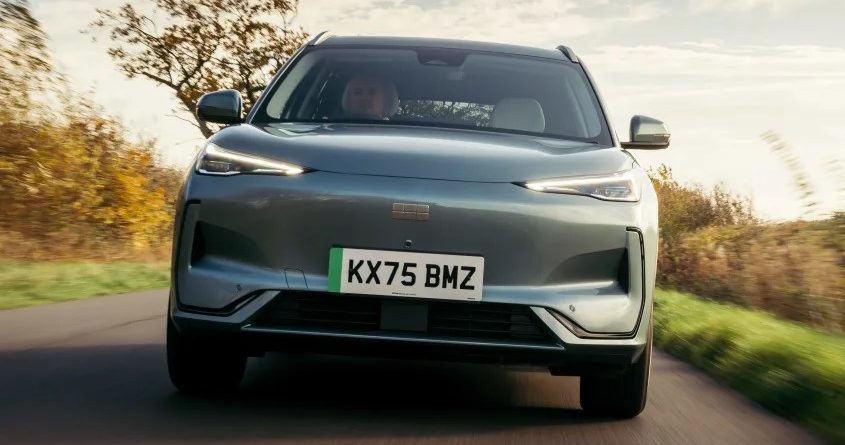
- Two Geely electric SUVs, including the Geely EX5 and a second model yet to be officially revealed.
Ford says combining production volumes will dramatically improve factory utilisation while reducing manufacturing costs and enabling both companies to compete more effectively against increasingly cost-competitive global rivals.
Jim Baumbick, President of Ford of Europe, said: “For nearly 50 years, Valencia has built some of the most-loved cars in our history, and now this team will help build our future.
“That’s why we’re building a flexible, cost-effective industrial system with a capable partner in Geely Auto. Together we can fully utilize a best-in-class plant with a great workforce and match the industry’s new cost benchmark.
“This is all part of Ford’s vision to give European drivers rally-bred handling, true off-road capability and multi-energy technology, with a distinct Blue Oval DNA.”
Alex Nan, Vice President of Geely Auto Group, added: “This joint venture with Ford in Europe reflects our commitment to open, collaborative product development as part of our growth strategy, deepening our local presence and commitment to customers in Europe.
“We are dedicated to delivering vehicles that European customers will choose on merit: on industry leading features, on high-quality and on actively contributing to Europe’s green future.
“Put simply: we are building cars in Europe, for Europe, alongside a trusted partner.”
Government support proved decisive
Ford has been unusually explicit about the role played by the Spanish authorities in making the project happen.
Baumbick described the collaboration as a model for industrial policy, saying: “This partnership shows how automakers are strengthening Europe’s industrial base, but we can’t do it alone.
“What we’ve achieved in Valencia, with the ongoing support of Spain’s national and regional governments, is a masterclass in public-private partnership that sets the benchmark for the rest of Europe.”
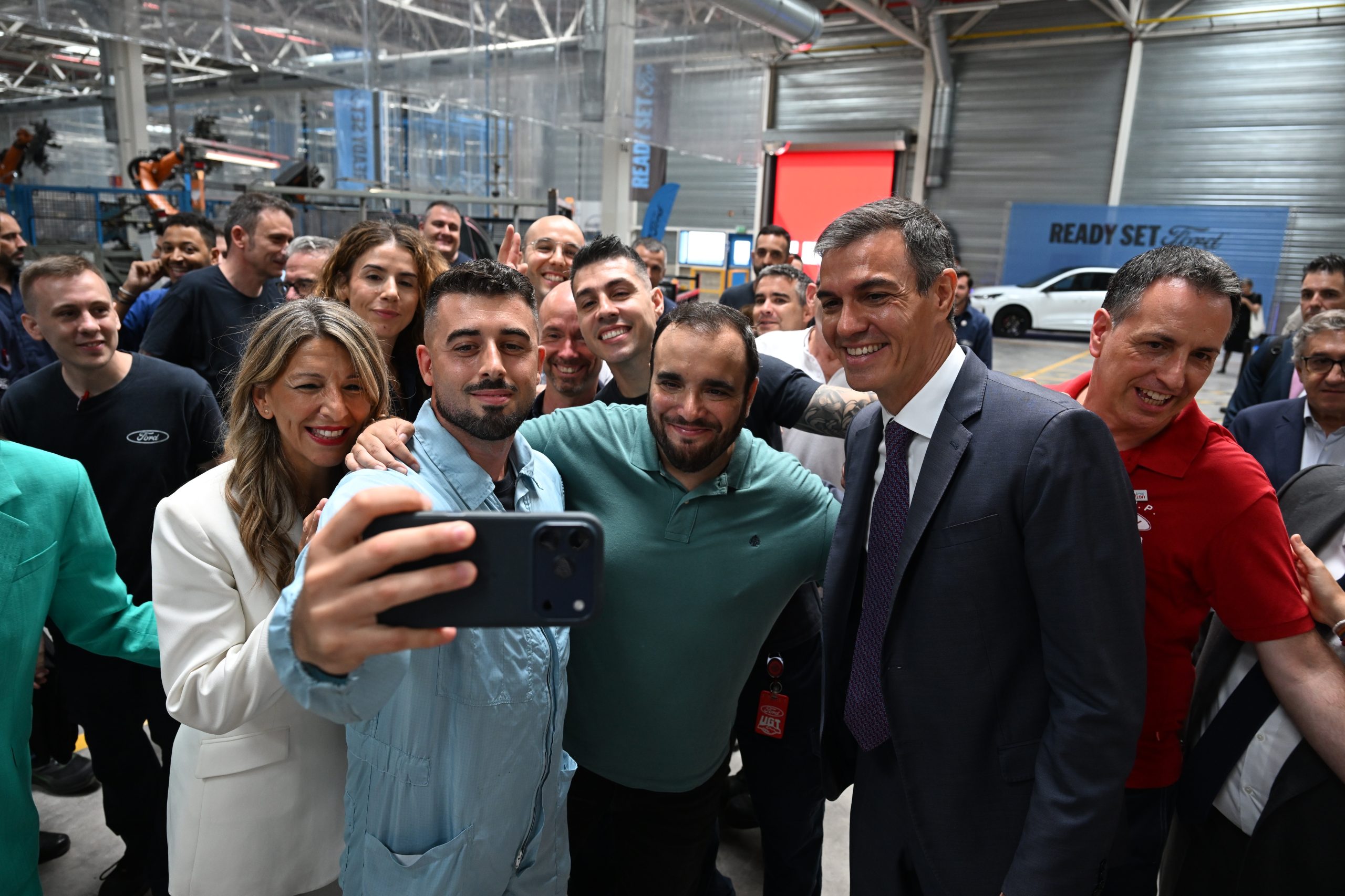
Pedro Sánchez, Prime Minister of Spain, with employees in Valencia
Prime Minister Pedro Sánchez attended the announcement in Valencia, underlining the political importance attached to the investment. Spain’s national government has supported the Almussafes plant through employment protection schemes during the transition to electrification while regional authorities have worked closely with Ford to secure the factory’s long-term future.
The agreement is expected to safeguard the existing workforce of around 4,200 employees while potentially creating additional jobs as production ramps up towards the plant’s full capacity.
Part of Spain’s wider China strategy
The Ford-Geely agreement is not an isolated investment, but part of a broader strategy pursued by Pedro Sánchez’s government to position Spain as Europe’s preferred manufacturing destination for Chinese automotive companies.
Rather than simply importing vehicles from China and facing the EU’s additional tariffs on Chinese-built electric vehicles, manufacturers can establish production inside the EU, allowing vehicles built in Spain to qualify as European-made products while also reducing logistics costs and improving supply chain resilience. Although local-content rules and trade regulations remain important considerations, European manufacturing significantly strengthens Chinese brands’ long-term competitiveness.
The most notable precedent is Chery Automobile’s partnership with Spanish marque Ebro. Together they have restarted vehicle production at Barcelona’s former Nissan factory, bringing a major manufacturing site back into operation after Nissan’s departure. Chery now produces vehicles for both the Ebro brand and its own European expansion strategy, creating hundreds of jobs while revitalising an otherwise idle facility.
Spain has also attracted investment from CATL in battery manufacturing and continues to court further Chinese automotive suppliers, helping establish a complete electric vehicle ecosystem spanning batteries, components and vehicle assembly.
What it means for Europe
The Ford-Geely partnership reflects changing realities within Europe’s automotive sector.
Chinese manufacturers possess advanced electric vehicle platforms, competitive battery technology and highly efficient manufacturing processes. Established European and American manufacturers, meanwhile, own experienced workforces, recognised brands and extensive production facilities that are often operating well below capacity.
By combining these strengths, both companies hope to improve profitability while maintaining manufacturing in Europe.
For Ford, the deal reduces the burden of carrying an underutilised factory while expanding its future product range. For Geely, it provides a European manufacturing foothold at a time when trade barriers are making local production increasingly attractive.
The collaboration also signals that Europe’s automotive future may increasingly depend on partnerships rather than outright competition between traditional manufacturers and Chinese newcomers.
As pressure grows from electrification, rising costs and changing consumer demand, more manufacturers may follow similar collaborative models to preserve industrial capacity and remain globally competitive.
With the Valencia agreement, Spain has once again demonstrated its ability to attract major automotive investment. If the partnership succeeds, it could become a blueprint for future collaborations between European and Chinese manufacturers, helping secure jobs, accelerate vehicle electrification and reinforce Europe’s manufacturing base in an increasingly competitive global market.