
Britain’s transition to zero emission vehicles (ZEVs) must be urgently reviewed before targets increase sharply from 2027, the automotive industry has warned, cautioning that failing to reassess the current approach could undermine both the UK’s net zero ambitions and economic growth.
New analysis from the Society of Motor Manufacturers and Traders (SMMT) argues that the pathway to electrification was built on assumptions that have since proved overly optimistic. Despite regulatory adjustments and the reintroduction of consumer incentives, the gap between policy ambitions and actual market conditions continues to widen.
The automotive sector maintains its commitment to achieving net zero emissions, but industry leaders say that dramatically changing economic and global conditions mean the transition strategy now requires reassessment to ensure the original objectives can still be delivered.
Market Reality Versus Policy Ambition
Although the UK currently has the highest battery electric vehicle (BEV) market share among major European markets, the country is already struggling to meet its own targets. In 2025, battery electric vehicles accounted for 23.4% of new car registrations, falling short of the 28% requirement under the ZEV mandate and even below the 26% level the government initially expected the market to reach without regulation.
This shortfall exists despite motorists having access to more than 160 BEV models, reflecting billions of pounds of investment by vehicle manufacturers. To bridge the gap between demand and policy targets, the industry has relied heavily on price reductions and regulatory flexibilities. Manufacturers have offered more than £10 billion in discounts over the past two years alone to stimulate demand.
However, these measures are widely seen as unsustainable, particularly as regulatory targets become significantly tougher by the end of 2027, when 52% of new car sales and 46% of van sales must be zero emission. Industry analysis suggests that natural market demand is unlikely to double the electric car market share – or quadruple electric van adoption – within such a short timeframe. Without policy adjustments, the industry warns that fleet renewal and vehicle decarbonisation could slow, potentially weakening the UK’s attractiveness as a vehicle market and manufacturing hub.
Rising Costs and Infrastructure Challenges
A new SMMT report, Same Destination, Smarter Route, presented at the organisation’s Electrified conference, highlights several factors that have complicated the transition. Battery costs remain more than 30% higher than anticipated, while raw material prices continue to stay elevated. Industrial energy costs have also surged, rising 80% in the UK and 28% in the EU since 2021.
These cost pressures mean the expected price parity between electric vehicles and conventionally fuelled models has not yet materialised, slowing consumer adoption. At the same time, although charging infrastructure has expanded significantly, the cost of public charging has increased sharply in some cases – rising by more than 140% over the past five years.
Infrastructure rollout has also progressed more slowly than expected. A government target to install at least six ultra-rapid charging points at every motorway service area by the end of 2023 was only around 70% complete by early 2025.
Commercial Vehicles Face Greater Obstacles
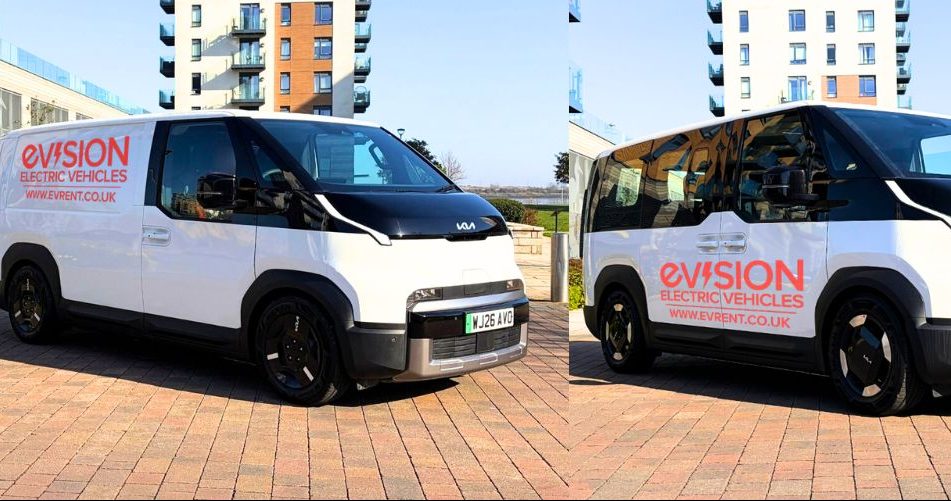
The challenges are even more pronounced in the commercial vehicle sector. While almost two thirds of new van models are now available as zero emission options, only 9.6% of vans sold in 2025 were electric, significantly below the 16% required by regulation.
Adoption in the heavy goods vehicle market remains in its earliest stages, with zero emission HGVs representing just 1.4% of sales in 2025. This reflects the sector’s diverse operational requirements, high upfront vehicle costs and the extensive charging or refuelling infrastructure still needed to support long-haul transport.
Changing Global Landscape
Industry leaders also point to a rapidly shifting geopolitical and economic environment. Energy markets, business confidence and international trade policies have all evolved significantly in recent years, creating new pressures on manufacturers and consumers alike.
The European Union recently published its draft Industrial Accelerator Act, which could affect trade in the very vehicles the EU and UK are seeking to promote. Meanwhile, other major markets including the EU and Canada have already adjusted their electrification timelines, while the United States has scaled back some of its electric vehicle commitments.
Against this backdrop, the UK automotive industry is calling on government to undertake a strategic review of the zero emission transition. Such a review would examine regulatory targets, market conditions and economic factors to determine whether the current pathway remains realistic and aligned with broader economic growth.
Mike Hawes, Chief Executive of SMMT, said: “The UK’s EV transition pathway was conceived with the best of intentions – but the assumptions behind it have proved over-ambitious. A landscape which once looked solid has turned out to be quicksand. Recognising the world of 2026 is not the one envisaged five years ago is not a retreat from ambition; it is a necessary step to achieving it. We need an urgent review that reflects today’s realities, that delivers decarbonisation not deindustrialisation and offers consumers the choice they have always expected.”
Industry Debate Continues
Not everyone agrees that the ZEV mandate needs revisiting. Vicky Read, head of ChargeUK, said the affordability of public charging should be addressed rather than altering EV sales targets.
“It is positive to see the auto and charging industries united in identifying that affordability of public EV charging needs to be addressed. The costs on our sector must be reduced to make driving an EV affordable for all, helping more drivers make the switch and supporting car makers to meet EV sales targets,” she said.
She added that revisiting the targets themselves could undermine investment in charging infrastructure. “Further messing with the Mandate would have the effect of chilling charging investment, creating a real barrier to EV adoption and putting the transition at risk.”
Recent government data on compliance with the ZEV mandate also highlights the progress already being made. Toby Poston from the British Vehicle Rental and Leasing Association said the figures demonstrate continued momentum in the shift to electric vehicles, while warning that the used EV market remains fragile.
“Today’s data on the ZEV mandate rubberstamps the progress we’ve seen in road transport decarbonisation. Driven by BVRLA members and their customers, the new EV market has been on a long-term growth trajectory,” he said.
“The finish line remains miles away though, the hard yards lie ahead. Those cars will shortly be feeding the used EV market, which remains immature, unstable and unsupported.”
Meanwhile, Ben Nelmes from the New AutoMotive argues that the mandate is already proving effective.
“There has been a consistent drumbeat of claims from automotive industry representatives that the ZEV mandate targets were unattainable. Today’s DfT report proves that those claims were false. Not only did manufacturers meet the targets, they over-complied.”
Supporters of the policy also stress the importance of maintaining momentum. Fiona Howarth from Octopus Electric Vehicles said consumer demand for electric cars continues to grow.
“Drivers are already choosing electric in growing numbers because the technology and economics make sense. The ZEV mandate provides the certainty that brings more choice and better value to drivers.”
She added: “Weakening this policy now would be the wrong approach. We should be doubling down on ways to power our cars and homes with energy produced here in the UK, rather than relying on imported fossil fuels. The focus now should be on building confidence and accelerating the transition, not slowing it down.”