
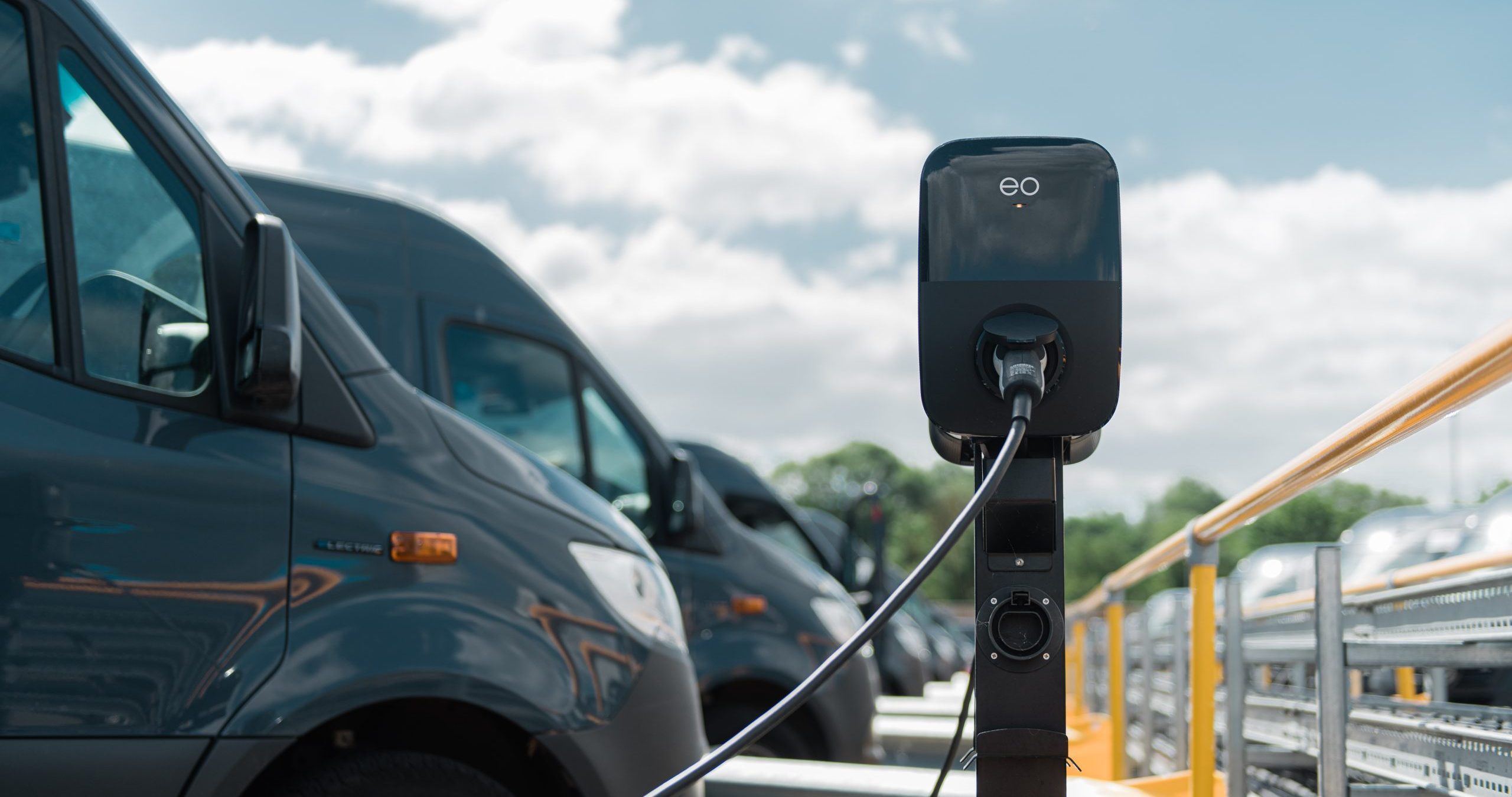
Pod has announced the acquisition of EO Charging, significantly expanding its commercial fleet charging and energy management capabilities as demand for electric vehicle infrastructure continues to grow across the UK.
The acquisition strengthens Pod’s position within the rapidly expanding fleet electrification sector, adding EO Charging’s specialist depot charging software and technologies to Pod’s existing expertise in home, workplace and public EV charging solutions.
With more than 17 years of experience supporting the UK’s transition to electric mobility, Pod has established itself as a major player in EV charging and energy flexibility, helping balance electricity demand through incentivised smart charging. By integrating EO Charging’s fleet and depot management technologies, Pod aims to provide enhanced support for logistics, transport and operational fleet operators navigating the shift to electric vehicles.
Commercial van and vehicle fleets are becoming increasingly important in the UK’s transition away from internal combustion engine (ICE) vehicles, particularly as government incentives and tighter emissions regulations accelerate fleet electrification. At the same time, operators face mounting challenges around limited grid capacity and lengthy electricity connection times, creating growing demand for intelligent charging and energy management systems that can maximise charging efficiency and optimise existing infrastructure.
Depot charging is also playing a more strategic role in the wider energy ecosystem, with overnight charging offering opportunities to reduce peak-time demand and make greater use of renewable energy sources.
Founded in 2014, EO Charging has built a strong reputation in the commercial charging sector, providing depot charging software and technologies for major fleet operators including Amazon, DHL and Tesco. Its solutions are designed to help operators manage charging performance, improve energy efficiency and support large-scale EV fleet deployments.
Pod said existing EO Charging customers will continue to receive uninterrupted service, while the acquisition provides a stable long-term platform for future development and innovation. The integration of EO Charging’s depot software with Pod’s smart charging and energy flexibility technologies is expected to strengthen support for mission-critical commercial charging environments.
Working alongside EDF, Pod plans to combine depot charging software, energy supply, smart energy management and flexibility trading into a more comprehensive offering for UK fleet operators as electrification accelerates.
The acquisition also marks another major milestone in Pod’s expansion strategy over the past two years, during which the company has scaled its presence across residential, workplace, public and fleet charging infrastructure. Pod says the deal cements its position as the UK’s largest EV charging services provider.
Melanie Lane, CEO of Pod, said: “We’re delighted to welcome EO Charging into the Pod family at such an exciting moment for fleet electrification, with their specialist depot charging capabilities strongly complementing Pod’s existing strengths in smart charging and flexibility. Together, we’re expanding Pod’s role at the centre of the UK’s shift towards smarter, more connected electric mobility.”
Philippe Commaret, Managing Director for Customers at EDF, added: “EDF’s purpose is to enable a more electric Britain. Helping our business customers reduce their bills and increase their competitiveness is central to our strategy. This acquisition allows our Pod subsidiary to help vehicle fleets benefit from electrification, improving their efficiency while also reducing their carbon emissions.”
The acquisition reflects growing momentum within the UK EV infrastructure market as fleet operators increasingly seek integrated charging, software and energy management solutions capable of supporting large-scale electrification while addressing energy and grid constraints.