
At CES 2026, Intrado Life & Safety, Inc. (Intrado), a leader in emergency communications technology, and SBD Automotive, a global automotive research and consulting firm, unveiled a new whitepaper, Making Seconds Count With Advanced Automatic Collision Notification (AACN).
Based on a national survey of over 5,000 U.S. drivers, the study highlights that next-generation crash notification technology could prevent more than 2,129 deaths each year, a 13.2% reduction in U.S. roadway fatalities.
 The findings were presented at a CES 2026 event, Drive for 2,000 Lives: The Next Revolution in Connected Safety, designed to raise awareness of how enhanced crash data can improve emergency response and save lives. Speakers included executives from Ford, General Motors, Toyota, Bosch, and public safety organisations such as APCO, NENA, and NASNA.
Life-Saving Benefits: Faster, More Detailed Data for 9-1-1
Currently, emergency response often relies on a bystander or occupant calling 9-1-1. This can be delayed if occupants are injured, unconscious, in low-traffic areas, or unable to provide accurate details. Research cited in the whitepaper shows that responses over 12 minutes increase mortality by 46% compared with those under seven minutes.
AACN addresses this challenge by automatically transmitting precise crash information, including:
- Injury severity predictions
- Vehicle telemetry
- Occupant data
This enables Emergency Communications Centres (ECCs) to accelerate decision-making and optimise resource deployment. AACN complements existing 9-1-1 workflows, delivering essential information directly from the vehicle to the NG9-1-1 network and then to first responders.
 U.S. Drivers’ Views on Road Safety
SBD Automotive’s survey revealed gaps between driver expectations and actual emergency response:
- 36% know someone involved in a crash over the past year
- 25% personally experienced a crash since 2020
- 8% of crash occupants could not call for help
- 92% believe the current 10-minute response time is “acceptable,” despite medical evidence showing delays increase severe outcomes
Drivers also expressed strong support for AACN:
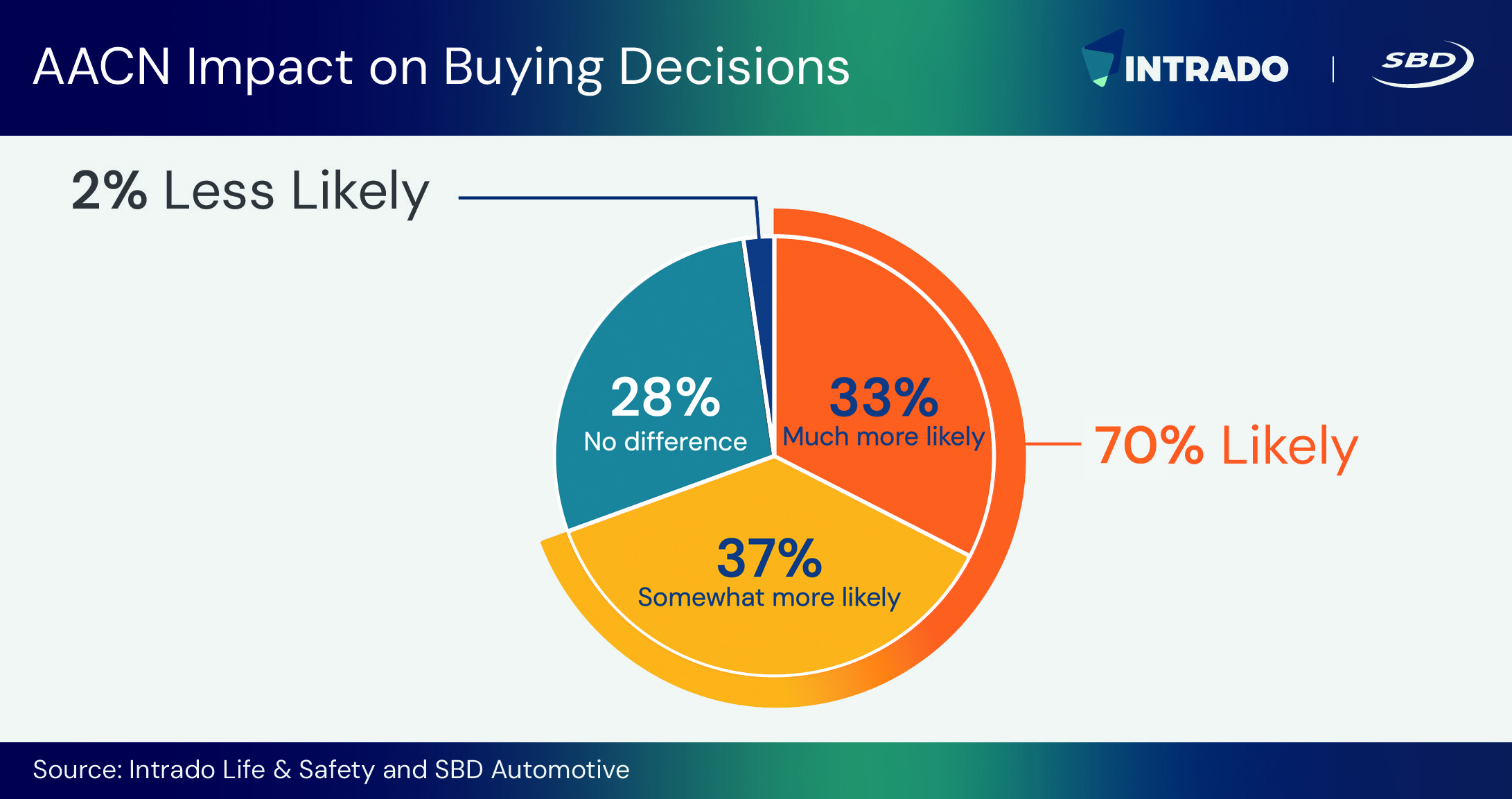
- 70% said AACN availability would influence their next vehicle purchase
- 94% support sharing vehicle and occupant data with 9-1-1 in emergencies
- 84% are aware of post-crash safety features, though only a minority have access to AACN
“These findings show a clear expectation from consumers that modern vehicles should play a larger role in keeping occupants safe—not only before a crash, but in the critical seconds after one occurs,” said Andrew Hart, CEO of SBD Automotive.
“By delivering richer and more reliable data directly to emergency responders, AACN has the potential to fundamentally change outcomes. This is an opportunity for automakers to lead with purpose and for the entire safety ecosystem to collaborate on technology that can save thousands of lives each year.”
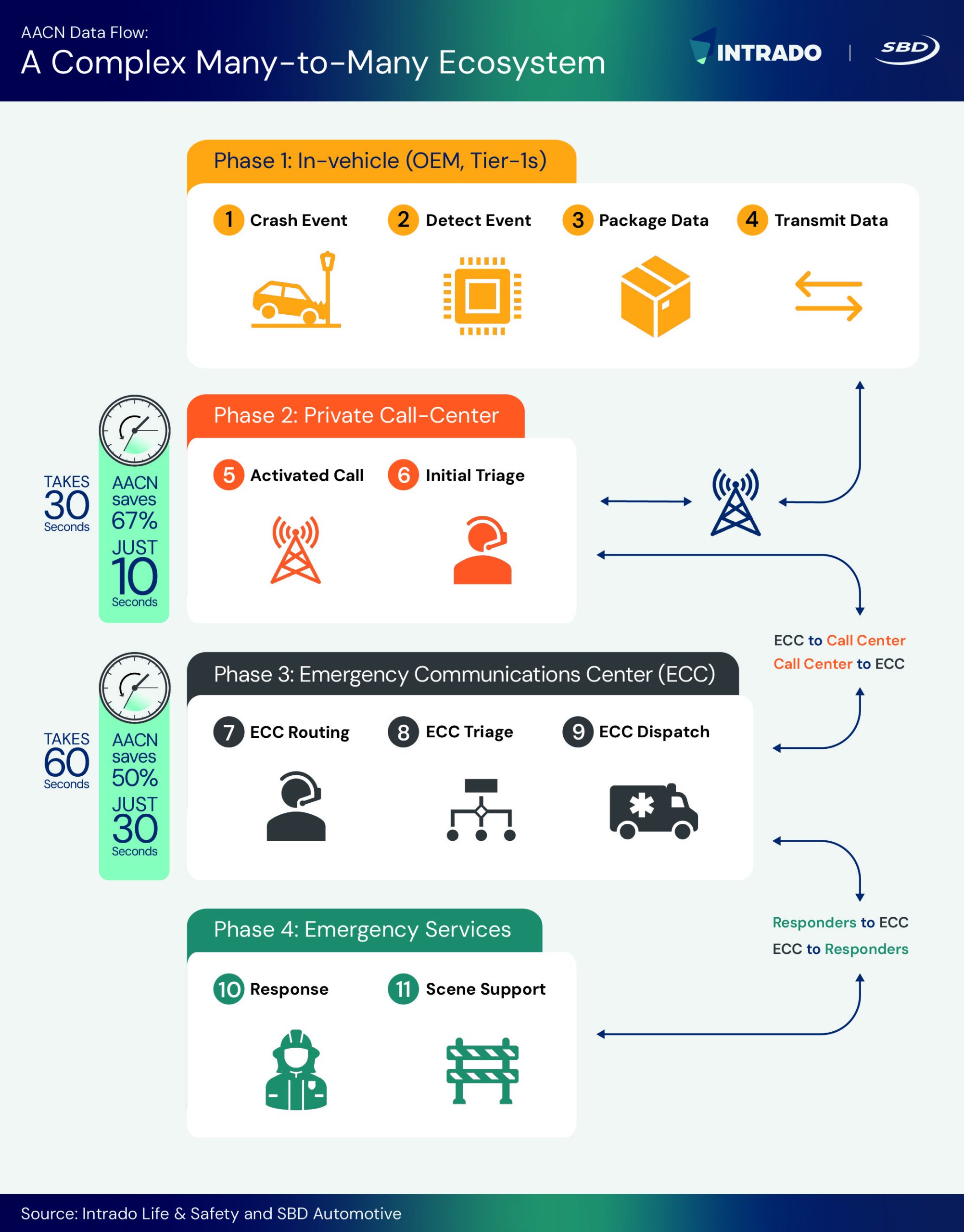 How ECCs Benefit From Better Data
The whitepaper stresses that ECCs are capable, but often lack timely, structured data. Integrating AACN into NG9-1-1 infrastructure allows:
- Improved triage accuracy
- Prioritisation of severe incidents
- Reduced radio traffic and more informed dispatch
- Efficient allocation of EMS, fire, and law enforcement resources
- Earlier coordination with trauma centres and specialised responders
Organisations such as NENA, APCO, and the Connected Vehicle Systems Alliance are defining data models like VEDS and VSS to enable scalable integration. Intrado’s NG9-1-1-ready platform is designed to deliver AACN crash intelligence directly into ECC workflows nationwide.
A Practical Roadmap for Industry Adoption
The whitepaper outlines a phased approach for AACN deployment:
- Start Now – Use existing NG9-1-1 text capabilities, already in use by 4,700+ ECCs, to deliver crash data immediately without major upgrades.
- Standardise Data – Adopt structured models such as VEDS, aligned with NENA, APCO, and cross-industry partners to improve interoperability.
- Integrate into ECC Workflows – Ensure AACN data appears directly in call handling and dispatch systems.
- Prepare for Regulatory Momentum – With NHTSA advancing safety initiatives and NG9-1-1 modernisation funding, early adopters gain a 3–5 year competitive advantage.
Industry Collaboration is Key
“The most meaningful safety innovation of the next decade may not be a feature that prevents crashes, but one that ensures help arrives faster when they occur,” said Joe Custer, CEO of Intrado.
“The survey results and whitepaper show that AACN is not only technically feasible—it is overwhelmingly supported by consumers. Intrado is committed to ensuring this life-saving data reaches ECCs through the NG9-1-1 network so first responders get the information they need as quickly as possible.”
The full whitepaper, Making Seconds Count With Advanced Automatic Collision Notification, is available for download here.