
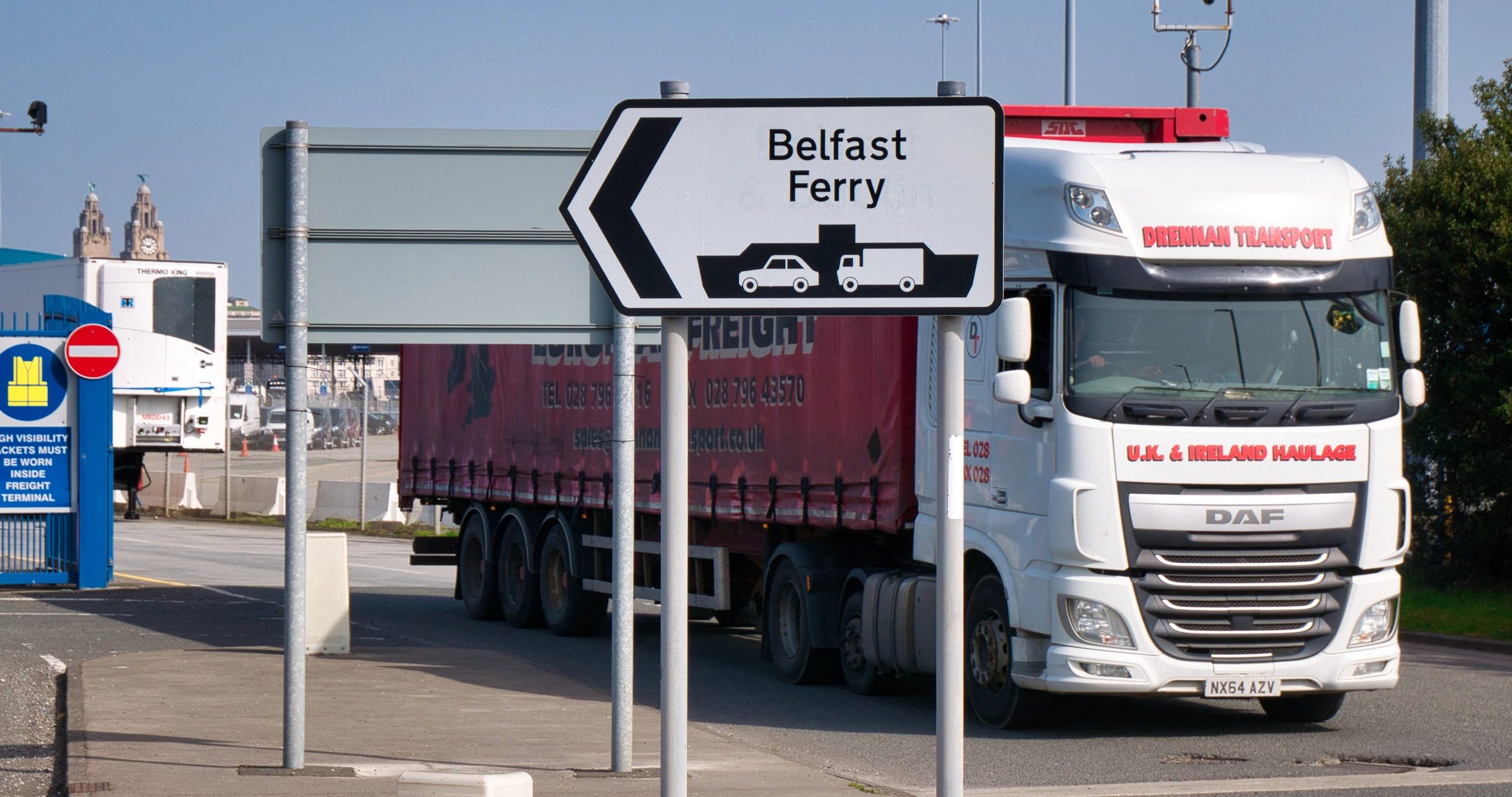
The UK Government has accepted in full the recommendations of the Independent Review of the Windsor Framework, led by the Rt Hon Lord Murphy of Torfaen — a move the government says will strengthen democratic scrutiny, improve business support and help smooth trade between Great Britain and Northern Ireland.

Rt Hon Lord Murphy of Torfaen
Main conclusions of the review and the government response
Lord Murphy’s review (published in September 2025) looked at how the Windsor Framework is operating since the Northern Ireland Assembly’s democratic consent vote and made a package of recommendations aimed at building broader cross-community confidence and reducing frictions for traders. Key proposals included:
- an enhanced “one-stop-shop” advice and support service for businesses to make dual-market trading easier;
- strengthened arrangements to give the Northern Ireland Assembly more time and clearer routes to scrutinise EU laws that apply to Northern Ireland;
- better, more consistent stakeholder engagement, clearer communications and targeted business support measures.
In its formal response, the government committed to implementing all the recommendations and to deliver a £16.6 million programme of business support, including the enhanced one-stop shop, plus steps to reduce certain SPS identity checks to smooth flows of goods. The response stresses the Government’s ongoing aim of protecting Northern Ireland’s place in the UK while avoiding a hard border on the island of Ireland.
Northern Ireland Secretary Hilary Benn described the acceptance as a “practical” step to respond to the views of businesses and communities and reiterated the government’s desire to work towards an SPS agreement with the EU that would benefit Northern Ireland traders and hauliers.
He said: “This Government remains steadfastly committed to ensuring that Northern Ireland’s trading arrangements command the broadest possible support. Today’s response to Lord Murphy’s report shows we are taking practical steps in response to the views of businesses and communities.
“We believe that the best and most sustainable results are achieved through agreed trading arrangements, and working in partnership with business and civic society. That is why we continue to work toward an SPS agreement with the EU from which Northern Ireland’s traders and hauliers stand to resoundingly benefit.”
What the changes mean for the logistics sector
Logistics and haulage businesses want simpler, faster processes and clearer risk-based approaches to cross-border trade. Industry groups have broadly welcomed aspects of the government’s approach — notably the promised business support and clearer guidance — but warned that concrete operational fixes for hauliers are still needed.
RHA Policy Director (Scotland, Wales & Northern Ireland) Martin Reid, said: “We welcome the Government’s acceptance of Lord Murphy’s recommendations, this is a positive step. However, the response doesn’t go far enough to address frictions faced by hauliers.
“The Government’s response makes no firm commitments to assisting firms in our industry who move goods and materials between GB and NI. We continue to believe a Trusted Haulier Scheme should be introduced, and we repeat our call for the determination of risk to be moved to the point of sale. We look forward to continuing to work with decision-makers and officials to find further solutions.”
The Horticultural Trades Association and the Northern Ireland Retail Consortium (representing retailers) also welcomed the direction of travel — both groups highlighted that smaller firms need clear, practical help to navigate paperwork, sanitary and phytosanitary (SPS) rules and upcoming changes such as the removal of the EU lower-value import exemption. They urged swift implementation and clarity on specific regulations that add cost and complexity.
Short-term priorities and risks
For logistics operators the immediate priorities are practical: clear timelines for the one-stop shop, concrete detail on how stakeholder engagement will work in practice, and measures that reduce roadside checks and administrative burdens. The government has pointed to recent reductions in SPS identity checks and the new funding package, but industry calls persist for a targeted Trusted Haulier scheme and further operational flexibilities ahead of major IT changes such as the roll-out of ICS2, which will affect declarations for parcels and freight.
Unionist political figures have criticised the review as insufficient, arguing it does not resolve what they see as “fundamental” problems with the Windsor Framework — a political backdrop that means implementation will need careful handling to retain cross-community support.)
Bottom line for fleet managers and hauliers
- Expect improved guidance and a centralised business support hub — useful for SMEs and logistic teams unfamiliar with dual-market rules.
- Keep pressure on policymakers for operational fixes (Trusted Haulier, point-of-sale risk decisions) that reduce costs and delays for GB-NI movements.
- Track upcoming deadlines for SPS/ICS2 changes and seek early engagement with the new one-stop shop for clarifications and practical help.
The government’s acceptance of Lord Murphy’s recommendations is a significant political step and — if implemented effectively — could reduce some business frictions. For logistics operators the proof will be in rapid, operational delivery: clearer guidance, lighter-touch checks for trusted operators, and targeted support for small traders who face the biggest compliance costs.