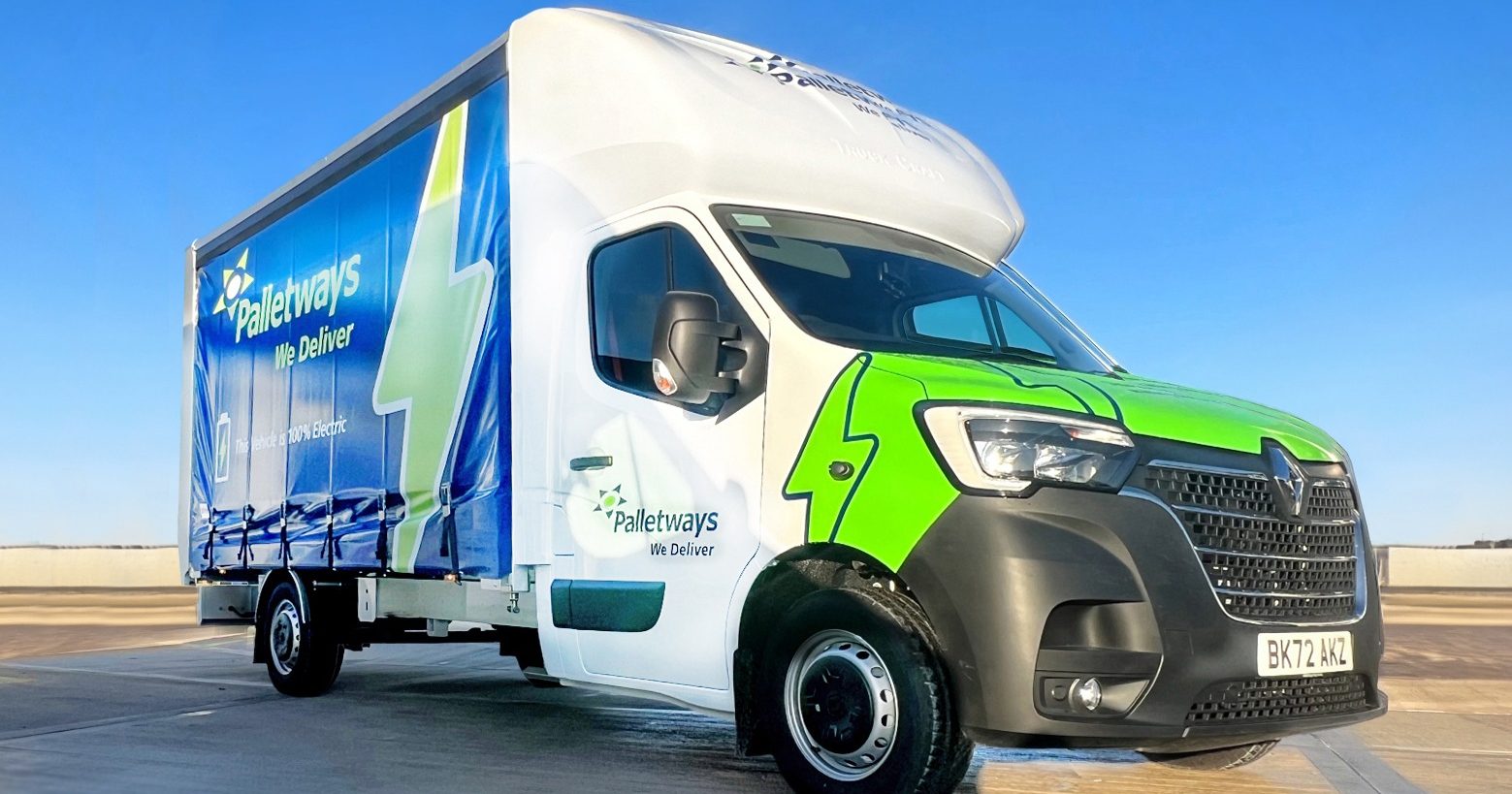
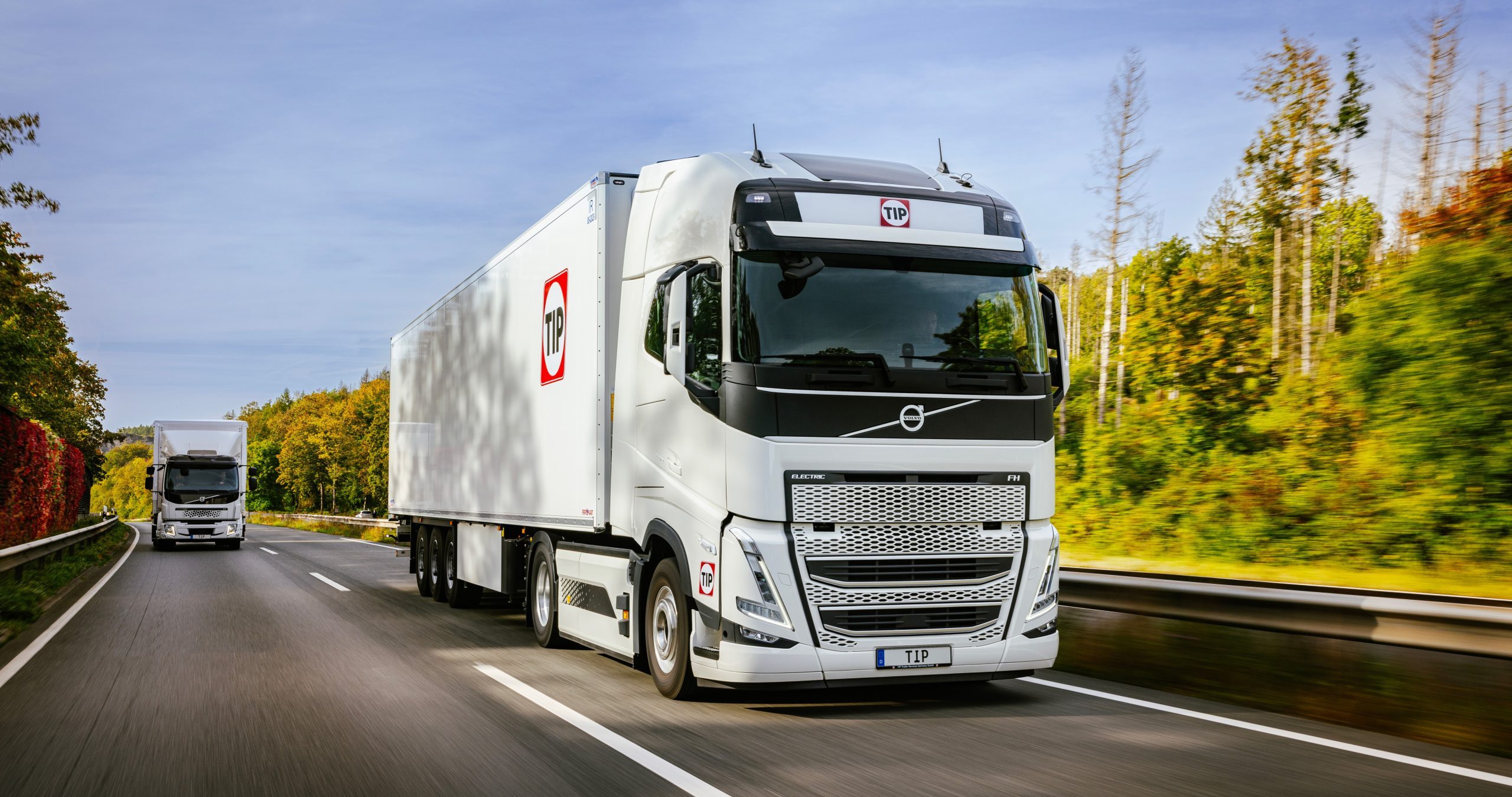
More than six months on from the Driver and Vehicle Standards Agency (DVSA) guidelines surrounding the assessment of heavy goods vehicle braking systems, TIP announces that 23,000 trailers have now been fitted with BrakePlus, its Electronic Braking Performance Monitoring System (EBPMS), helping transport operators throughout the UK to stay compliant.
The guidelines, as set out in the DVSA’s ‘Guide to Maintaining Roadworthiness’ (GTMR) publication, were updated in April and, amongst other things, stipulated that operators of commercial goods vehicles must ensure that their braking systems are assessed at each service inspection.
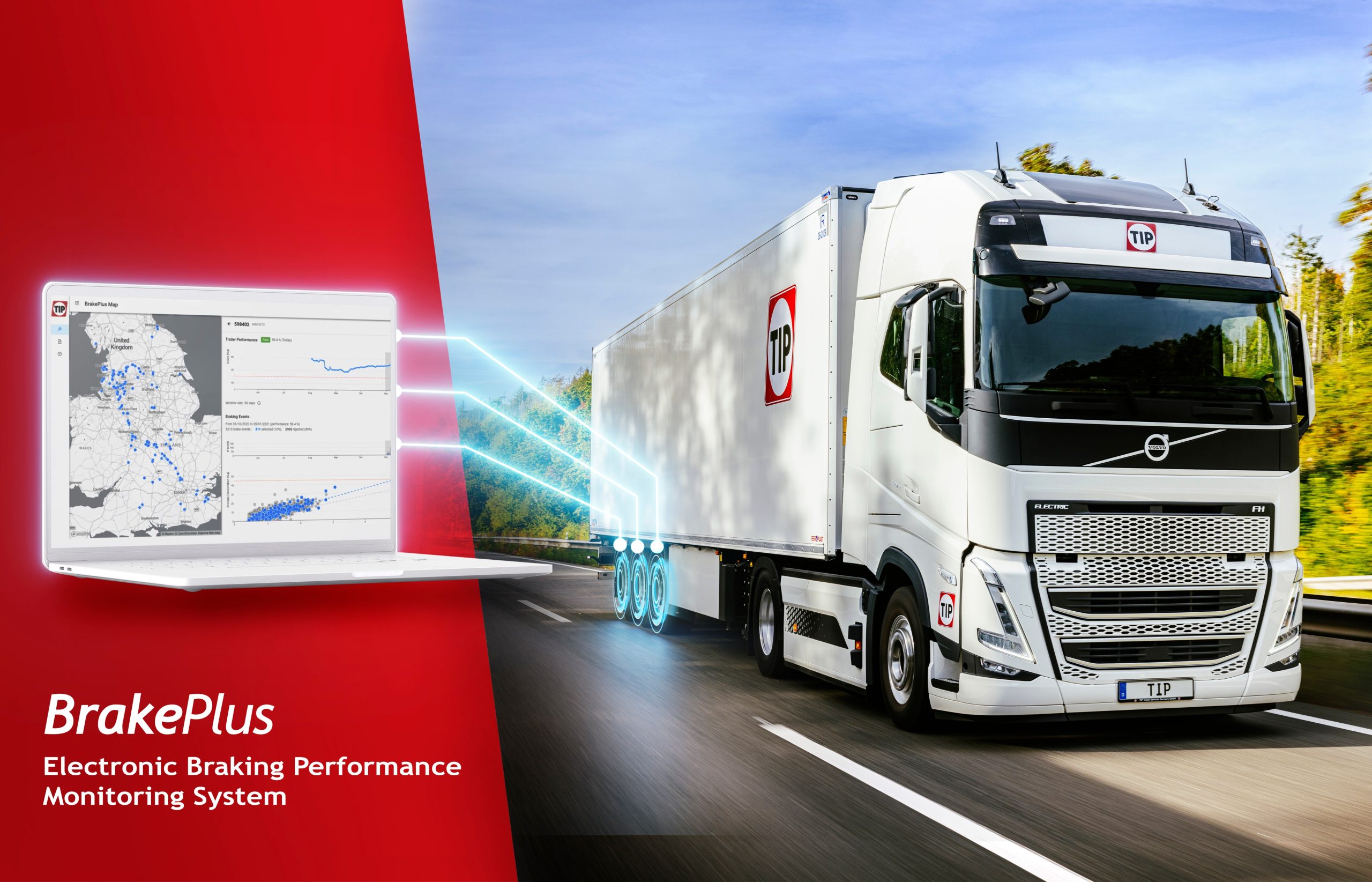
Image: TIP
That assessment could be in the form of a roller brake test or provided by a report that is generated from an EBPMS. Over the past year, awareness of the operational and cost benefits of EBPMS has grown significantly, with many operators moving away from frequent workshop visits for roller brake tests.
TIP’s commercial director, Karl Davies, said: “The cost and inconvenience of having to visit a workshop for a roller brake test every few weeks to comply with the new guidelines is not inconsiderable. Most operators feel it is counter-productive to take a trailer off the road for a day to undertake a roller brake test and it’s a major reason why many operators have opted for EBPMS.”
Braking performance is monitored on a continual basis, measuring brake force and comparing it with deceleration, so that the brakes’ effectiveness can be seen and any deterioration in performance highlighted.
However, TIP maintains that physical roller brake tests still play a vital role, something reflected in the GTMR.
Davies is clear on the role that EBPMS plays and is keen to clear up any confusion between it and that of roller brake tests. He emphasises that EBPMS is not intended as a direct replacement for roller brake testing, but that the two means of assessment are somewhat different and are complementary to each other.
“EBPMS provides continuous monitoring of the braking system’s on-road performance and alerts operators to a deterioration in that performance, so that they may take remedial action,” Davies said.
“It doesn’t necessarily identify which axle is at issue and, of course, doesn’t test the park brake. On the other hand, roller brake tests identify a performance issue immediately, including which axle it relates to. Even with EBPMS fitted, roller brake test facilities at our nationwide network of workshops are utilised whenever BrakePlus highlights a braking system performance issue. When you consider remedial work to address braking system performance issues that have been identified are most likely to be carried out in a workshop anyway, it makes sense to carry out a roller brake test to provide further analysis, both before and after such work is completed.”
The same principle applies when it comes to the annual MOT, where a laden roller brake test provides that extra level of compliance whilst a trailer is already in the workshop.
TIP is delighted with the impact that BrakePlus continues to have on the commercial vehicle industry and the fitment ramp-up it has witnessed in the lead up to the guideline changes and in the six months since. “We now have 23,000 systems fitted and we expect to fit a further 2,000 – 3,000 in the next six months,” Davies said. “Many of the systems have been fitted to trailers that are not part of TIP’s direct rental fleet, but that are third-party owned. The value of having our EBPMS fitted is there for all to see and we expect BrakePlus’ popularity will only continue to grow.”