
Artificial Intelligence (AI) is poised to play a transformative role in fleet management, with more than 70% of fleet managers actively considering its implementation, according to new research focused on the Italian market.
The study was conducted by Targa Telematics, a global leader in AIoT (Artificial Intelligence of Things) solutions for connected mobility, in partnership with the Connected Vehicle & Mobility Observatory of Politecnico di Milano School of Management, one of Europe’s leading STEM universities.
Findings from the Fleet Management Watch research revealed that 73% of fleet managers are currently evaluating AI-based solutions for their fleet operations. In contrast, just 23% said they do not expect to adopt AI technologies in the near future, highlighting the growing momentum behind intelligent fleet management systems.
The research identified predictive maintenance as the leading application for AI integration, cited by 38% of respondents. This was followed by anomaly detection at 24%, predictive analytics dashboards at 19%, and consumption analysis and optimisation at 14%. These technologies are increasingly being viewed as essential tools for improving efficiency, reducing downtime and enhancing operational decision-making.
The study also examined drivers’ and vehicle users’ perceptions of telematics technology. Nearly half of respondents (46%) cited ease of use as the primary benefit, while 23% highlighted operational support and assistance features as key advantages.
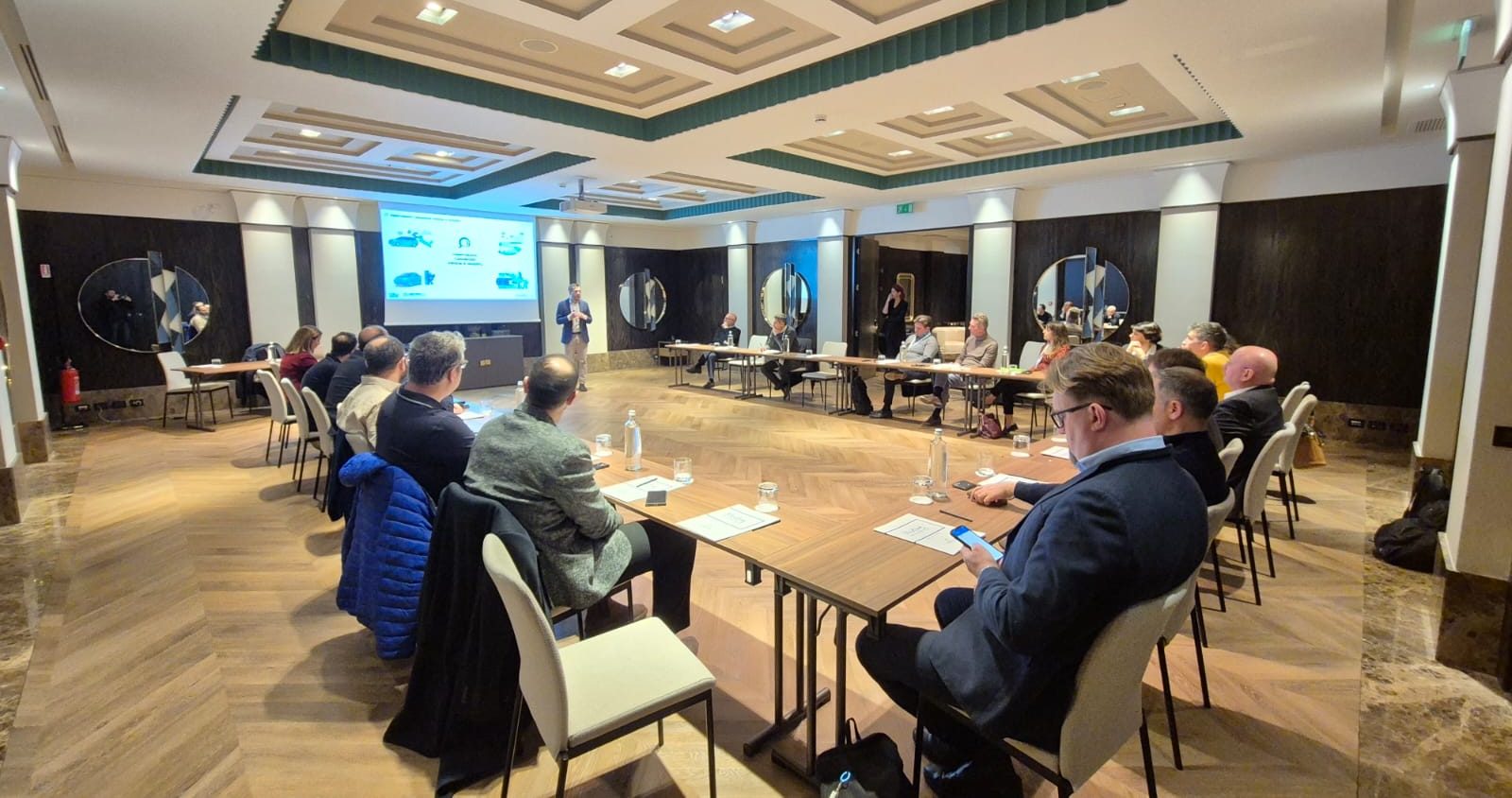
Targa Telematics’ Fleet Management Watch draws on insights from fleet and mobility managers participating in the Osservatorio Top Thousand and Osservatorio Top Hundred programmes. These long-running observatories monitor major mobility trends across Italy and include organisations operating fleets ranging from fewer than 1,000 vehicles to more than 1,000 vehicles. Collectively, the two observatories oversee almost 60,000 vehicles spanning corporate, operational, commercial and field service fleets.

Image: Targa Telematics
“Artificial Intelligence represents the main driver of evolution in fleet management, as it unlocks a truly proactive approach centred on early identification of potential issues and enhanced support to decision-making,” said Michele Cipullo, Go To Market Manager at Targa Telematics. “Data from the Top Thousand and Top Hundred observatories confirms that the market is ready to fully embrace AI. We are no longer at the experimentation stage, but rather rapidly advancing along the adoption journey.”
The findings reflect a broader shift towards data-driven fleet operations, with AI increasingly being used to generate actionable insights, improve asset utilisation and support more strategic management decisions.
According to Targa Telematics, the trend extends well beyond Italy, with growing interest across international markets, including the UK.

Image: Targa Telematics
“Artificial Intelligence is the next frontier in fleet management across every market, and the UK is no exception. From enhancing fuel efficiency, a crucial priority at a time of economic uncertainty, and optimising routes to improving driving behaviour and reducing incidents, AI is having a transformative impact on the sector”, said Chris Horbowyj, UK Commercial Director at Targa Telematics.
“Vehicle misuse prevention is yet another area where AI has already left its mark. Recent research from Targa Telematics Observatory showed that recovery rates may exceed 90% for operators capable of harnessing Agentic AI. Indeed, AI has redefined our ability to leverage data and turn it into actionable insights that take performance, safety and sustainability standards to new heights.”
As AI adoption accelerates, fleet operators are increasingly recognising its potential to improve efficiency, reduce costs, enhance safety and support sustainability goals, positioning intelligent fleet management as a key area of innovation for the years ahead.